
Cardiff's leafy streets and large Victorian and Edwardian houses give ivy plenty to climb. We remove it from house walls, garden walls, fences, outbuildings, chimneys and trees, clearing the growth in a careful order so that the brick, stone and timber beneath are disturbed as little as possible.
We work across the city, including Llandaff, Whitchurch, Rhiwbina and Penylan. If your property is in a conservation area or the ivy sits on a shared wall, tell us and we will plan the work around that, including who owns the wall and which side the ivy roots on.
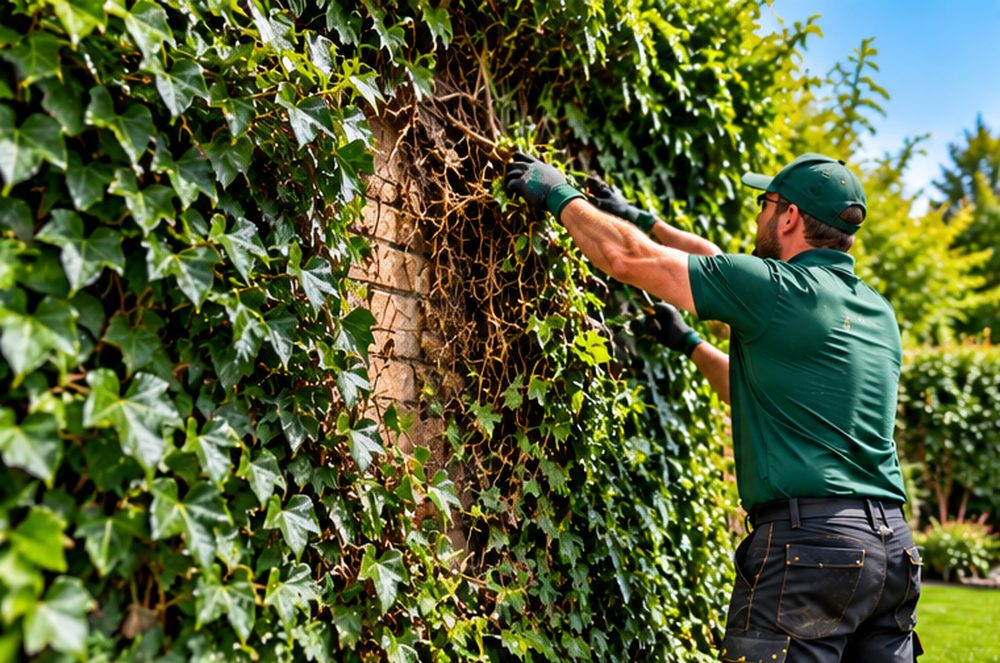
Many Cardiff houses have tall brick or stone walls and boundary walls that have carried ivy for a long time. Some owners like the look, but the plant roots into joints, lifts render and keeps surfaces wet. Taking it off lets you inspect the masonry properly and decide what repair, if any, is needed, and it often shows up problems that were hidden behind the leaves.
We never rip green ivy off an old wall. Each stem is cut at the base, the upper growth withers, and the dried ivy is then taken down in sections. That is slower, but it is kinder to old pointing, and you can watch the ivy brown and loosen over the following weeks. The leaves and stems that fall during the work are swept off paths and borders.
Cardiff has many mature trees, in streets and big back gardens, and ivy often climbs the trunks. A healthy tree can usually carry some ivy, but a thick mass may hide decay, add weight in storms and block your view of the canopy. We cut a clear section through the stems low on the trunk. On tall trees we work only as high as we can reach safely from the ground or a ladder.
The ivy above is left to die back on the tree, which avoids tearing bark. If a protected tree is involved, check the position with the council first. When the trunk is exposed, we also tell you if anything looks like it needs a tree surgeon, since bare bark is far easier to inspect. Cracks, fungus or dead wood that the ivy was covering then come into view.
Ivy removal in Cardiff often produces a surprising volume of waste. We bag the cuttings, clear fallen leaves and stems from borders and paths, and take it all away. We check for nesting birds before cutting, particularly in spring and summer. Afterwards you will be told what remains, such as rootlets on brick, and that they can take time to fade.
A few jobs we have completed. We also work in and around Cardiff.
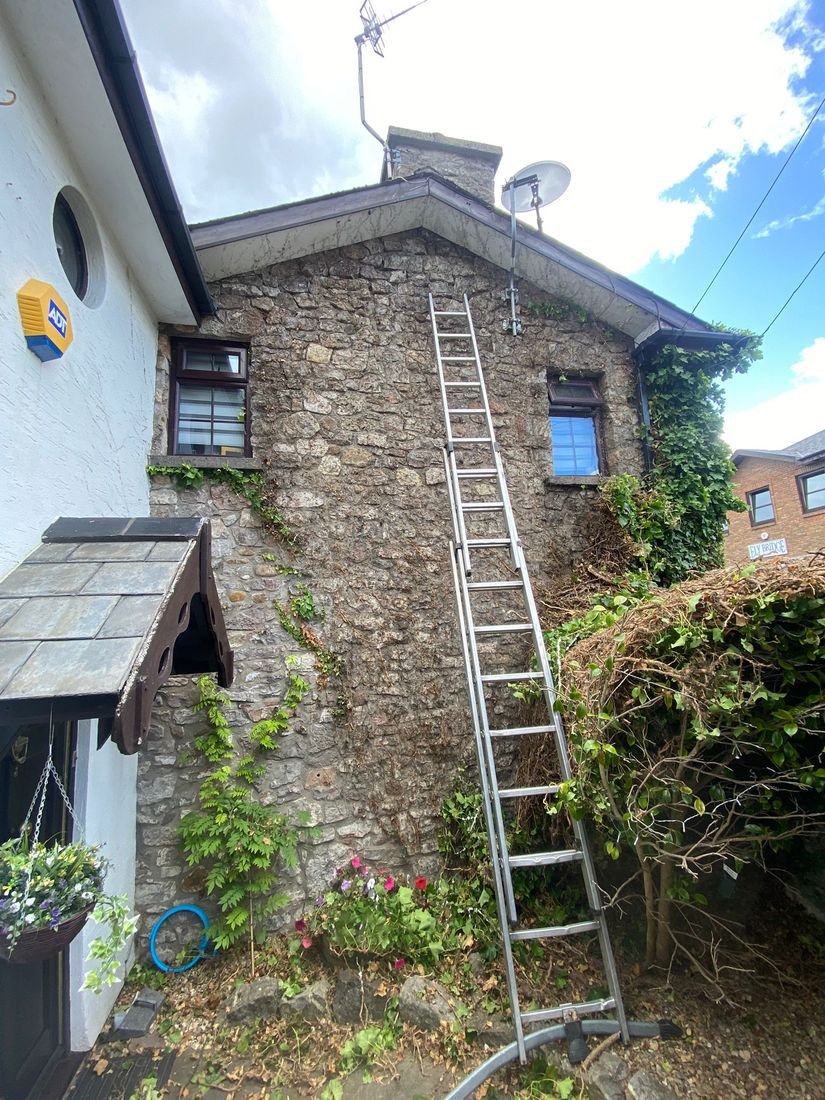
Ivy RemovalIvy being cut back from the stone gable of a cottage in Cardiff, with a long ladder up the wall beside the windows.
See the project →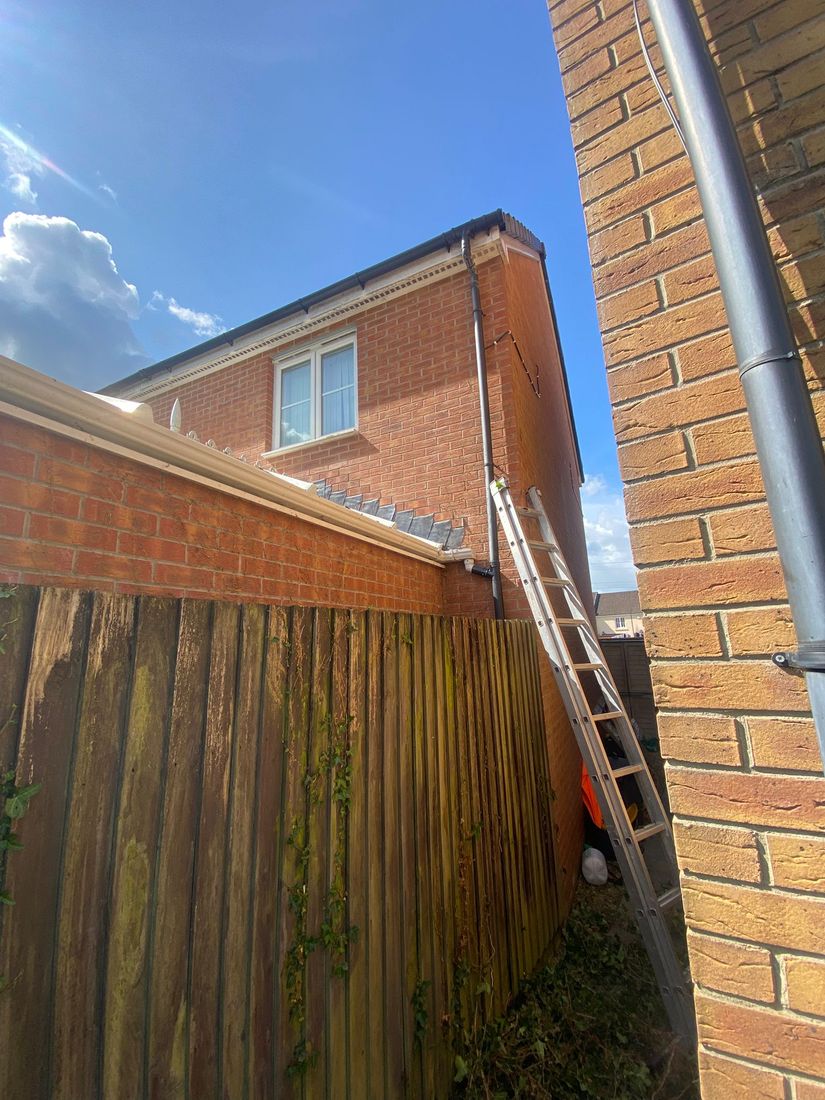 Ivy Removal
We cleared ivy from a close-boarded garden fence and the side of a brick house in Swansea, working from a ladder.
See the project →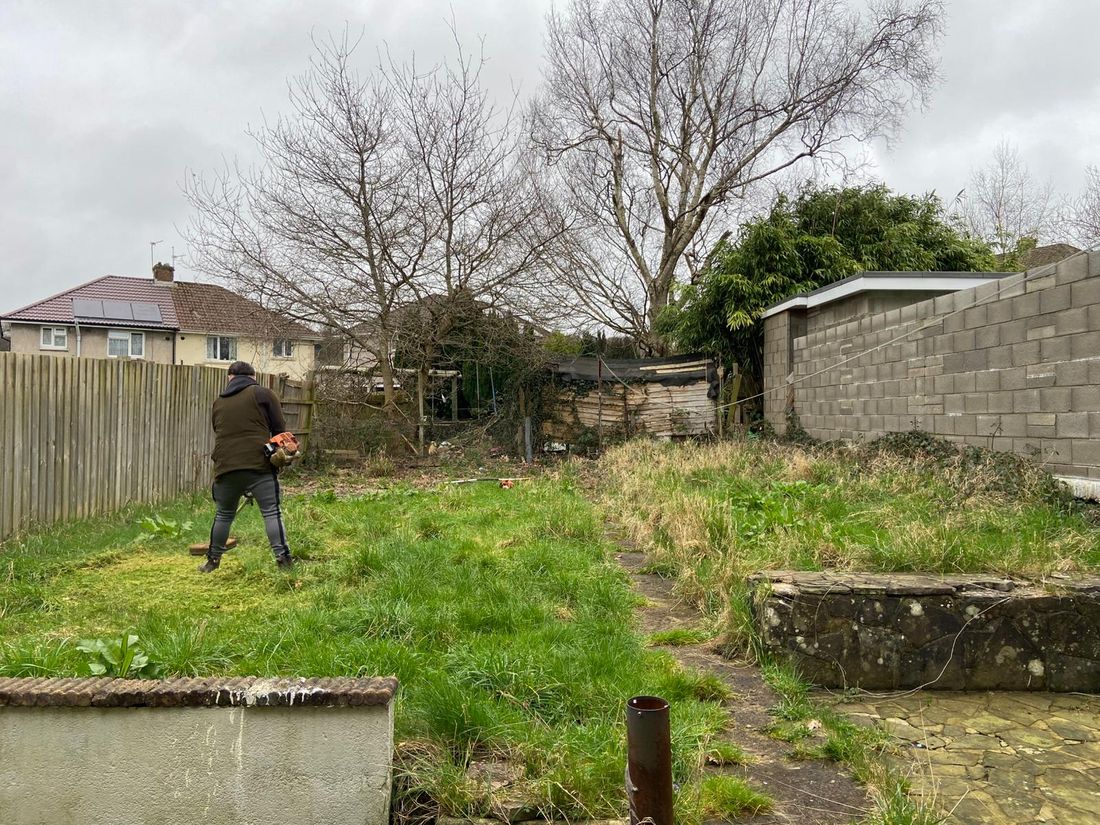 Garden Clearance
Work in progress clearing a long-neglected Cardiff back garden, with a brushcutter cutting down tall grass and weeds across the lawn.
See the project →We work across South Wales. Pick your town to see how ivy removal works locally.
Ivy comes off brickwork most cleanly when it is cut at the base and left to die back first, rather than ripped away while still alive.
Read the guide →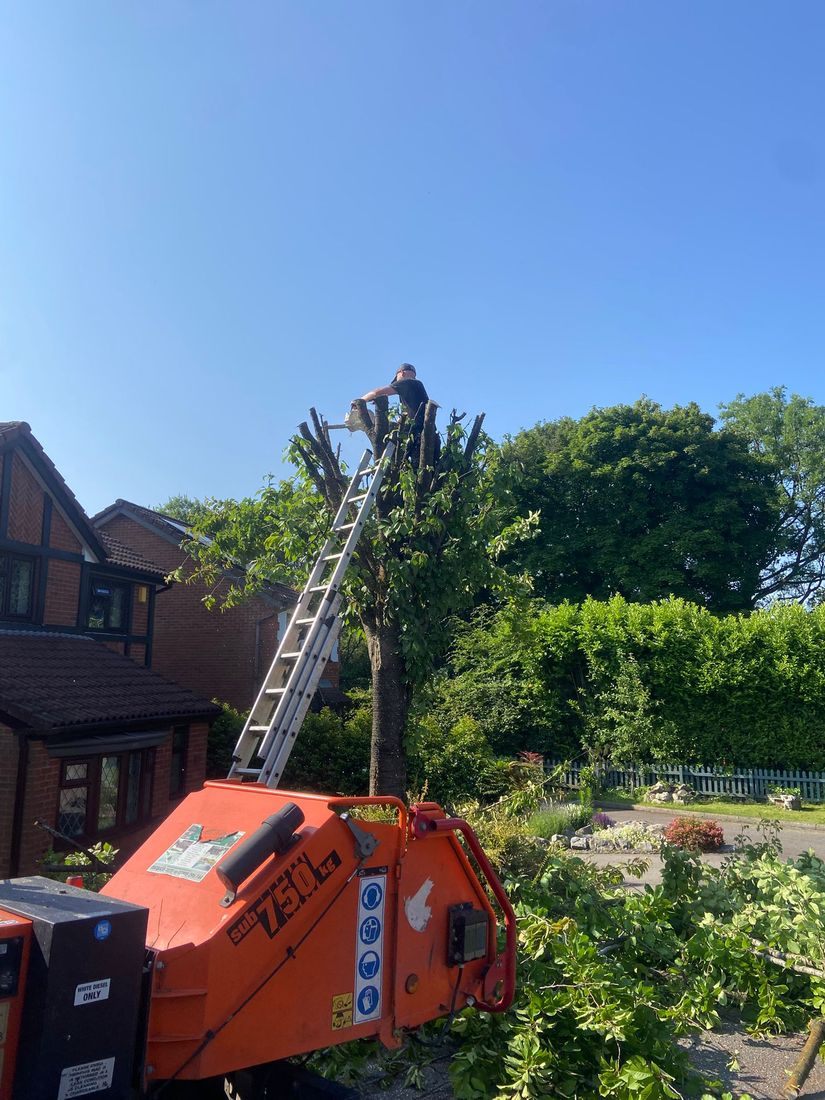
Tree surgery is priced job by job rather than from a fixed list, so this guide explains what moves the cost up or down and how to get a firm figure.
Read the guide →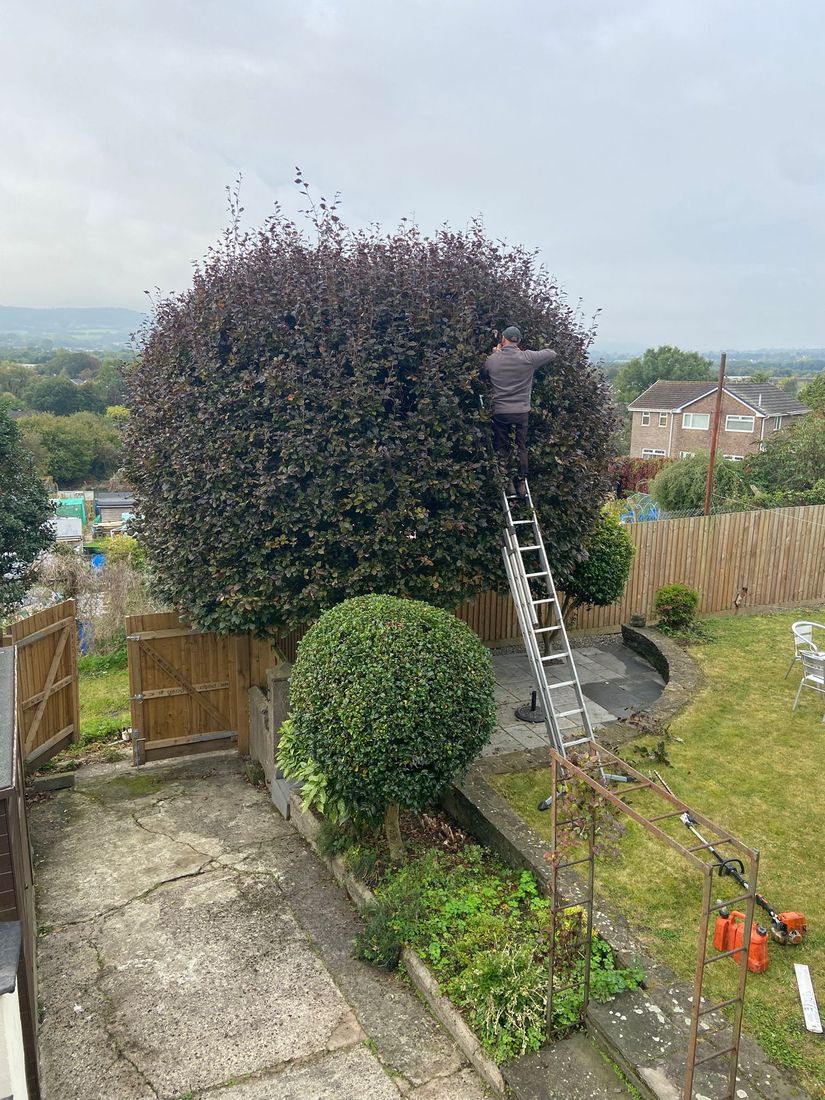
There is no single perfect month for every tree, but winter suits many species, and this guide shows how timing, nesting birds and weather affect the choice.
Read the guide →Taking ivy off a wall is normally fine, but trees in conservation areas have separate rules. If the ivy is on a tree, check with the council first. Tell us the address and we can talk through what applies.
We cut the stems at ground level, wait for the upper ivy to die back, then take it down in sections from a safe working position. Where the wall is too high to reach safely, we tell you rather than take a risk.
Not if it is done carefully. We cut and clear from your side and avoid pulling on growth that crosses into their garden. It helps to let your neighbour know beforehand, as some ivy may need cutting from their side too.
Tell us what needs doing and where. We will come back to you, or call 07766 919630 if it is urgent.