Ivy can look attractive on an old wall, but left to run it climbs into gutters, gaps in stonework and the crowns of trees. We remove ivy from walls, fences, sheds, outbuildings, chimneys and trees in Abergavenny, taking the growth down in a careful order so that the surface underneath is not pulled apart.
Our work covers the town and nearby places such as Llanfoist, Govilon and Crickhowell. If you are unsure whether the ivy is doing harm, we can look at it with you and talk through what should come off and what can stay.
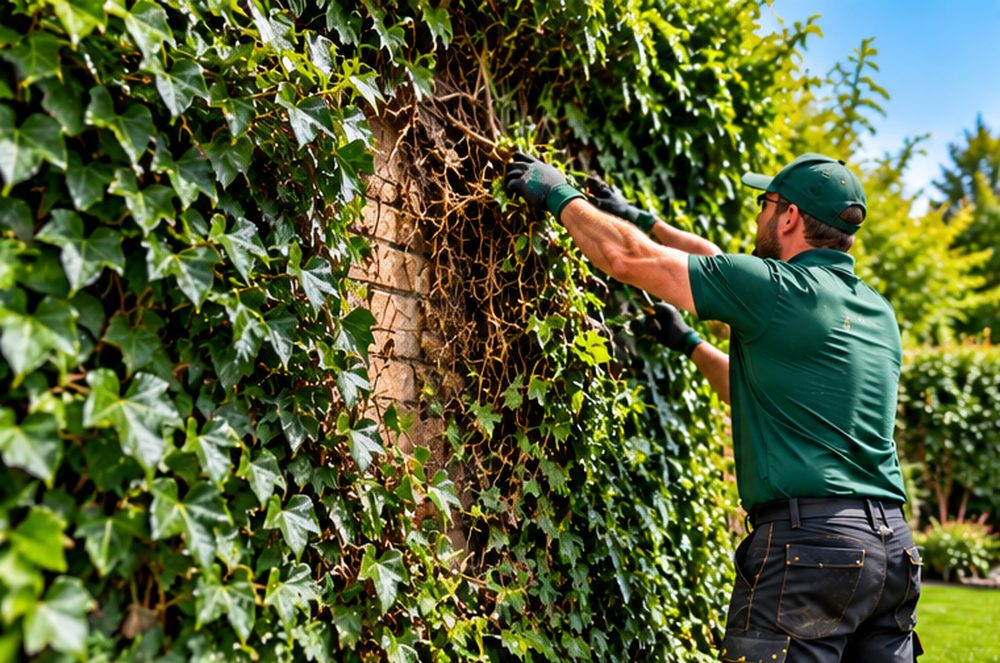
Abergavenny has period terraces, villas and long garden walls, and ivy can find its way into any of them. On older brick and stone it roots into joints, loosens pointing and holds moisture against the surface. We start by cutting every stem at the base, which stops the plant feeding the growth above it, then leave the upper ivy to die back before pulling it away.
That waiting period matters. Green ivy is firmly attached, and tearing it off a wall can take mortar and render with it. Once the growth has dried and loosened, it comes away far more easily. We take down what is ready and remove it from site. Anything that will not come away safely is left alone, and you will know which areas those are.
The area around Abergavenny has plenty of mature garden and hedgerow trees, and ivy often climbs their trunks and spreads into the canopy. It does not always harm a healthy tree, but a heavy mass can add weight, catch the wind and hide cracks, rot or dead wood. Clearing the lower trunk lets you see the bark properly again, which is the first step in judging whether the tree itself needs attention.
On a tree we cut a clean section out of the ivy at a comfortable working height and leave the higher growth to die back where it hangs, since forcing it off the bark can injure the tree. If the trunk looks unsound once it is exposed, we will say so. Where it is sound, the tree is usually better off with the ivy gone from its base.
Dense ivy is a favourite place for nesting birds, so we check before cutting, particularly in spring and summer. If a nest is in use, we leave that section alone and agree a later date to return. After ivy removal in Abergavenny, dead stems and sticky rootlets on masonry may stay visible for some time, and we explain this beforehand so there are no surprises.
A few jobs we have completed. We also work in and around Abergavenny.
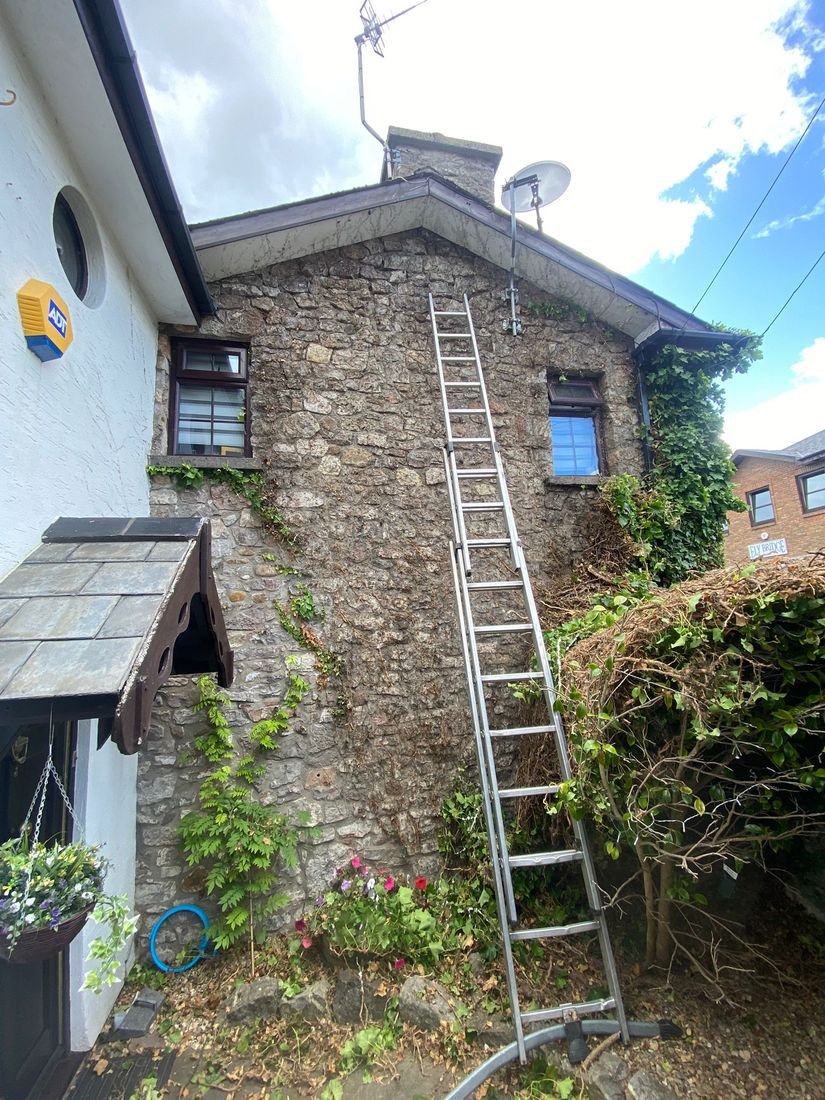
Ivy RemovalIvy being cut back from the stone gable of a cottage in Cardiff, with a long ladder up the wall beside the windows.
See the project →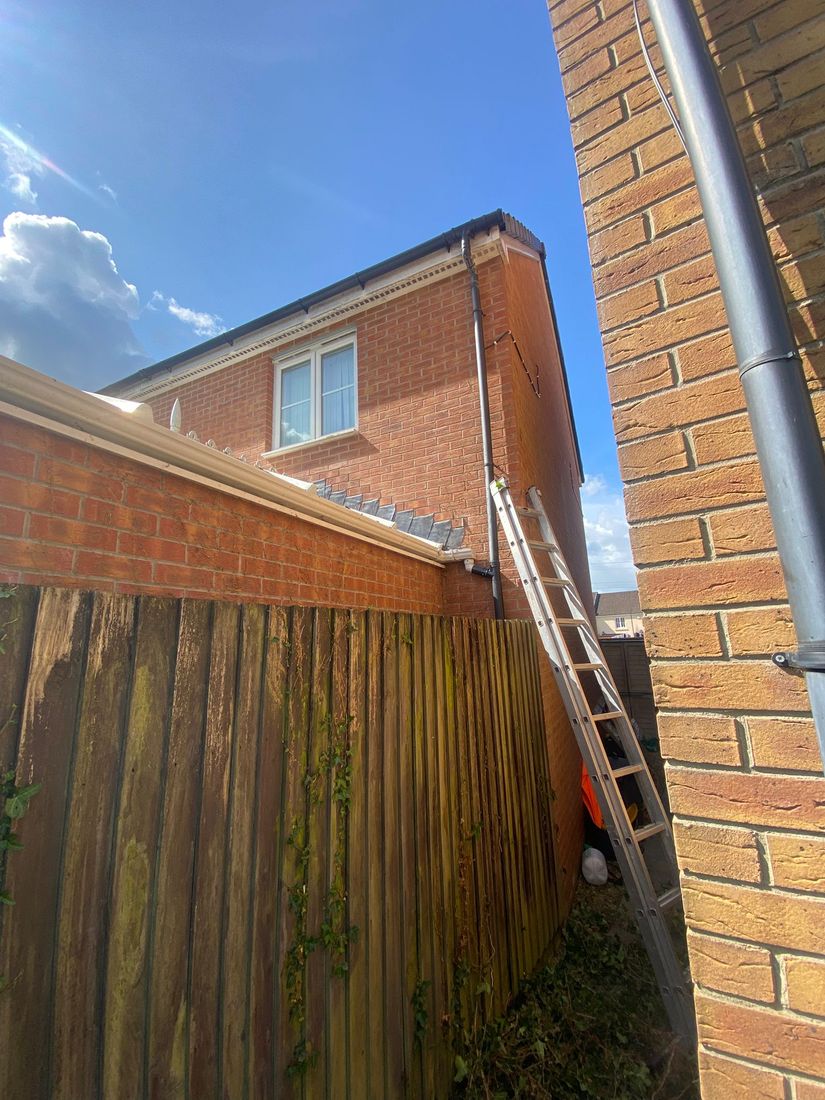 Ivy Removal
We cleared ivy from a close-boarded garden fence and the side of a brick house in Swansea, working from a ladder.
See the project →We work across South Wales. Pick your town to see how ivy removal works locally.
Ivy comes off brickwork most cleanly when it is cut at the base and left to die back first, rather than ripped away while still alive.
Read the guide →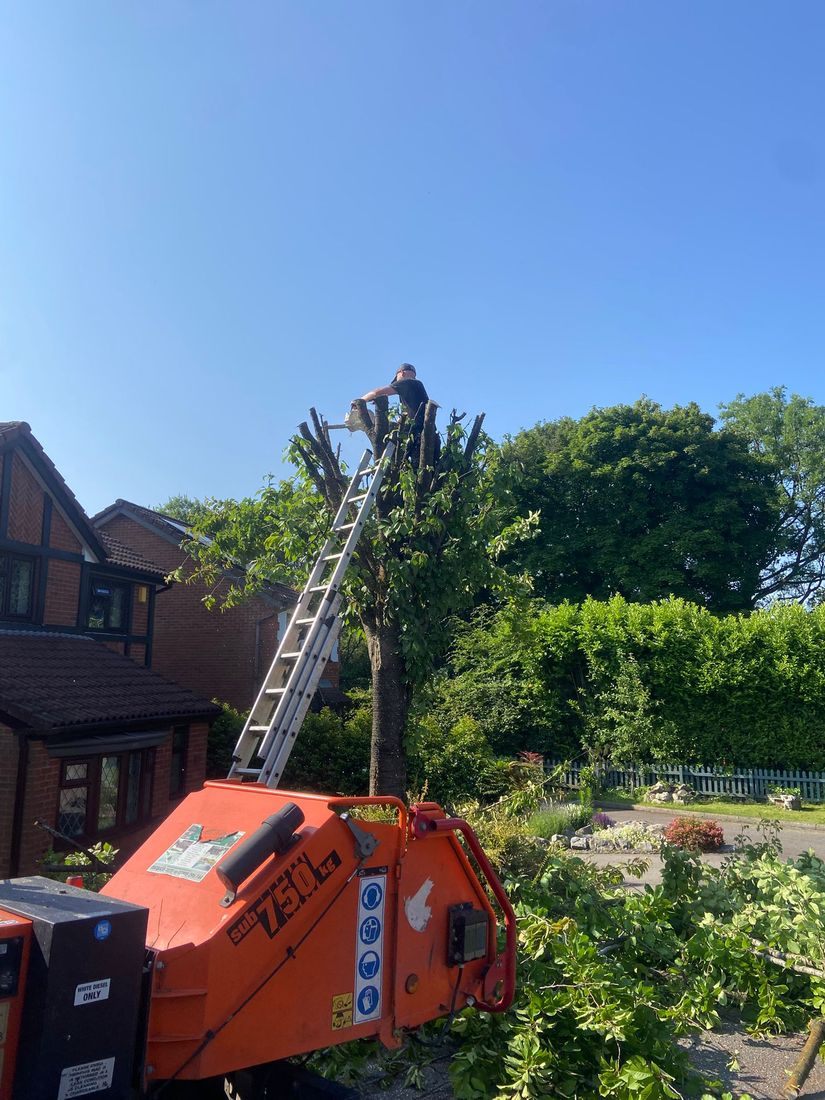
Tree surgery is priced job by job rather than from a fixed list, so this guide explains what moves the cost up or down and how to get a firm figure.
Read the guide →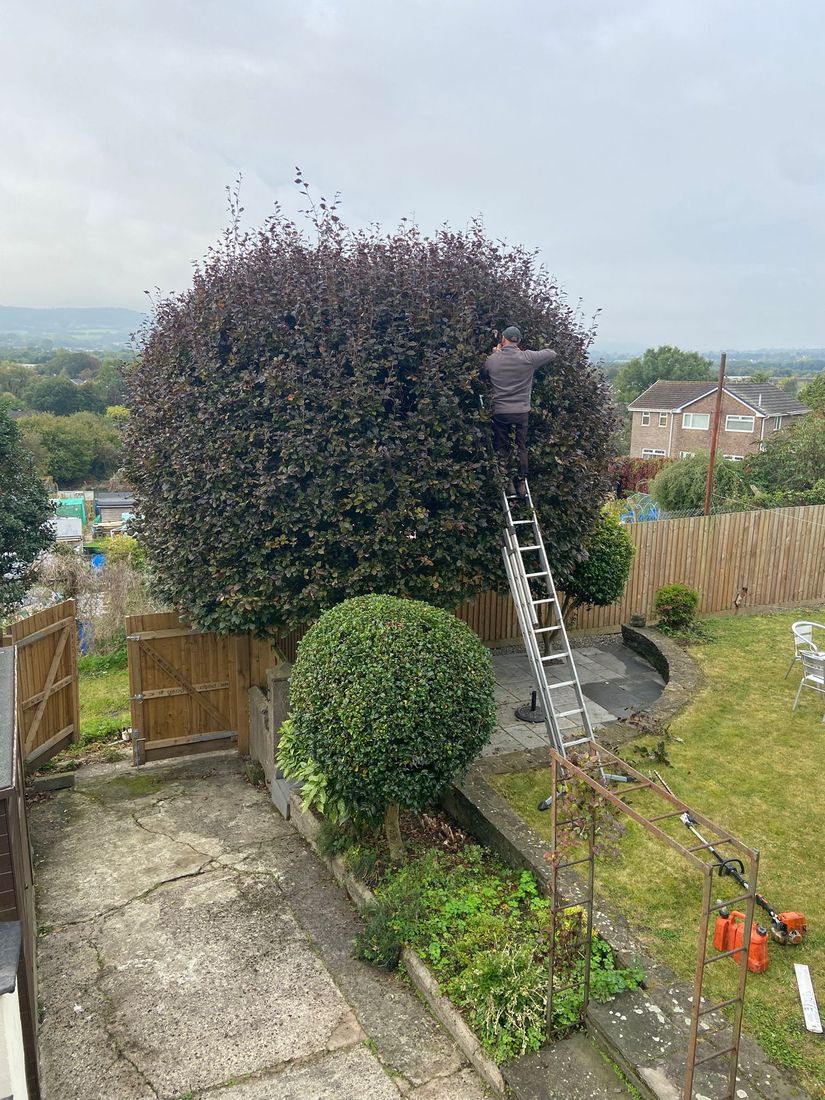
There is no single perfect month for every tree, but winter suits many species, and this guide shows how timing, nesting birds and weather affect the choice.
Read the guide →It can. On sound, well-pointed masonry the harm is limited, but ivy pushes into cracks, loose mortar and gaps under render. Once it is cleared, the wall can be looked at properly and you can decide whether any repair is needed.
Green ivy grips hard, and pulling it can take pointing, render or paint with it. Leaving the cut growth to wither first makes it much gentler on the wall. Some rootlets may still stay on the masonry for a while.
Yes, where we can reach it safely. If a chimney or wall is in poor condition, we will point that out, because ivy may have been hiding damage that someone should look at before anything else is done.
Tell us what needs doing and where. We will come back to you, or call 07766 919630 if it is urgent.