
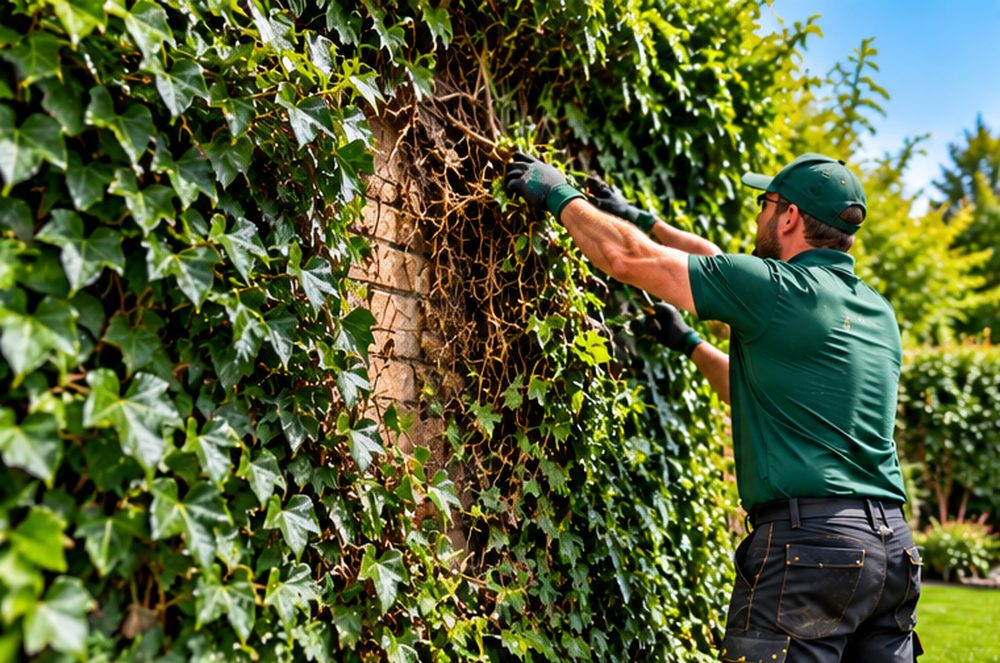
Ivy looks harmless until it has taken hold. We remove it from walls, fences, outbuildings, sheds, chimneys and trees across South Wales. The usual method is to cut the stems at the base, let the growth die back, and then take down what has been cut, working carefully so that we do not pull away more than we should along with it.
It is a job that suits homeowners, landlords and businesses alike, whether the ivy is on a garden boundary wall, a shed roof or a mature tree that is carrying far more of it than you would like to see. We will explain what is sensible for your particular job before any cutting begins.
Ivy grips with small sticky roots and, over time, pushes into gaps in brickwork, mortar, fence panels and roofing. It can hide cracks, loose pointing and rot that you would otherwise spot, and its weight puts real strain on old fences and sheds. On trees, heavy growth can make it hard to judge the condition of the branches and trunk underneath it. Ivy also loosens roof tiles and gutters if it is left to climb for long enough.
None of that means every piece of ivy has to go. A little on a sound wall may do no harm at all. The question is whether it is hiding damage, loading a structure or spreading where you do not want it, and an honest look at the job usually answers that quickly. Often the answer is to clear the worst and keep the rest in check afterwards.
We begin by looking at where the ivy is growing and what it is attached to, then agree the work and the cost with you. Stems are cut at the base so the growth above can die back. Once it has loosened, we take it down carefully rather than tearing it off, and bag and remove all the waste before leaving the site tidy. Higher or awkward growth on chimneys and outbuildings is cut back with the right access equipment for the job.
Sticky roots left on masonry can take time to come away, and may leave marks on brick or render for a while. We will say so plainly before we start. Where ivy is on a tree, we cut it at the base and leave the growth in the canopy to die back, rather than pulling it down onto healthy branches. Any marks left on the surface can be looked at together once the growth is gone.
Older stone and brick walls are common here, along with timber fences on exposed sites and boundary walls around valley terraces and sloping gardens. Ivy thrives in damp, mild conditions, so it returns readily on shaded and sheltered boundaries. Mature trees on farmland edges and in older gardens can also carry heavy growth that has been building for many seasons. Sloping gardens can also make it harder to reach the upper parts of a wall safely.
Before work starts, check who owns the wall or fence, and tell us if a neighbour's ivy is growing over from the other side. Birds may nest in ivy in the warmer months, so we check before cutting and will not disturb an active nest. If the tree is protected or in a conservation area, mention it when you get in touch. We can then plan the work with that in mind.
Real jobs we have completed.
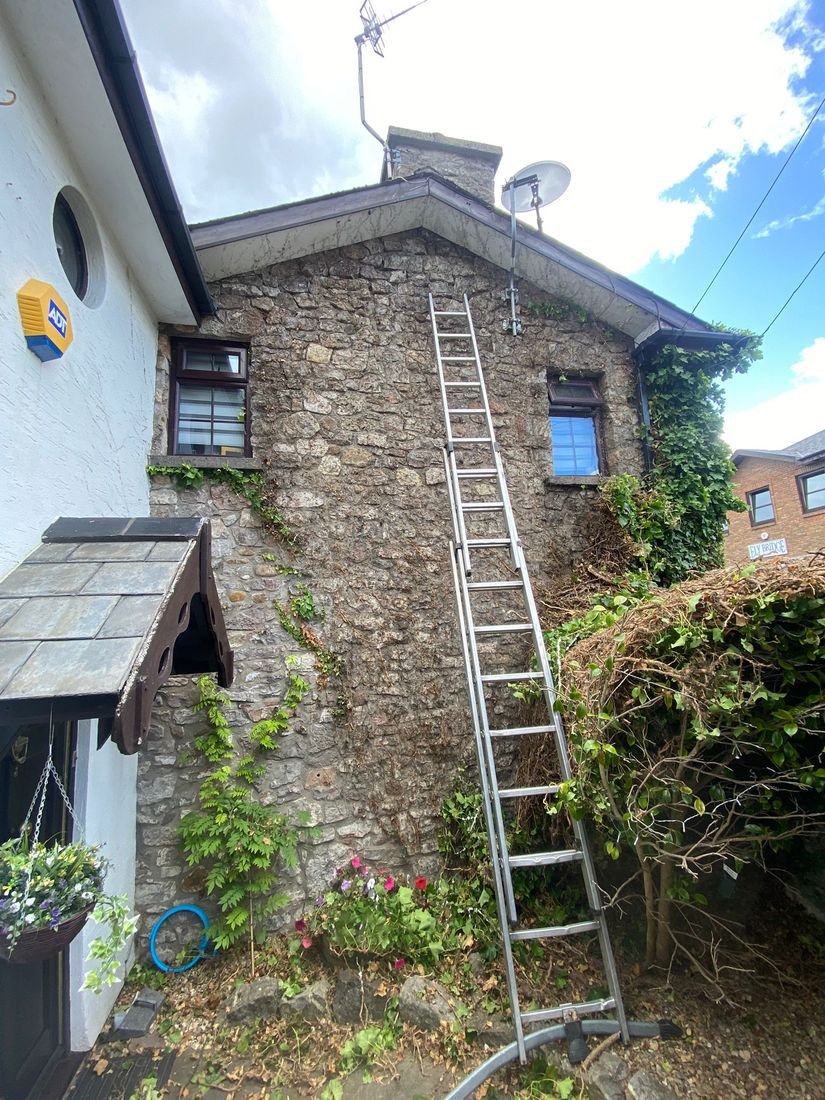
Ivy RemovalIvy being cut back from the stone gable of a cottage in Cardiff, with a long ladder up the wall beside the windows.
See the project →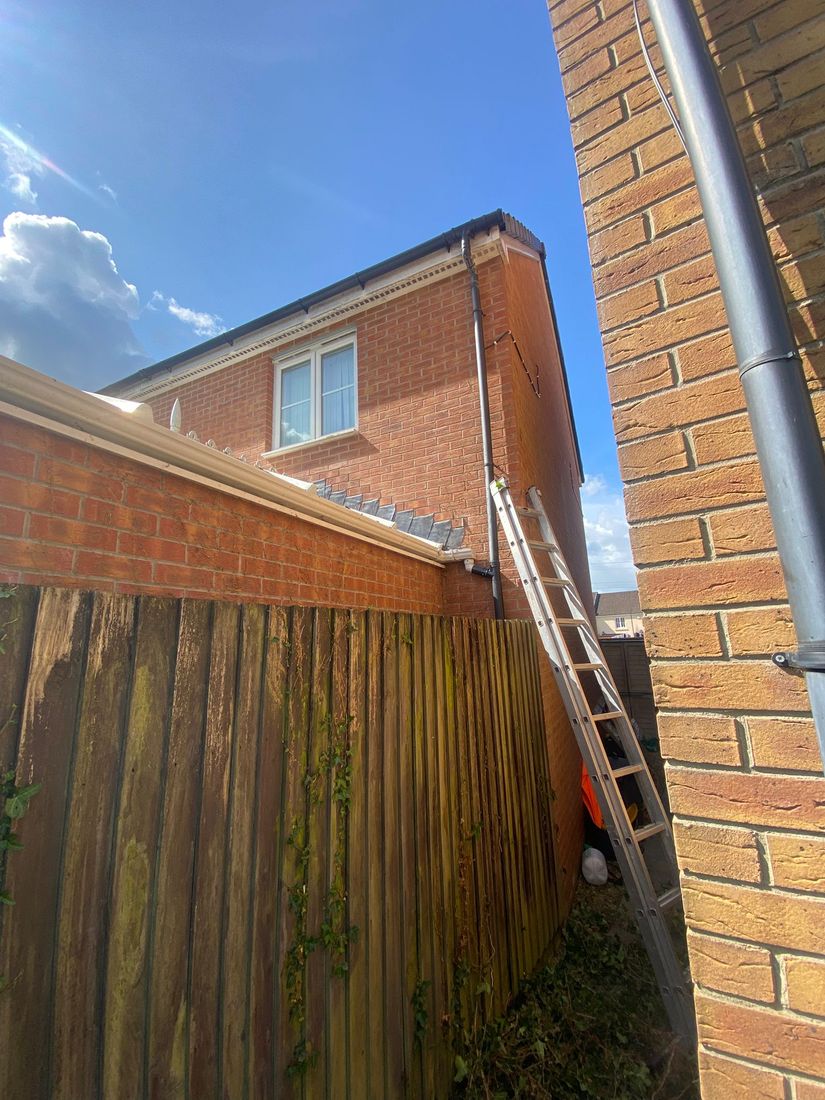 Ivy Removal
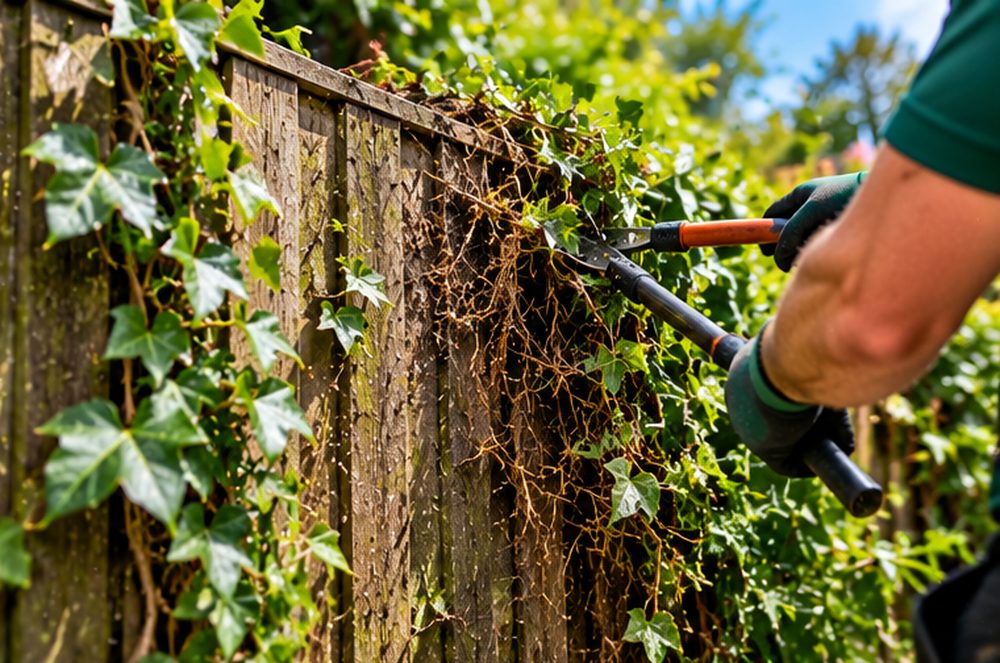
We cleared ivy from a close-boarded garden fence and the side of a brick house in Swansea, working from a ladder.
See the project →We work across South Wales. Pick your town to see how ivy removal works locally.
Ivy comes off brickwork most cleanly when it is cut at the base and left to die back first, rather than ripped away while still alive.
Read the guide →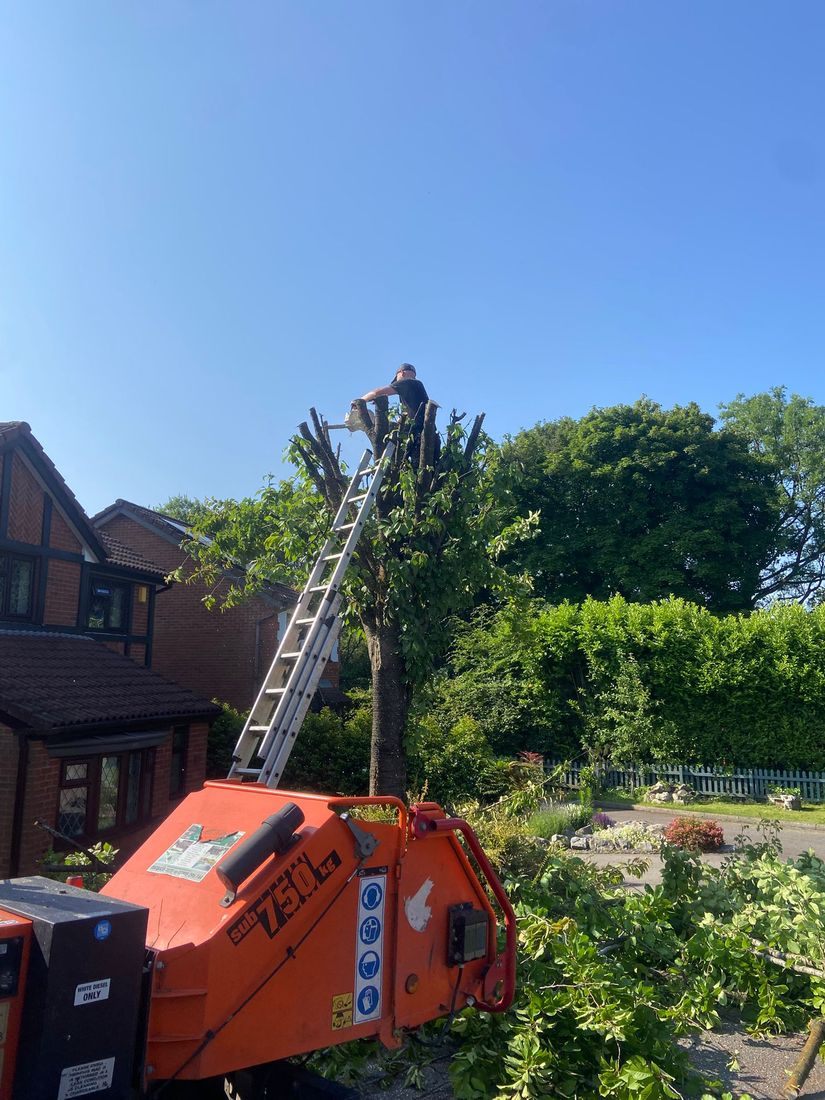
Tree surgery is priced job by job rather than from a fixed list, so this guide explains what moves the cost up or down and how to get a firm figure.
Read the guide →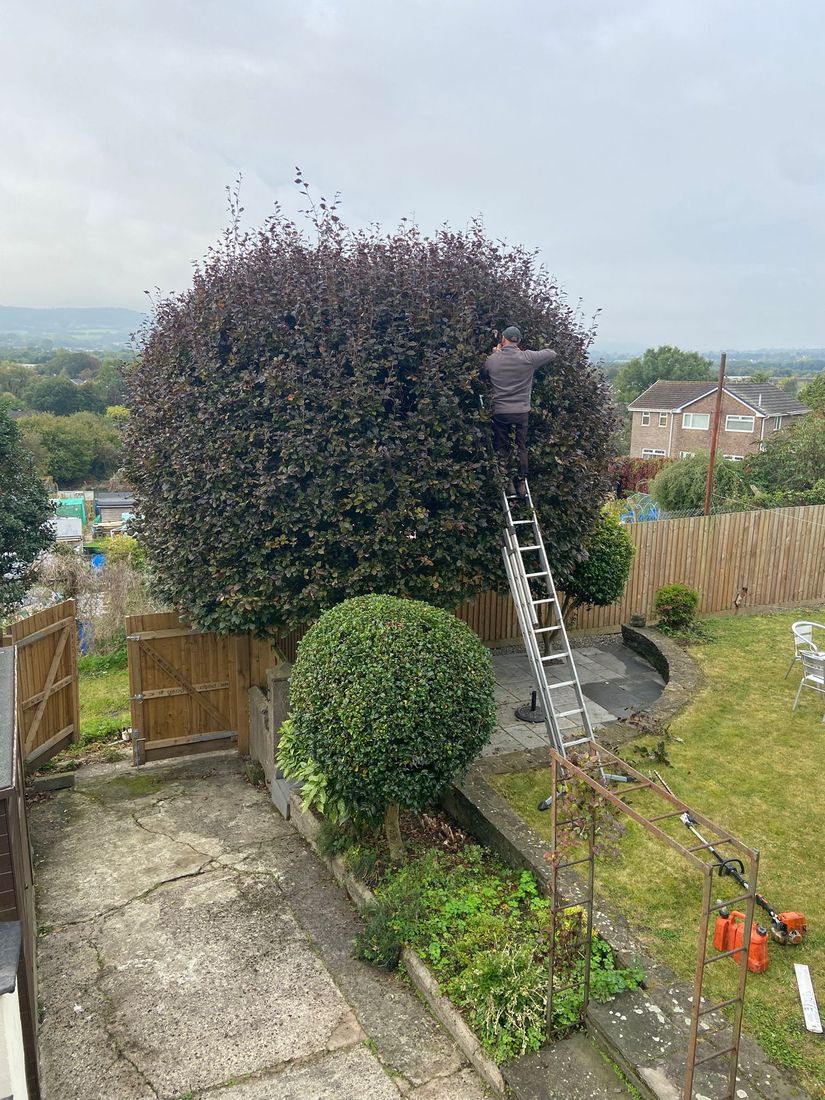
There is no single perfect month for every tree, but winter suits many species, and this guide shows how timing, nesting birds and weather affect the choice.
Read the guide →Cutting and clearing ivy carefully should not harm sound masonry, but sticky roots can stay on brick or render and take time to come away. Where ivy has pushed into loose pointing or cracks, the wall may show damage once the ivy is gone. We explain the risks before we start.
Cutting the stems at the base stops the plant taking up water, so the growth above starts to die back. Dead ivy comes away far more easily than living growth and is less likely to pull at brickwork, fence panels or bark. Then we remove it carefully.
Yes. We cut the stems at the base of the trunk so the ivy above can die back, rather than dragging it down from healthy branches. It is worth doing on trees where heavy growth hides the trunk, adds weight to branches or makes inspection difficult.
Yes. Ivy is a popular nesting place in spring and summer, so we look before we cut. If there is an active nest we leave that area alone and talk to you about timing. Wild birds are protected, so we will not risk disturbing a nest.
Tell us what needs doing and where. We will come back to you, or call 07766 919630 if it is urgent.