
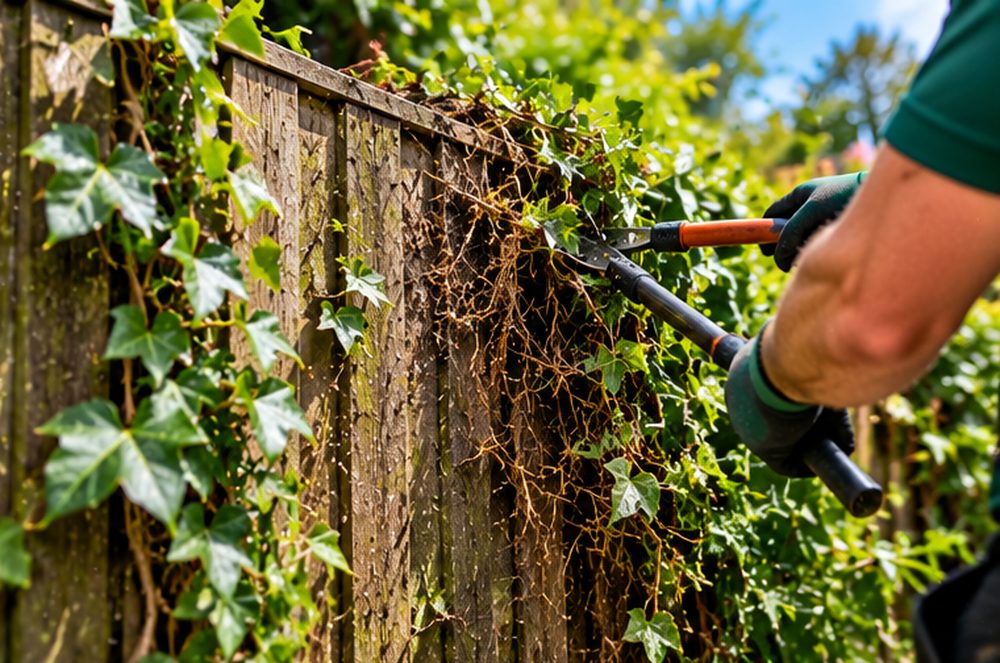
If ivy has taken hold of a wall, fence, garage or tree at your Bridgend home, we can remove it. The method is simple and careful: cut each stem at the base, give the growth time to die back, then take it down and away. That protects the surface underneath and avoids tearing the plant off while it is still gripping hard.
We cover Bridgend and nearby places including Pencoed, Brackla and Coity. Whether the ivy is on an old street frontage or a newer estate boundary, we can look at it with you and agree what is worth clearing.
Bridgend mixes older terraced streets with newer estates, and ivy behaves differently on each. On older brickwork it can root into worn pointing and keep the wall damp. On newer fences it tends to climb over the top and add weight, which speeds up rot at the posts. Either way, the first step is to cut the stems at the base. Left alone, it only gets harder to deal with.
Once the ivy is cut, the leaves begin to brown and the grip weakens. When it is ready, we lift it away in sections, working from the top down so it does not drop onto plants or paths. All the cuttings are bagged and removed from site, which saves you a trip to the tip. It is a steady job rather than a rushed one.
Outbuildings are some of the most common places we find ivy. It crawls up the side of a garage, across a felt roof edge and under the eaves of a shed. Left in place, it can lift roofing, block gutters and keep timber permanently damp. In Bridgend, side passages and narrow plots make this worse, because little air or sun reaches the wall.
After clearing, you can see the condition of the structure properly. Rot, cracks and gaps that were hidden may then need repair. We do not make repairs a condition of the work. We simply tell you what we noticed so you can decide what to do about it. Often, simply seeing the wall again is a relief, and you may find the building is in better shape than you feared.
Ivy on a tree trunk is treated with caution. We cut a clean section at the base and let the upper growth die back in place, rather than pulling it down and risking harm to the bark. Before cutting anything, we look for nesting birds. Some regrowth in Bridgend gardens is normal, so a light follow-up cut later can keep things under control.
A few jobs we have completed. We also work in and around Bridgend.
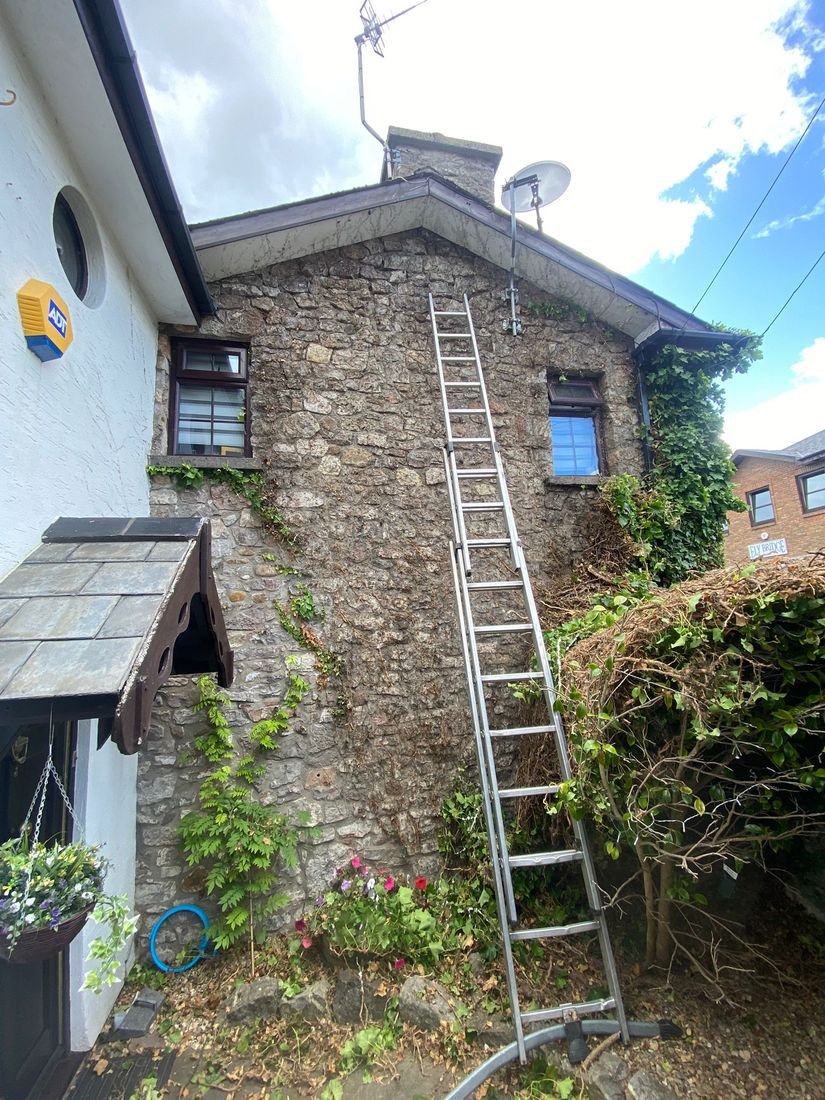
Ivy RemovalIvy being cut back from the stone gable of a cottage in Cardiff, with a long ladder up the wall beside the windows.
See the project →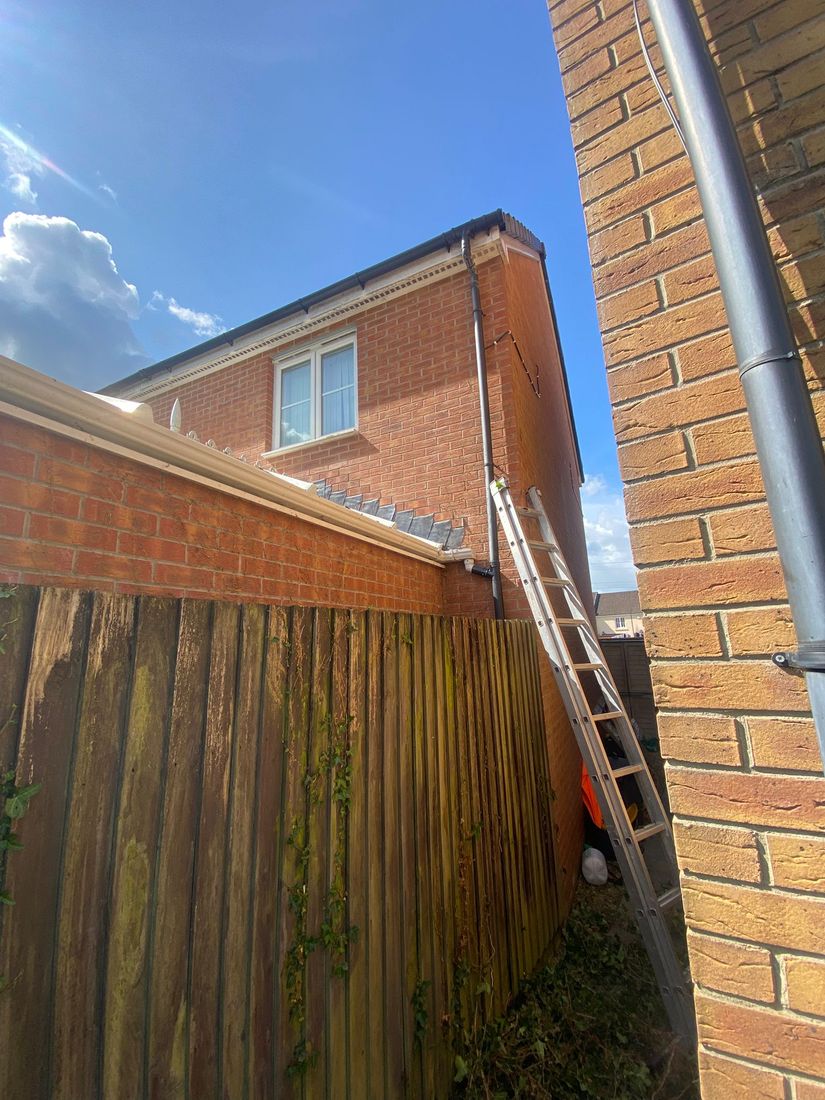 Ivy Removal
We cleared ivy from a close-boarded garden fence and the side of a brick house in Swansea, working from a ladder.
See the project →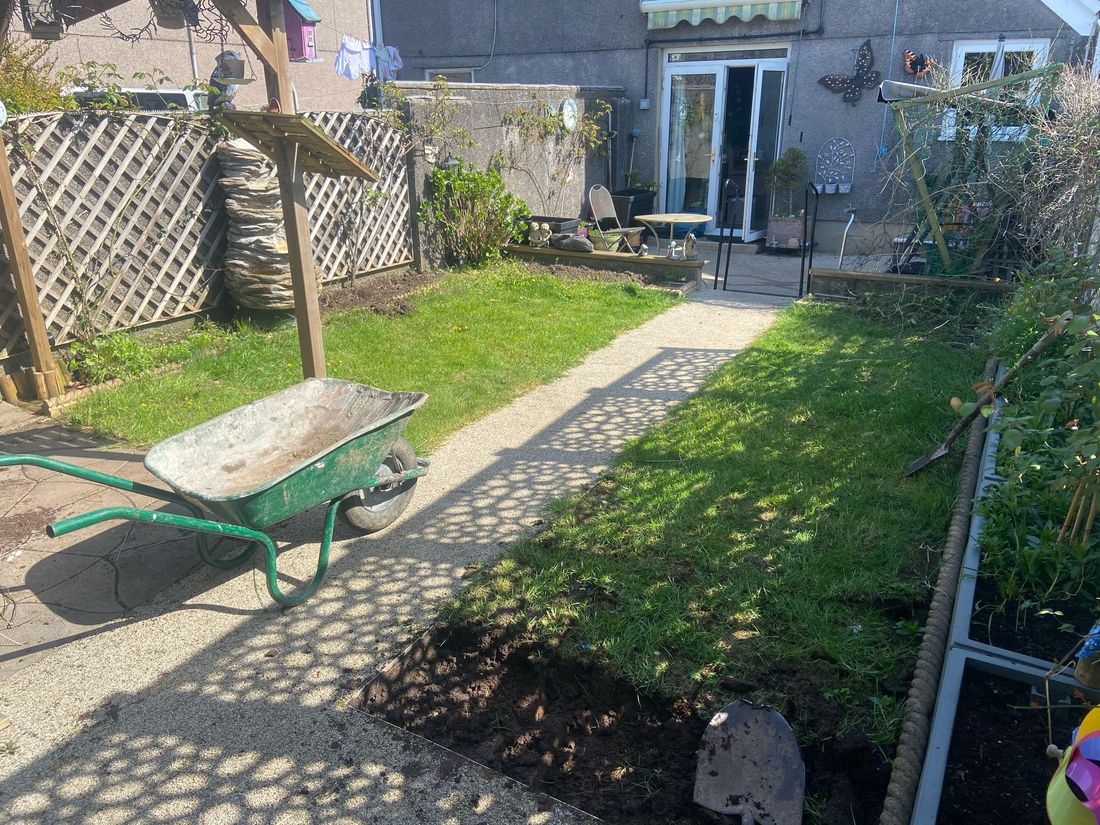 Artificial Grass
Early groundwork for artificial grass in a terraced Bridgend back garden, with the old lawn being cut back along its edge.
See the project →We work across South Wales. Pick your town to see how ivy removal works locally.
Ivy comes off brickwork most cleanly when it is cut at the base and left to die back first, rather than ripped away while still alive.
Read the guide →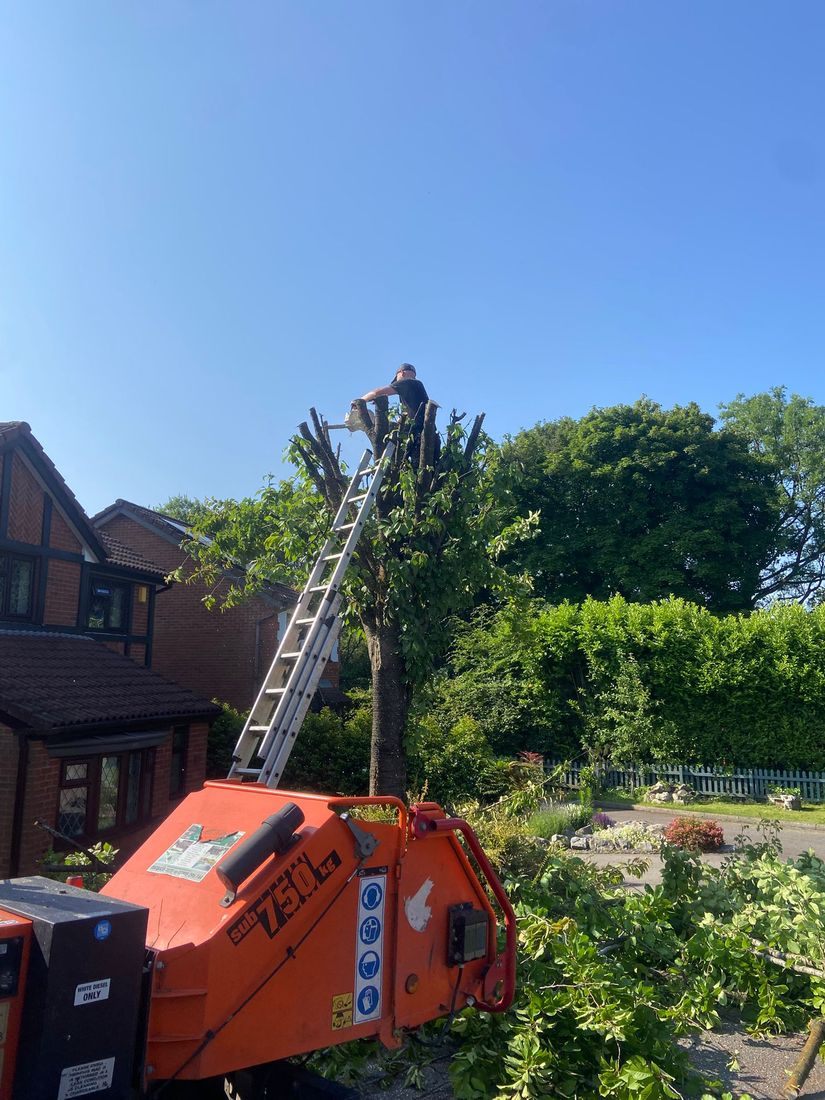
Tree surgery is priced job by job rather than from a fixed list, so this guide explains what moves the cost up or down and how to get a firm figure.
Read the guide →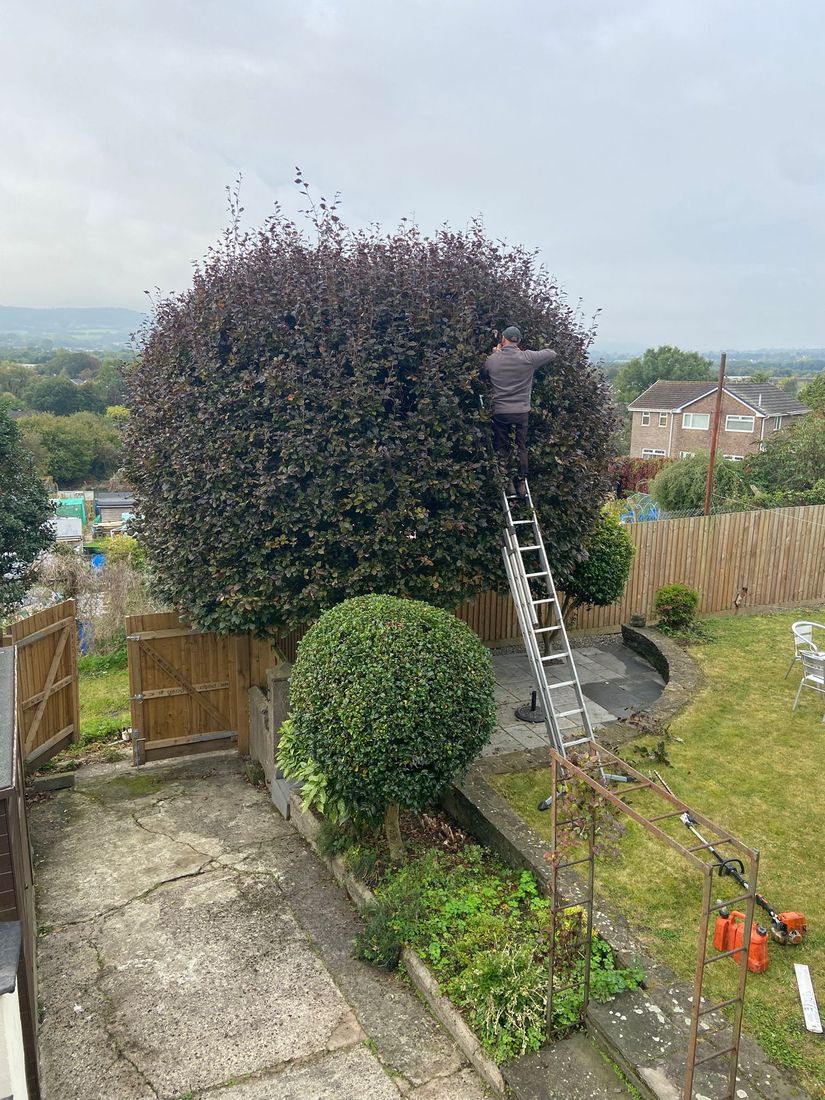
There is no single perfect month for every tree, but winter suits many species, and this guide shows how timing, nesting birds and weather affect the choice.
Read the guide →Yes. We cut the ivy at the base, remove what comes away easily and clear it from the site. If the fence panels have rotted under the ivy, we will point that out once the growth is off.
Cutting first is usually gentler. Green ivy grips firmly, and pulling it can take pointing or render with it. Cutting at the base lets the growth die back and loosen, which makes removal easier and safer for the wall.
We take it away. Cuttings are bagged or bundled and loaded into our vehicle, so you are not left with a heap of dead stems at the bottom of the garden or by the side of the house.
Tell us what needs doing and where. We will come back to you, or call 07766 919630 if it is urgent.