Brecon has plenty of stone-built houses, garden walls and outbuildings, and ivy clings to all of them. We remove ivy from walls, fences, sheds, barns and trees in Brecon by cutting the stems at the base and then taking the growth down as it dies back, so the stone and pointing underneath are disturbed as little as possible.
We also work in nearby places such as Llanfrynach, Libanus and Talybont-on-Usk. If the ivy is on a boundary wall or a farm building, send us the details and we can talk through the approach, including whether it is better to wait for the growth to die back before anything is lifted.
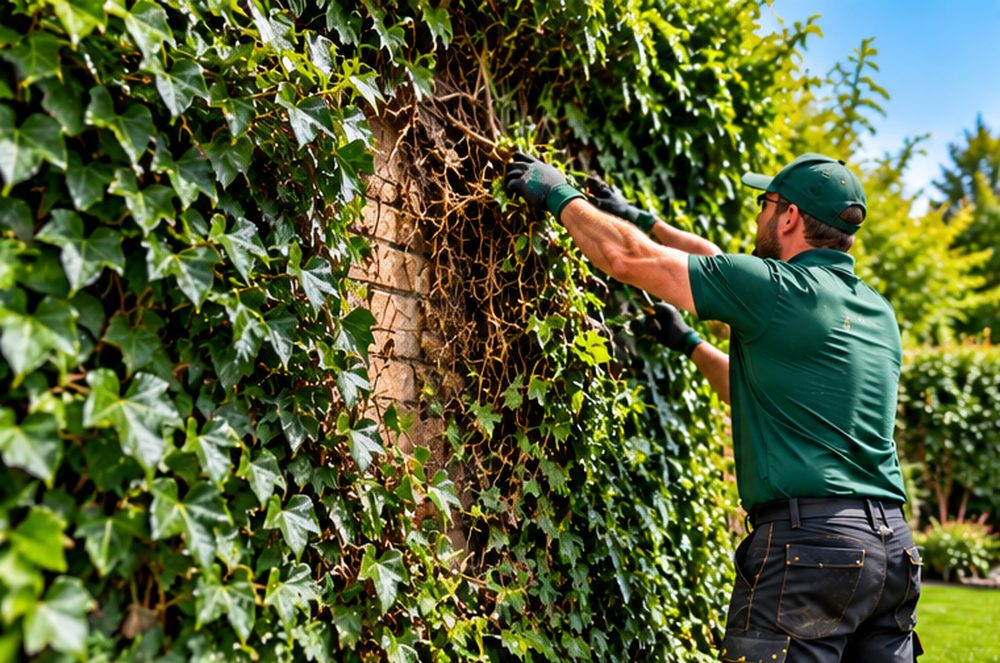
Old stone walls are often held together with soft lime mortar, and green ivy pulled from them can bring that mortar with it. Ivy roots also find their way into the joints, so the longer it is left, the harder it grips. We cut the stems at the base first and let the growth die back until it has loosened. Brecon has a lot of older masonry, so patience is usually the kinder choice.
Once it has dried out, we remove it in sections and take it away. Sticky rootlets left on the stone can take a long time to fade, and we do not scrape them off where that would harm the surface. We would rather leave a few marks than weaken a wall that has stood for generations. Anything we leave is explained, so you know what to expect as the weather works on it.
Around Brecon, ivy turns up on field boundary walls, hedge banks, barns and sheds. On outbuildings it can lift roof sheets, block guttering and hold dampness against timber, while on hedges and trees it competes for light and adds weight. Clearing it also shows what condition the structure underneath is really in, which is often the first thing owners of older farm buildings want to know.
Some boundaries are better left with a little ivy for wildlife, and we are happy to talk about that. If you want it gone from a particular wall, building or tree, we cut it back to the base and clear the area. Livestock fencing and gates need care on farmland edges, so we close them behind us and leave them as we found them.
Many Brecon gardens are big, with old trees where ivy has had years to climb. We cut a clean section through the stems at the base, leave the upper growth to die back and avoid tearing it off the bark. Nesting birds are checked for before cutting. Afterwards we take the waste away and tell you what we found underneath.
A few jobs we have completed. We also work in and around Brecon.
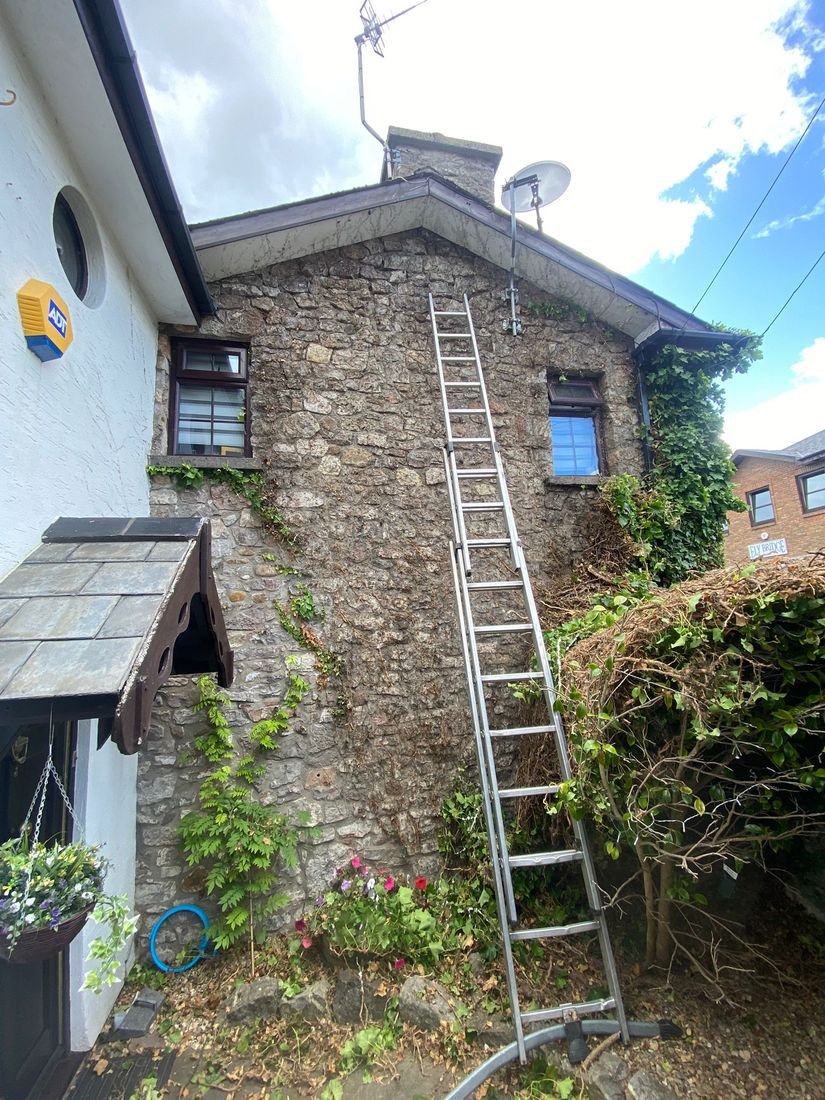
Ivy RemovalIvy being cut back from the stone gable of a cottage in Cardiff, with a long ladder up the wall beside the windows.
See the project →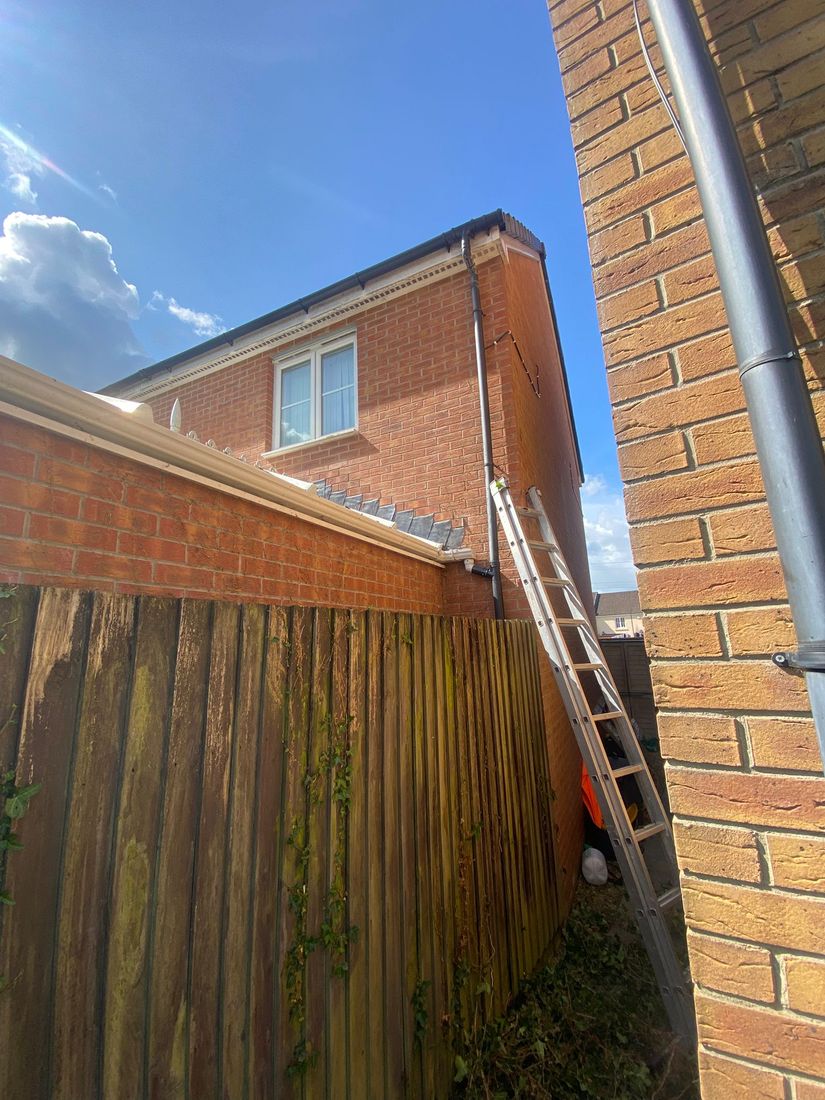 Ivy Removal
We cleared ivy from a close-boarded garden fence and the side of a brick house in Swansea, working from a ladder.
See the project →We work across South Wales. Pick your town to see how ivy removal works locally.
Ivy comes off brickwork most cleanly when it is cut at the base and left to die back first, rather than ripped away while still alive.
Read the guide →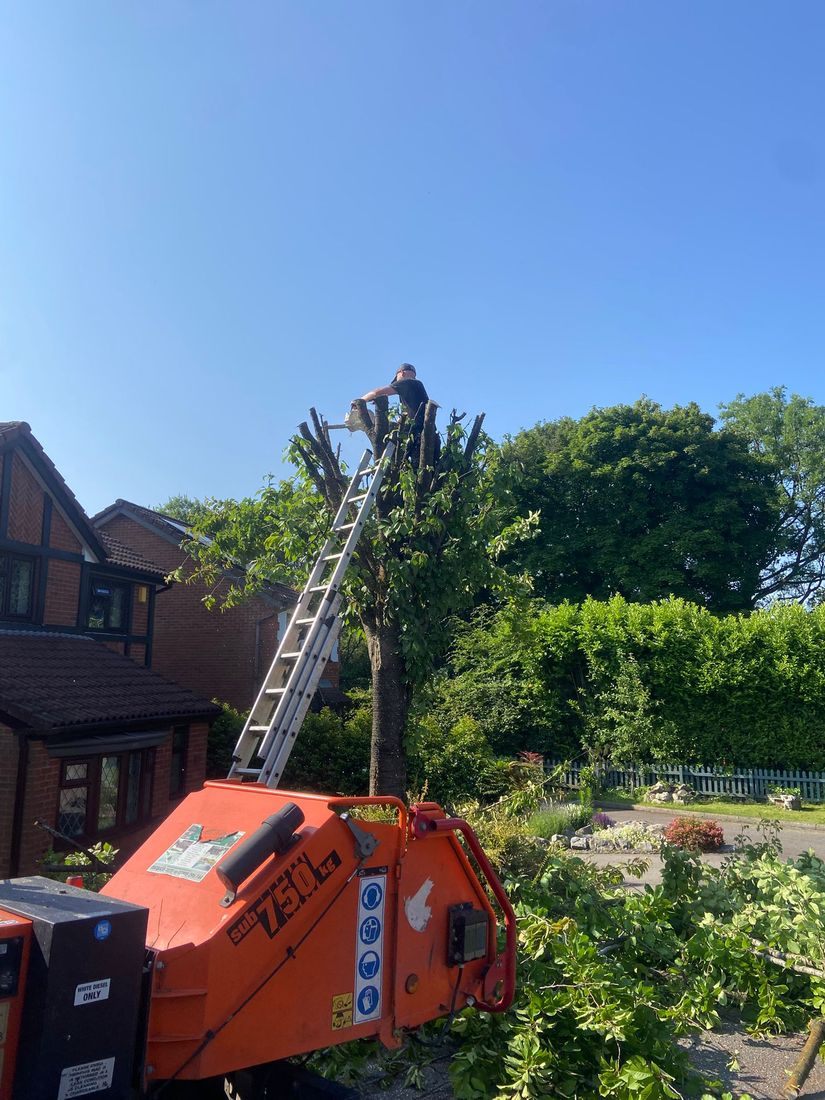
Tree surgery is priced job by job rather than from a fixed list, so this guide explains what moves the cost up or down and how to get a firm figure.
Read the guide →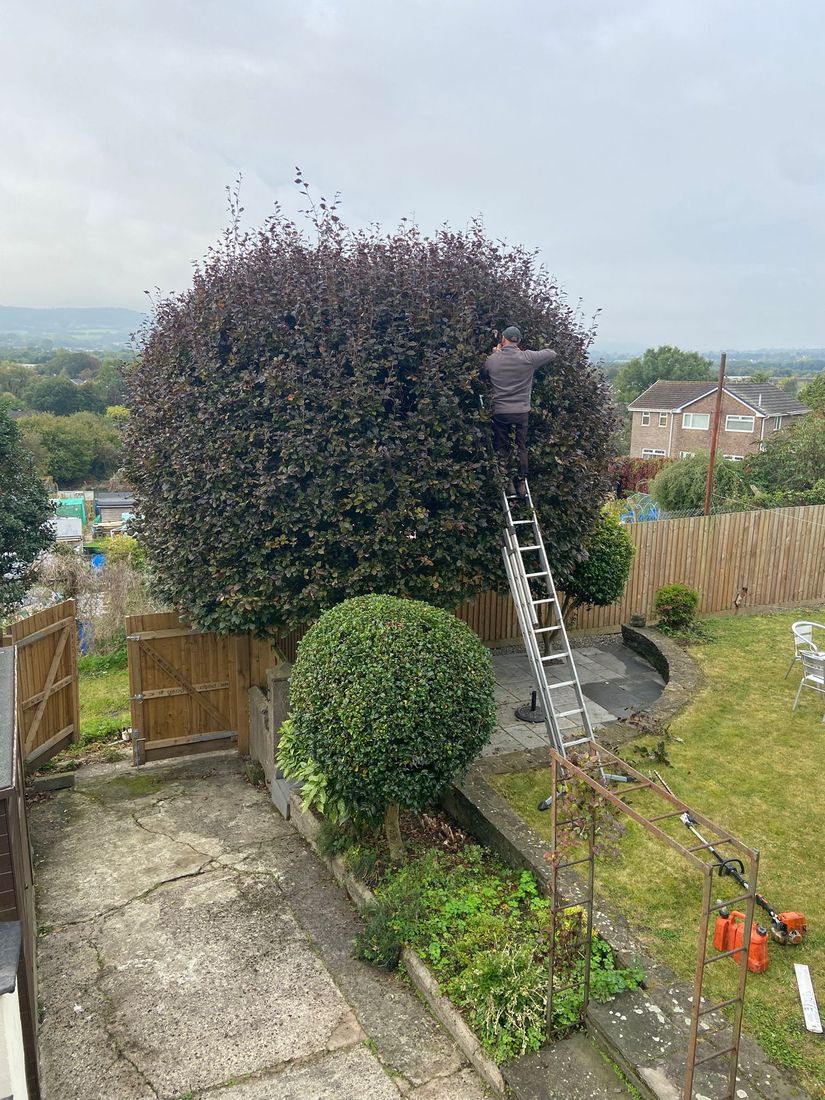
There is no single perfect month for every tree, but winter suits many species, and this guide shows how timing, nesting birds and weather affect the choice.
Read the guide →Not if it is done carefully. We cut the stems at the base, let the ivy die back and then lift it away once loose. Pulling it off green is what usually damages mortar, so we avoid doing that.
Yes, as long as we can reach it safely. Ivy on roofs, gutters and timber can hide damage, so we point out anything we find. Tell us about access, livestock and any parts you want left alone. We will confirm the plan first.
Not necessarily. A healthy tree often copes well, but heavy ivy can hide defects and add weight in wind. We can cut a clear band at the base and talk through whether you want the rest removed. The choice stays with you.
Tell us what needs doing and where. We will come back to you, or call 07766 919630 if it is urgent.