From Victorian terraces to newer suburban estates, ivy turns up in most parts of Newport. We cut it back and remove it from garden walls, fences, garages, sheds, chimneys and trees, then clear the waste, so you can see your boundary and your building again and the problem does not creep further.
Newport has a mix of housing, parks and mature street trees, and the ivy problems differ from one road to the next. We also cover Caerleon, Bettws, Rogerstone, Maindee and Duffryn, so tell us where you are and we will arrange a visit.
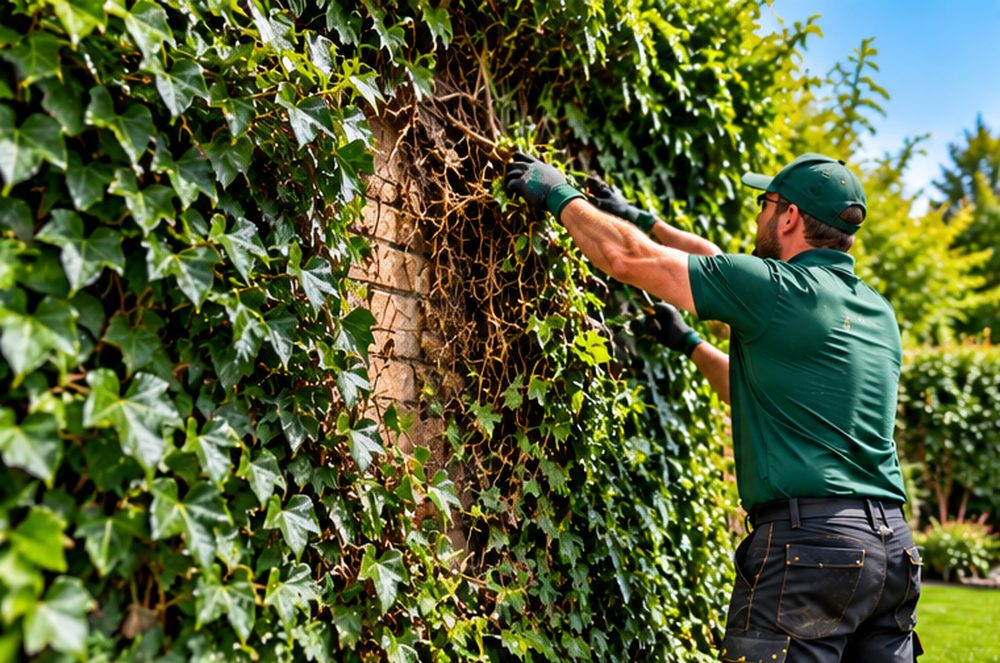
Back walls and yard walls on older Newport terraces are often thin brick with weathered mortar, and ivy finds every gap. Left alone, it holds moisture against the brickwork and works into the joints. We cut it at the base and ease the growth away in sections once it has withered, rather than yanking it off green and taking the face of the brick with it.
Chimneys and gable ends are a particular concern, because ivy there can reach flashing, pots and the roof edge. We deal with what we can reach safely from the ground or a proper access position, and we tell you when something looks like a job for a roofer instead. That saves you calling the wrong trade for a repair, and it avoids paying for ivy removal on a roof edge that really needs flashing attention.
On a suburban Newport estate, fences and garages sit close to neighbours, and ivy moves from one garden to the next. We cut it at the base on your side and take it off fence panels, posts, garage walls and sheds, working tidily so we do not leave debris in a neighbour's border. Where the ivy has been growing through the fence from next door, we cut it flush on your side and tell you it will need dealing with at the source.
Lightweight panels, felt roofs and thin cladding can suffer under a thick coat of ivy, so we are careful when lifting it away. If something has already weakened or rotted underneath, we show you. Sticky roots on masonry can stay for a while, and we say so before we start, so you hear about it from us beforehand and not afterwards, when the marks are already on the brick.
Newport has plenty of mature trees, including those near its parks, and ivy often climbs them. In a private garden we cut the ivy stems at the base of the trunk and clear what we can reach. Trees on council land or the pavement are the council's to deal with, not ours. We check for nesting birds first, then clear and remove all the waste.
A few jobs we have completed. We also work in and around Newport.
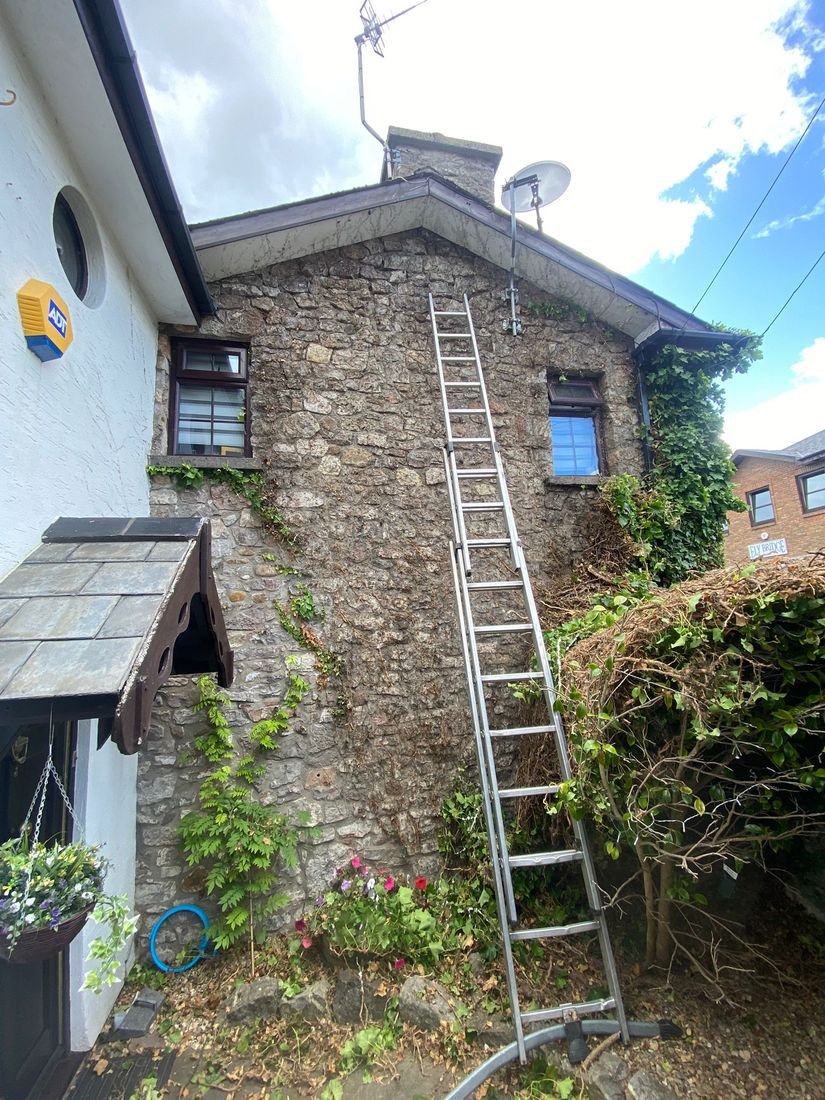
Ivy RemovalIvy being cut back from the stone gable of a cottage in Cardiff, with a long ladder up the wall beside the windows.
See the project →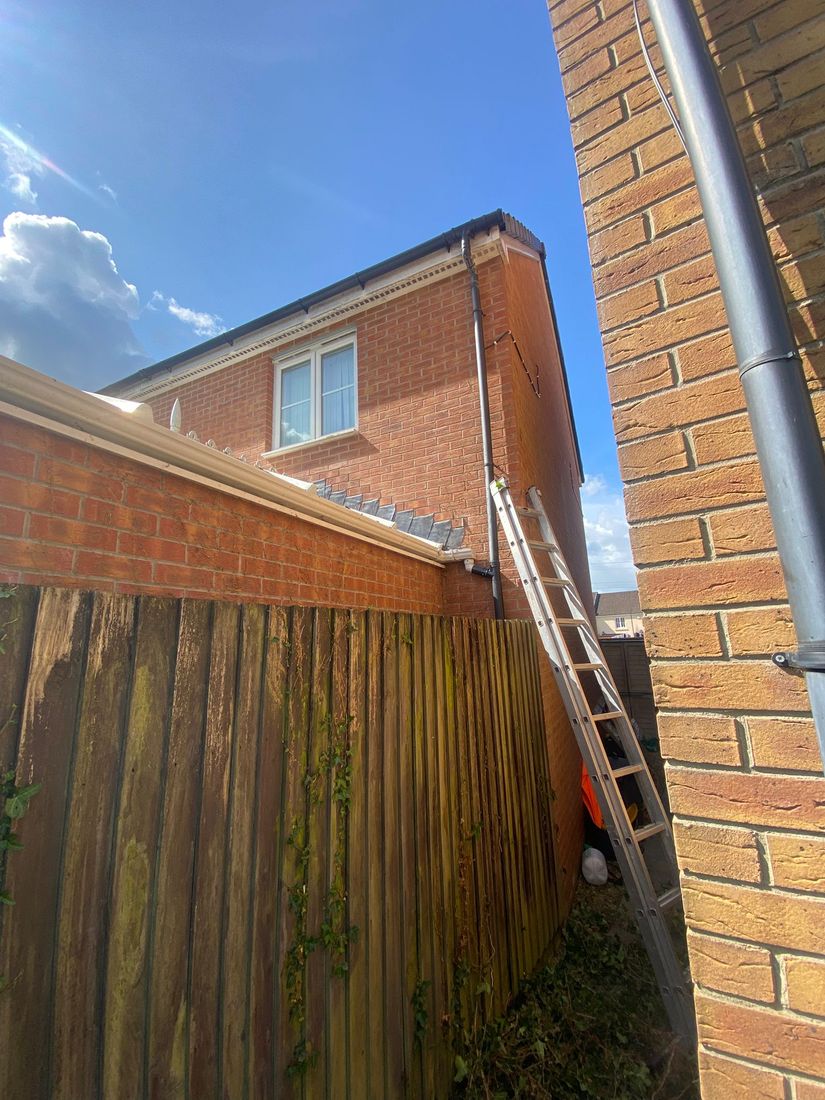 Ivy Removal
We cleared ivy from a close-boarded garden fence and the side of a brick house in Swansea, working from a ladder.
See the project →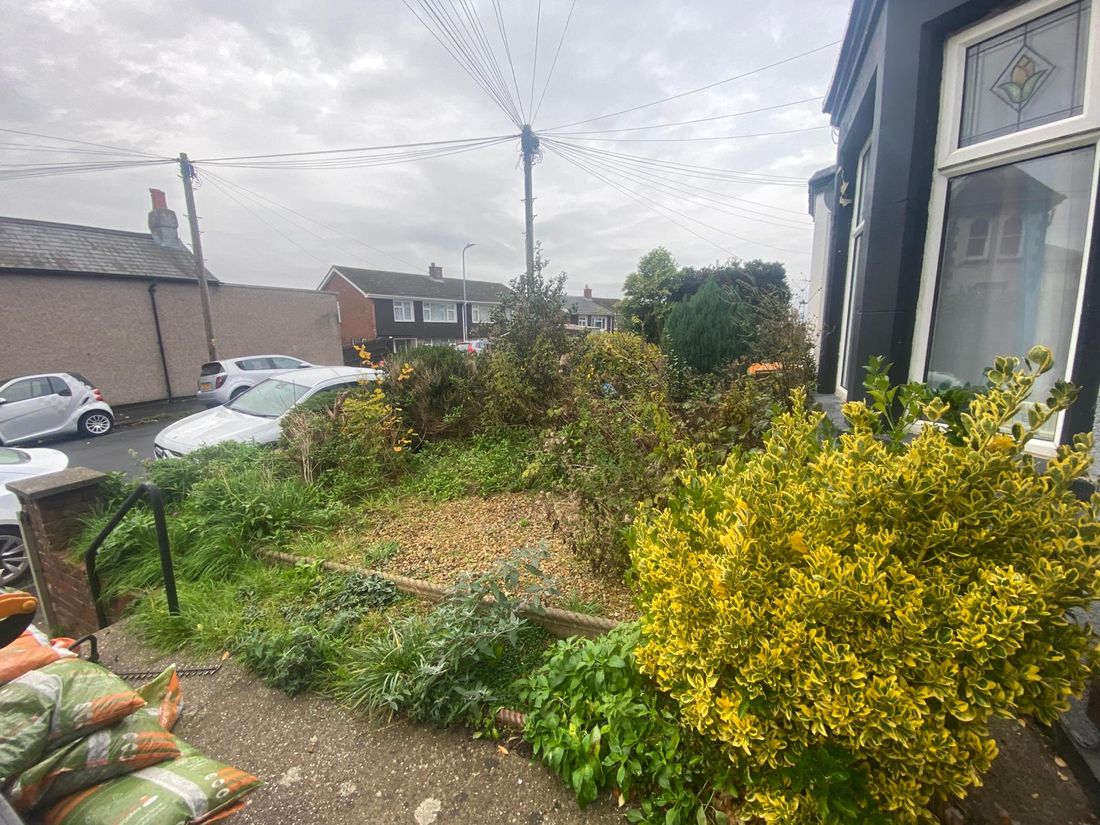 Garden Clearance
A selection of clearance work in Newport, including an overgrown front garden cut back and bagged, and a bramble-choked plot with bins.
See the project →We work across South Wales. Pick your town to see how ivy removal works locally.
Ivy comes off brickwork most cleanly when it is cut at the base and left to die back first, rather than ripped away while still alive.
Read the guide →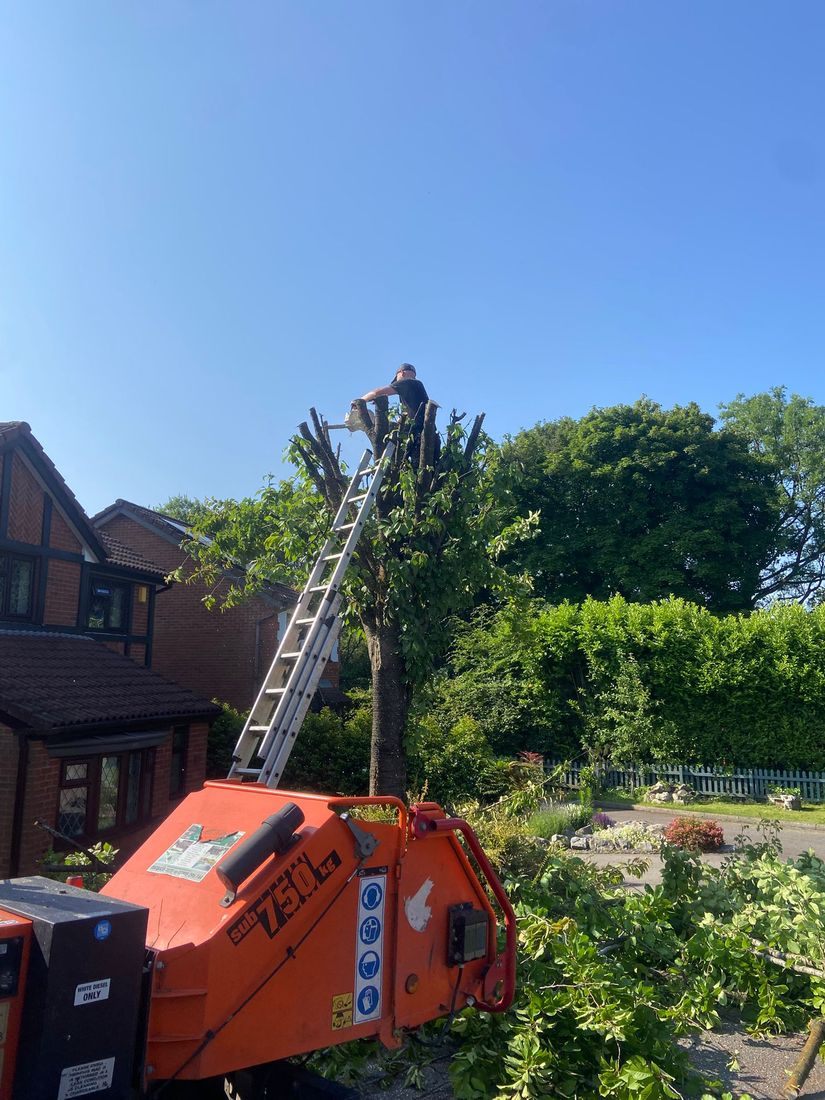
Tree surgery is priced job by job rather than from a fixed list, so this guide explains what moves the cost up or down and how to get a firm figure.
Read the guide →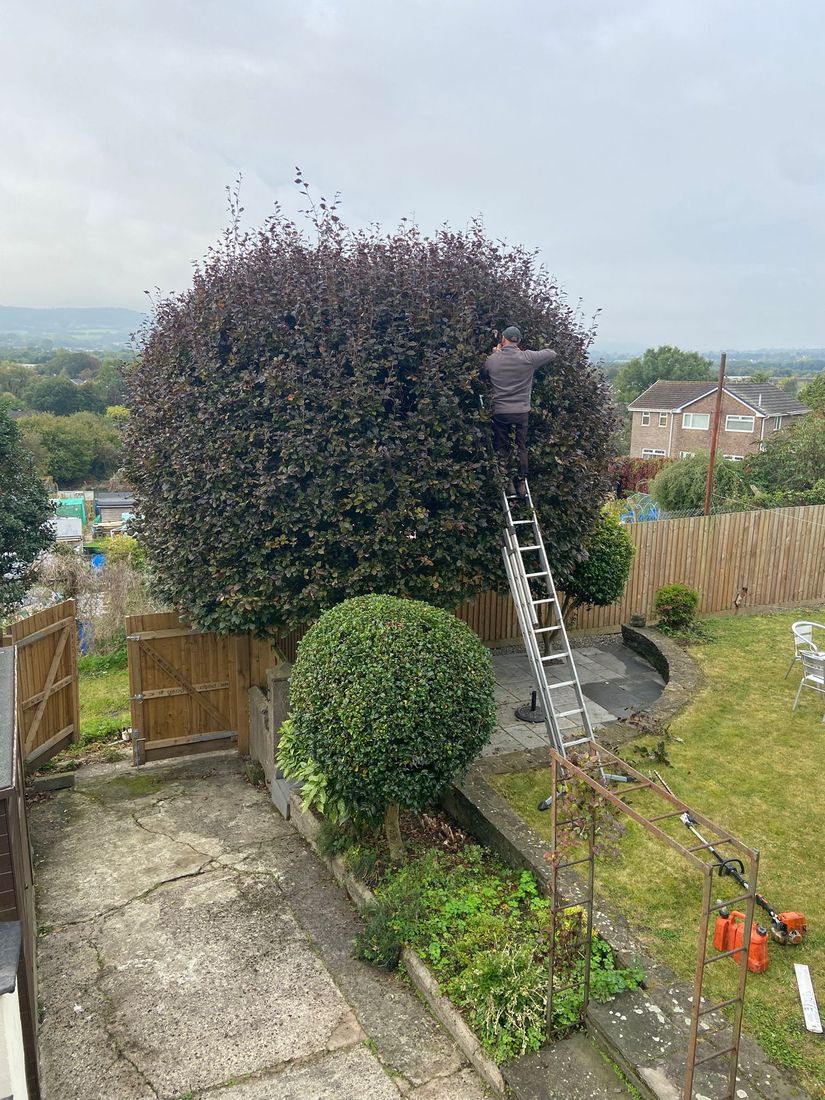
There is no single perfect month for every tree, but winter suits many species, and this guide shows how timing, nesting birds and weather affect the choice.
Read the guide →We can deal with ivy we can reach safely, but a high chimney may need roof access. We will look first and tell you whether it is a job for us or for a roofer, rather than start something we cannot finish properly.
You can cut and clear it on your side. It is sensible to tell your neighbour first, as the roots or fence may belong to them, and the growth may come back from their side. A quick word usually avoids disagreements.
Not always. Sticky roots and marks may stay on the brick for some time. We cannot promise a spotless wall, but we will tell you what is likely, clear all the main growth, and let you decide whether the remaining marks need cleaning.
Tell us what needs doing and where. We will come back to you, or call 07766 919630 if it is urgent.