
A good fence gives a garden privacy, keeps children and pets in and marks a boundary clearly. We supply and fit new timber fencing for homes, landlords and businesses across South Wales, including close-board and panel fencing with firmly set posts, and we replace tired panels and posts where the rest of the run is still sound.
Every job starts with a look at the site. We agree the line, height, style and cost with you before any work begins, then take out the old fence if there is one, put up the new and clear away behind us. We work for homeowners, landlords and small businesses, and we are happy to talk through options first.
Fences usually fail at the posts first. Timber that sits in damp ground for years can rot near the base, so a panel may look fine while the whole run leans in the wind. Gaps, loose boards and sections that move when you push them are all signs. Sometimes a few panels or one post will do, and other times a full replacement is more sensible.
Weather in South Wales is a real test. Exposed coastal gardens take strong wind, while wet valley sites keep the ground damp for long periods. We look at how your fence has aged, tell you honestly whether repair makes sense, and explain what we would change so that the new fence stands up better to those conditions. It also helps to say whether a pet or a child is likely to push against the boards.
We measure the boundary, mark the line and agree the height and style with you. Close-board gives a solid, private finish, while panels suit straighter runs and can be a simpler option. Posts are set firmly, and gravel boards go along the bottom so the timber is kept off the soil, which helps it cope better in wet ground. We explain the choice of finish, so that you know what you are getting before we order timber.
If an old fence has to come out, we take it down and remove it, so you are not left with rotten panels in a corner of the garden. On sloping gardens, which are common here, we step or rake the panels to follow the ground. When the job is finished we tidy the area and take all our waste away with us. If a post is hard to dig because of old concrete or roots, we deal with it as part of the job.
First, be clear who owns the boundary. Talk to your neighbours early, because a fence along a shared line is much easier to agree on before work starts than after. Check your deeds or the property details if ownership is uncertain, as we cannot settle a boundary dispute for you, and we would rather you were sure first. Photos of the existing fence help us understand the job before we visit.
Height matters too. Fences above a certain height, or next to a road, can need planning permission, and conservation areas or listed properties may have extra rules, so it is worth checking with your council. Tell us about access, slopes and any plants beside the line, and we will plan the work around them. Landlords may want to confirm the plan with tenants beforehand, so that access is easy on the day.
Real jobs we have completed.
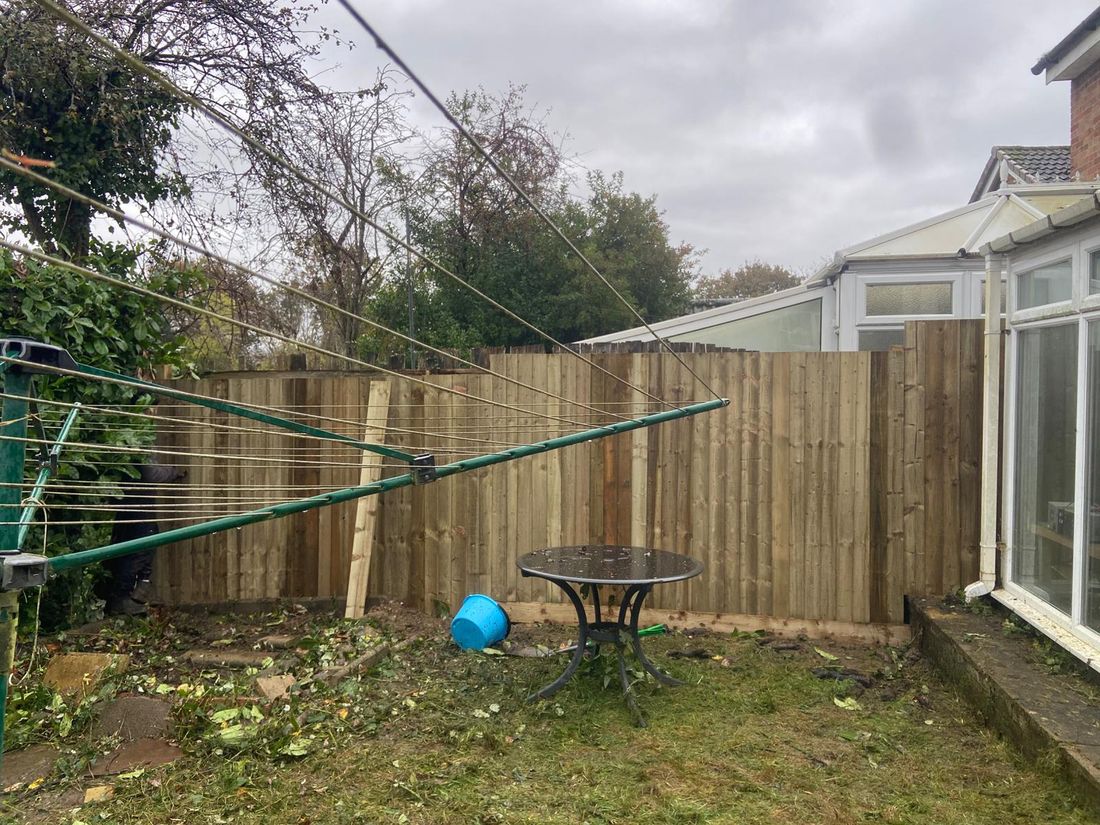
Garden FencingOld weathered fence panels taken down and new close-boarded fencing fitted beside a conservatory in a Cardiff back garden.
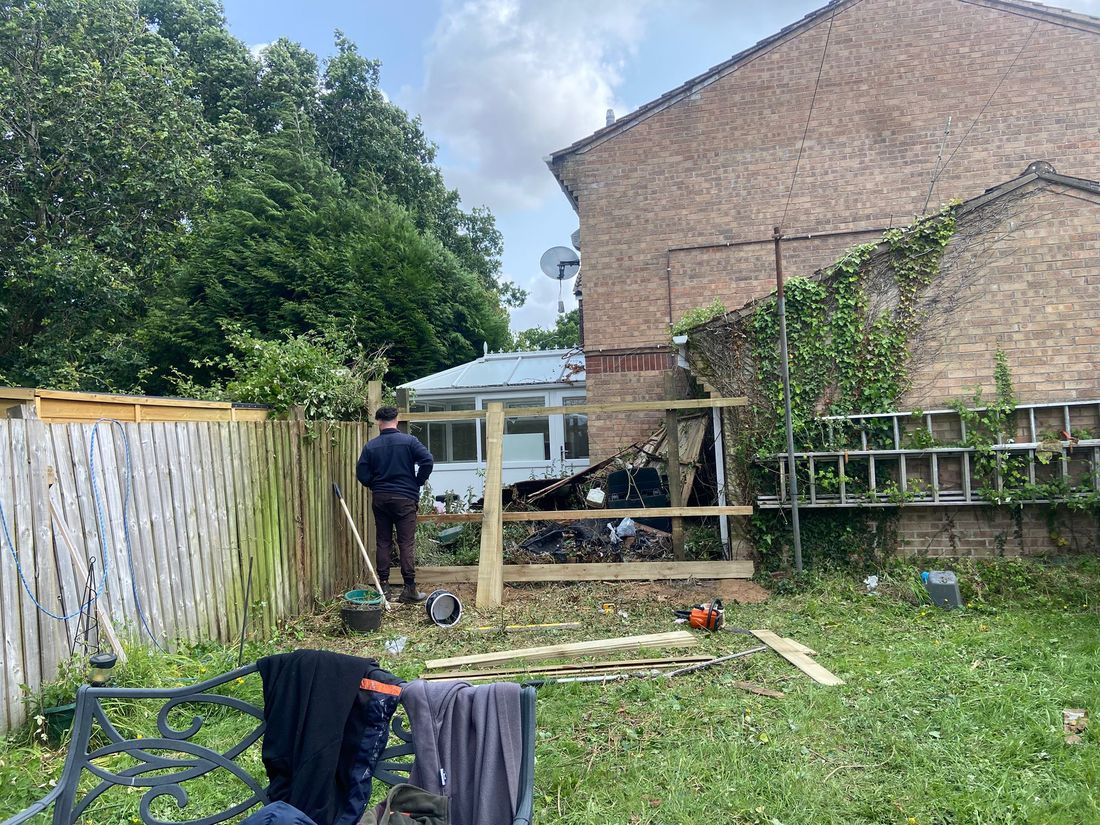
See the project →Garden FencingA fence replacement part-way through in a Cwmbran garden, with fresh posts and rails standing in the gap beside a brick house.
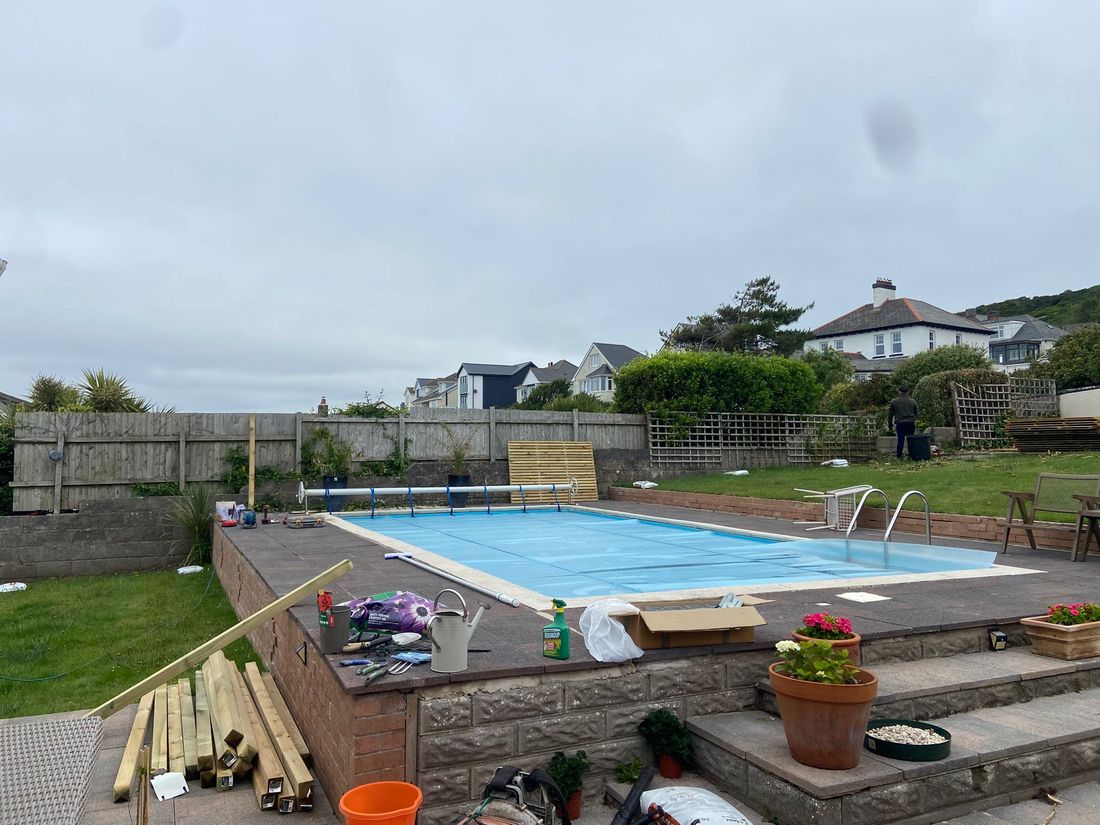
See the project →Garden FencingNew fence posts and a panel laid out beside a swimming pool in an Ogmore-by-Sea garden at the start of a fencing job.
See the project →We work across South Wales. Pick your town to see how garden fencing works locally.
For privacy, solid timber close-board or well-made lapped panels on firm posts usually work well, provided the fence suits your wind, slope and boundary.
Read the guide →Timber is the familiar, adaptable choice for most gardens, while composite trades a higher outlay for less upkeep, so the right answer depends on your priorities.
Read the guide →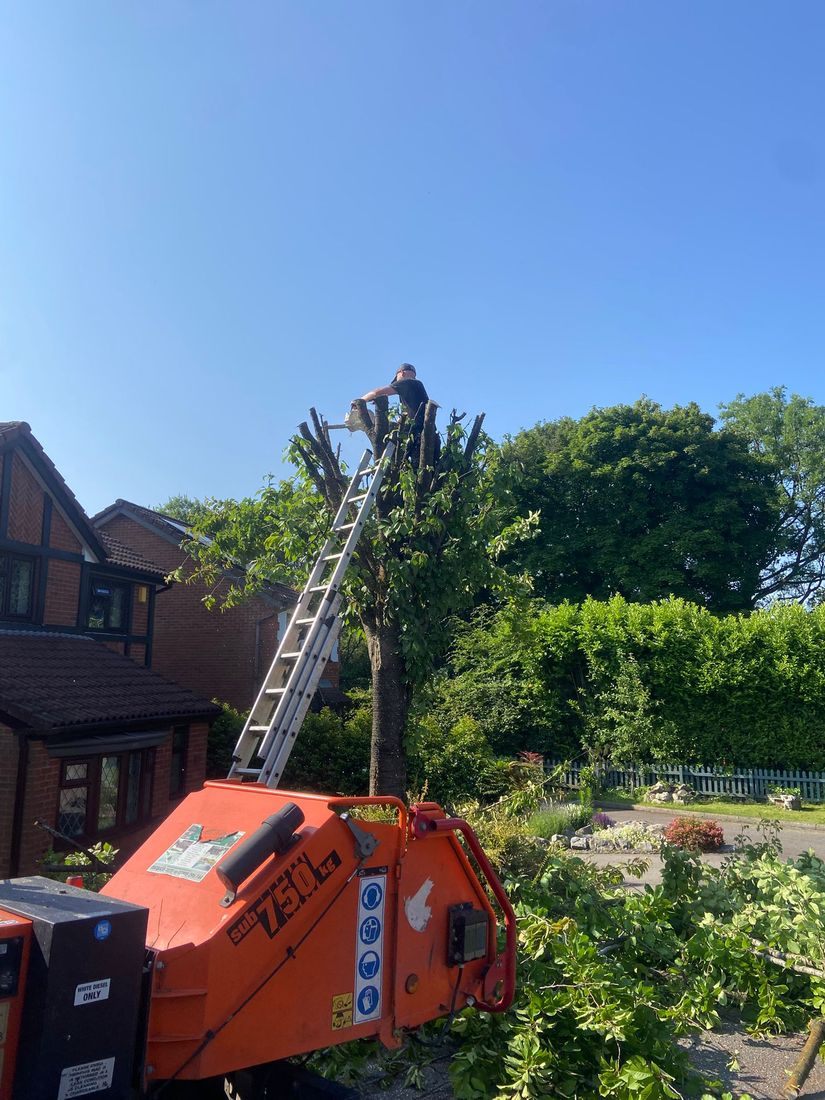
Tree surgery is priced job by job rather than from a fixed list, so this guide explains what moves the cost up or down and how to get a firm figure.
Read the guide →Yes, where the rest of the fence is still sound. We replace single panels or posts and match the style as closely as we can. If the posts are rotten along the run, we will say so honestly, because new panels on weak posts will not last.
Yes. We take the old panels and posts down and remove them with our other waste, so nothing is left lying in your garden. This is agreed when we look at the job, along with the new fence line, height and style.
Often not, but there are limits on height, and extra rules can apply beside a road, in a conservation area or on a listed property. We suggest checking with your local council before work starts. It is also wise to speak to neighbours about the boundary.
A gravel board is a low board fixed along the bottom of the fence. It keeps the panels clear of soil and damp, which helps stop the timber rotting from the base. It can also be replaced on its own later without taking the whole panel out.
Tell us what needs doing and where. We will come back to you, or call 07766 919630 if it is urgent.