Pruning keeps a tree healthy, balanced and in proportion with the garden around it. We shape trees, thin dense growth, take out deadwood and reduce crowns that have grown too large, working on fruit trees, ornamentals, mature garden trees and the fir and conifer hedges and specimens that are common across South Wales gardens. It suits large gardens and small ones alike.
This page explains what good pruning involves, how we run a visit and what to consider before the work starts. Our town pages further down show where we cover, so you can find the one nearest to you and see how the work applies locally. Ask if anything is unclear.
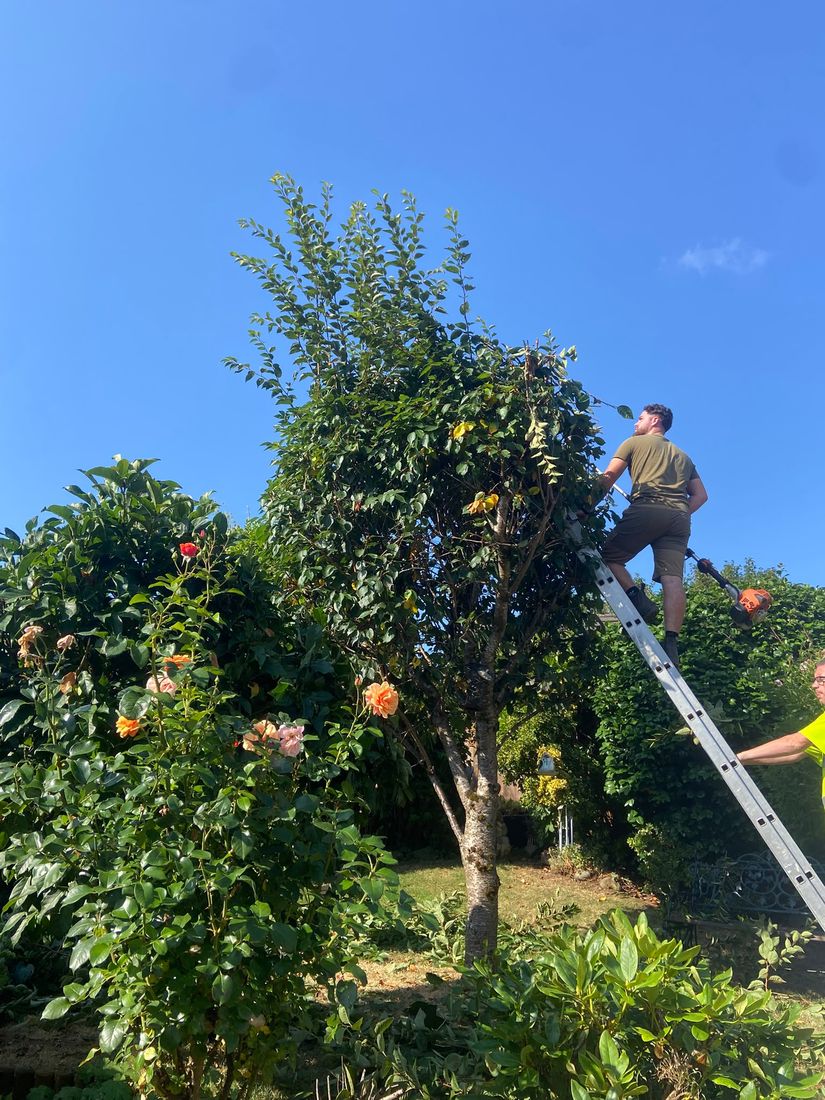
A well-pruned tree lets in light, looks natural and puts less strain on its own branches. Thinning opens up a crowded crown, deadwood removal clears branches that could fall, and a crown reduction brings an overgrown tree back to a more manageable size. Fruit trees are often pruned to keep their shape and make picking easier, and ornamental trees to keep them in scale with the plot.
Pruning is not a cure for every problem, and a tree should never be cut back harder than it can cope with. Conifers need special care, because they will not regrow from old bare wood. Cutting a fir right back to brown growth can leave a permanent gap, so we always keep the cut within the green and explain why before we start. That is the sort of mistake we help you avoid.
We look at the tree first, considering its species, its size, how it has been cut before and what you want from it, whether that is more light, less overhang or simply a neater shape. We then agree the work and the cost with you before starting, so you know exactly what will and will not be taken off and can ask about anything unclear. Nothing is cut that you have not agreed.
We make clean cuts at the right points, take only what is needed and keep the tree's natural form. Afterwards the cuttings and green waste are cleared away and the area is left tidy. Pruning suits homeowners, landlords with overgrown gardens, schools, and businesses with trees on their grounds, and it is often a sensible way to avoid bigger work later. We would rather do a little well than a lot badly.
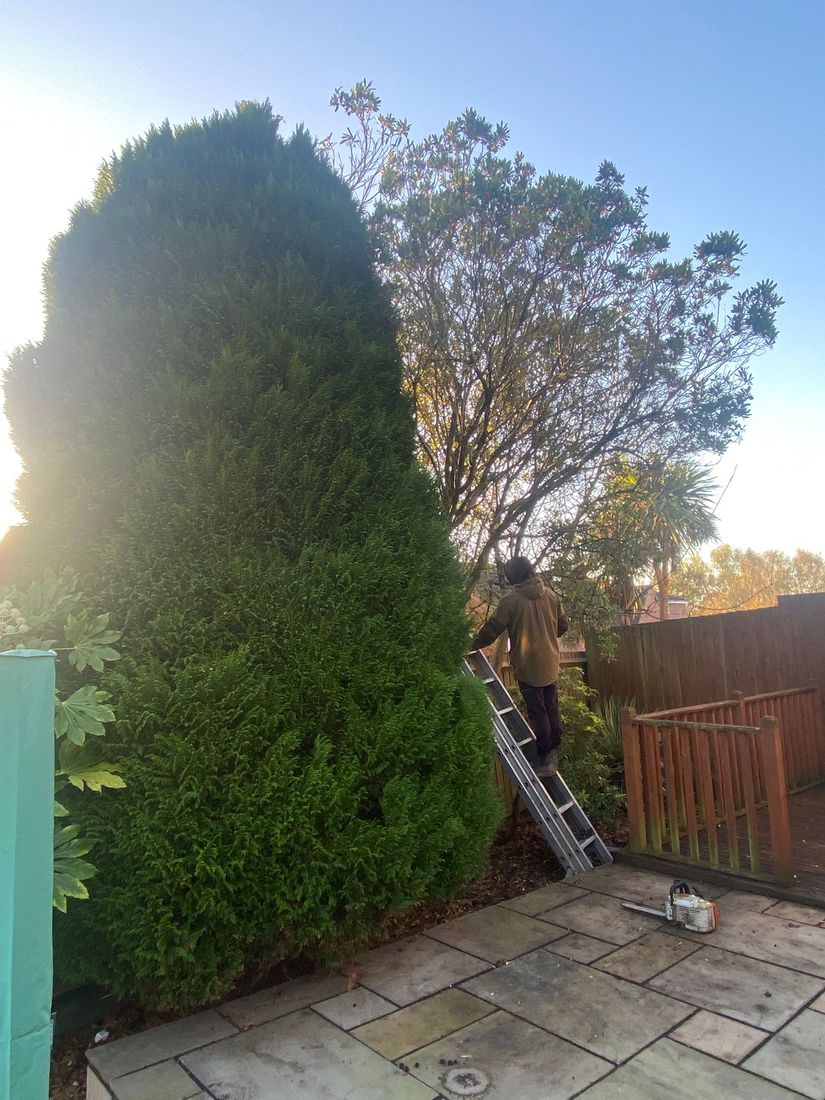
Timing matters. Many species are pruned in winter while dormant, though some are suited to another season, and we will advise on what suits your tree. Pruning is also avoided in the nesting season, as birds and their young are protected, and we plan around that wherever we can. Ask us early if you have a particular month in mind. It helps to know a few weeks ahead.
Across South Wales, sloping gardens and valley terraces can make access awkward, coastal trees take a battering from sea wind, and mature trees in conservation areas or under a Tree Preservation Order may need council consent before any cutting. Check with your local council first if you are unsure whether your tree is protected, and let us know what they say. That keeps everyone on the right side of the rules.
Real jobs we have completed.
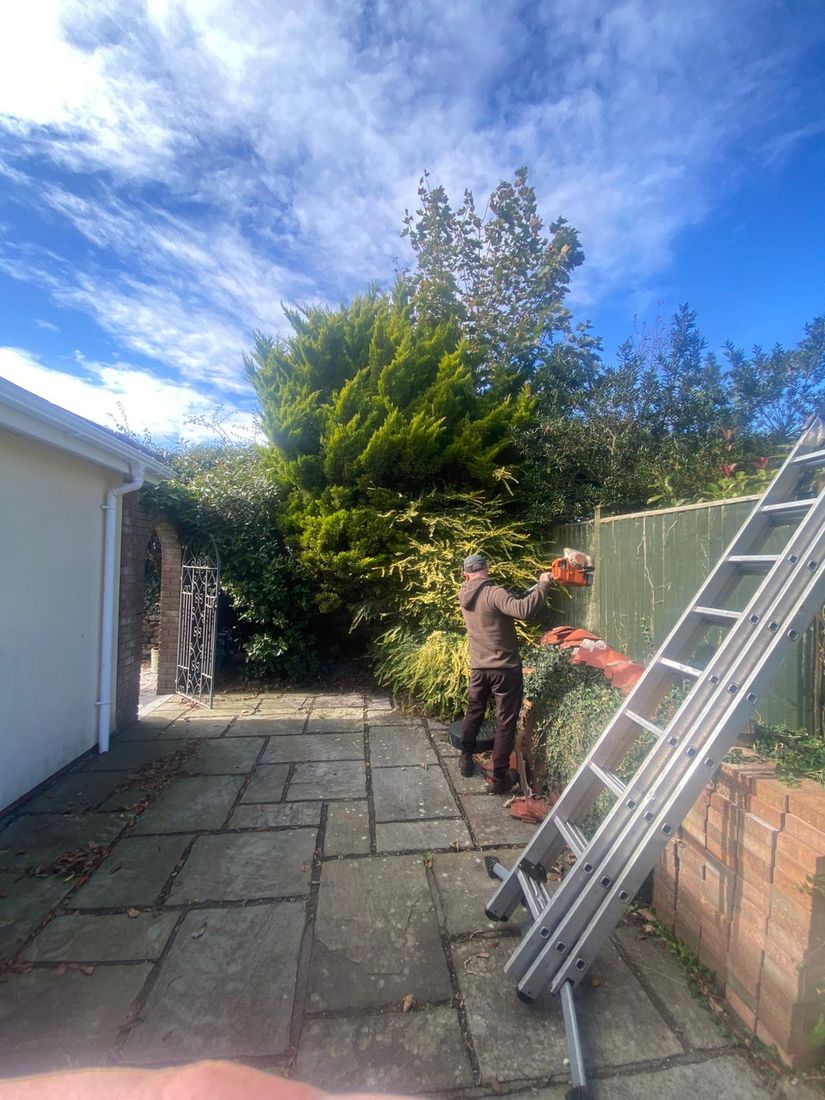 Tree Pruning
Cutting back a bushy evergreen from the ground beside a Bedwas patio, with a ladder ready against the wall for higher growth.
See the project →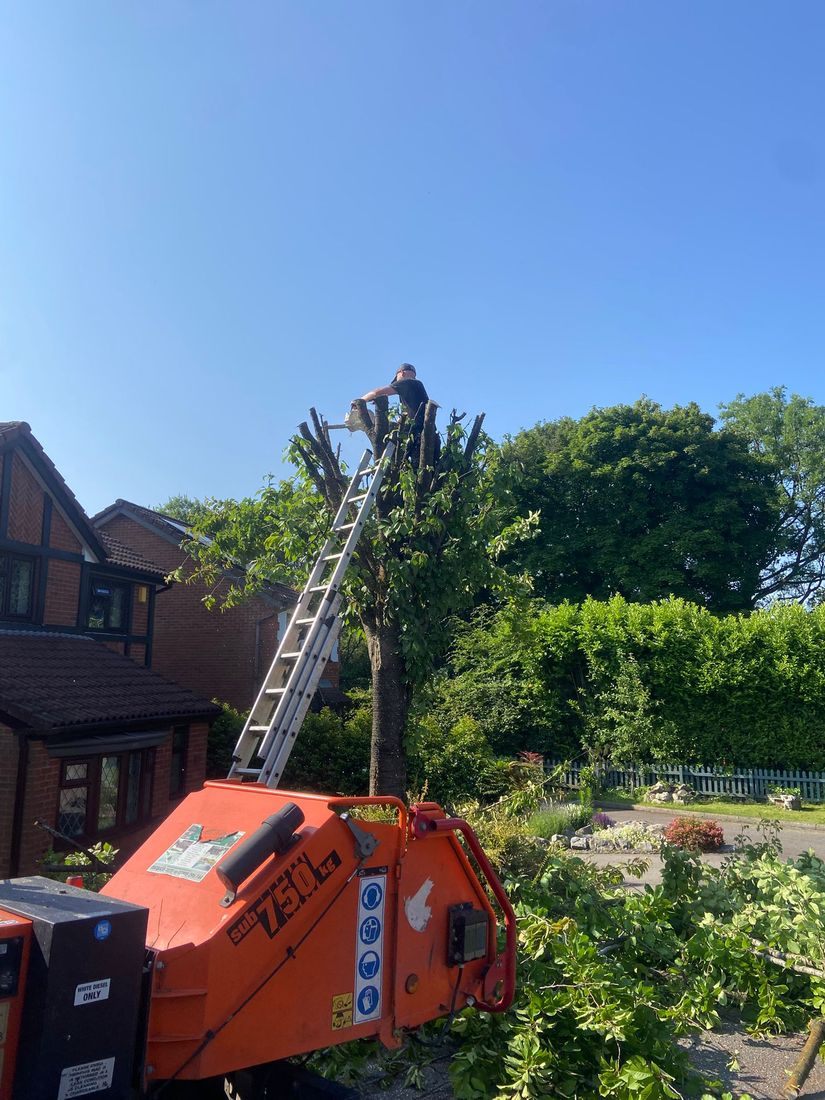 Tree Pruning
Cutting back a tree in a Blackwood front garden from a ladder, with the chipper beside the road taking the branches.
See the project →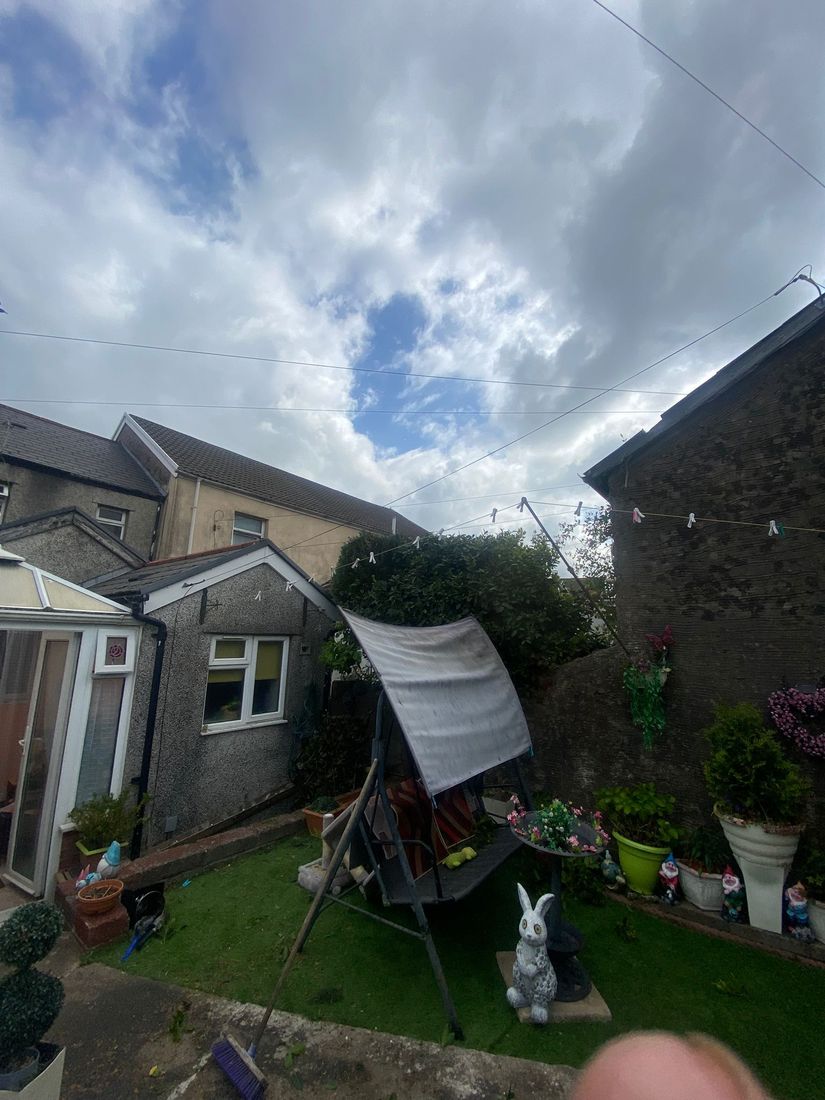 Tree Pruning
Pruning dense evergreen growth in a small terraced back garden in Caerphilly, working around a conservatory and a covered swing seat.
See the project →Tree PruningA selection of tree pruning jobs across Cardiff gardens, from a flowering tree and trimmed crowns to a tall clipped evergreen.
See the project →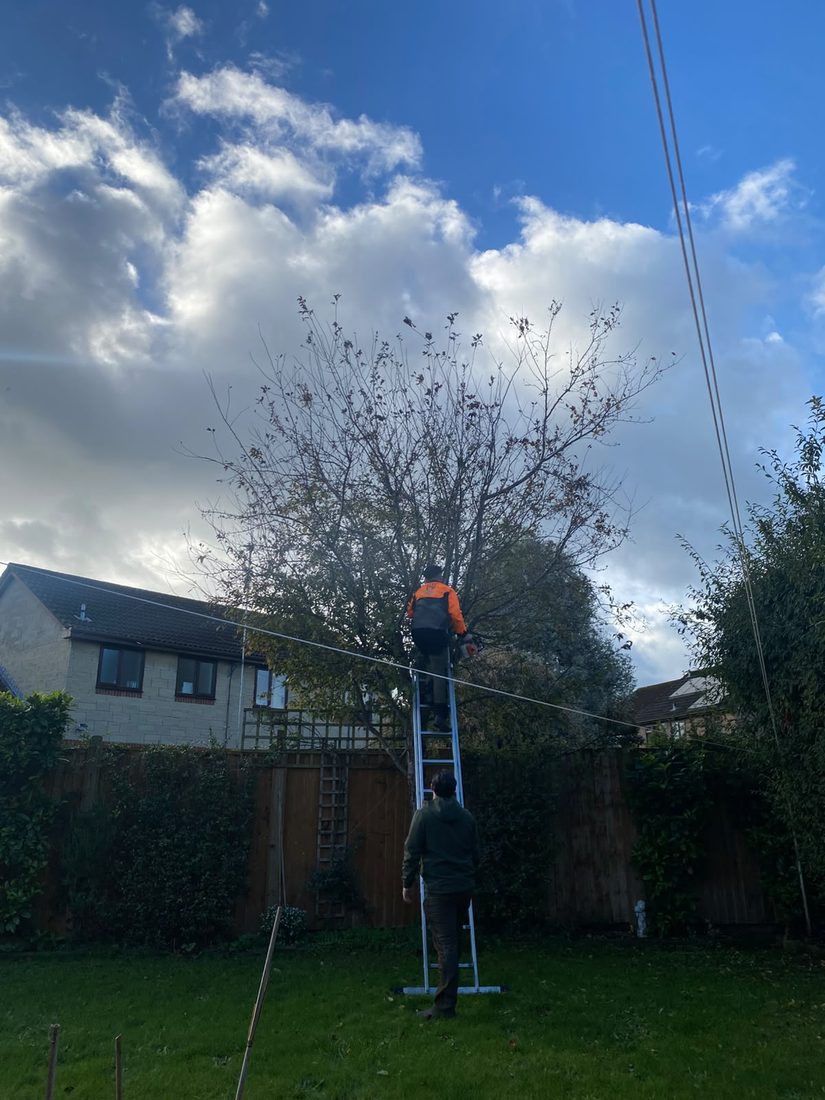 Tree Pruning
Pruning a garden tree from a ladder with overhead cables close by, then clearing up with the chipper at the kerb.
See the project →Tree PruningReducing a very large conifer beside a paved patio in Pontprennau, with one of us working from a ladder at its side.
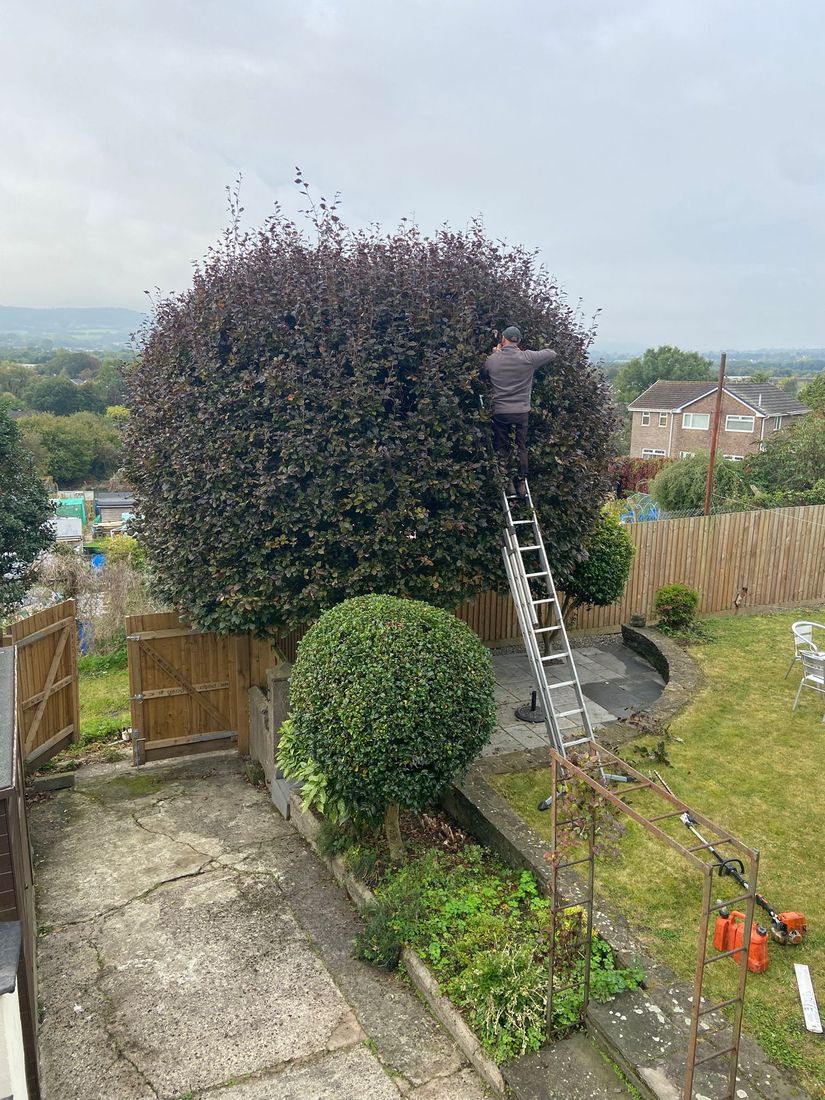
See the project →Tree PruningCutting a large purple-leaved tree into a neat, boxy crown from a ladder in a sloping Pontypool back garden.
See the project →We work across South Wales. Pick your town to see how tree pruning works locally.
There is no single perfect month for every tree, but winter suits many species, and this guide shows how timing, nesting birds and weather affect the choice.
Read the guide →Tall conifers can often be reduced safely, but only back to living green growth, because most will never regrow from bare brown wood.
Read the guide →Regular pruning keeps trees safe, balanced and healthy, brings light back into gardens and buildings, and usually avoids the larger and more disruptive jobs that neglect leads to.
Read the guide →It depends on the species. Many trees are pruned in winter when dormant, while some fruit and flowering trees prefer other times. We also avoid the nesting season for birds. Tell us what you have and we will suggest sensible timing for it.
Not all the way. Conifers will not regrow from old bare wood, so cutting back to brown growth can leave a permanent gap. We reduce them within the green growth so the tree keeps its shape and stays healthy for the long term.
We take off only what the tree can cope with, keeping its natural shape. Heavy cutting can stress a tree and leave it weaker, so we will explain what is sensible and, if needed, suggest spreading the work over more than one visit.
If a tree has a Tree Preservation Order or stands in a conservation area, you may need consent from the council even for pruning. Check with your local council before any work begins. We are happy to talk through what is needed with you.
Tell us what needs doing and where. We will come back to you, or call 07766 919630 if it is urgent.