Barry gardens take a battering from the sea. Salt-laden wind comes in off the Bristol Channel, and the trees that grow in Victorian and Edwardian terraces and on the 20th century estates have to be tough. Even so, they need regular shaping. We prune and reduce garden trees, thin dense growth and remove dead wood so they keep their form and stay in proportion with the plot.
A tree that is clipped back sensibly stands up to wind better than one that has grown top heavy and tangled. That is the idea behind most of the pruning we do around Barry, whether the tree is a conifer, a fruit tree or an old ornamental.
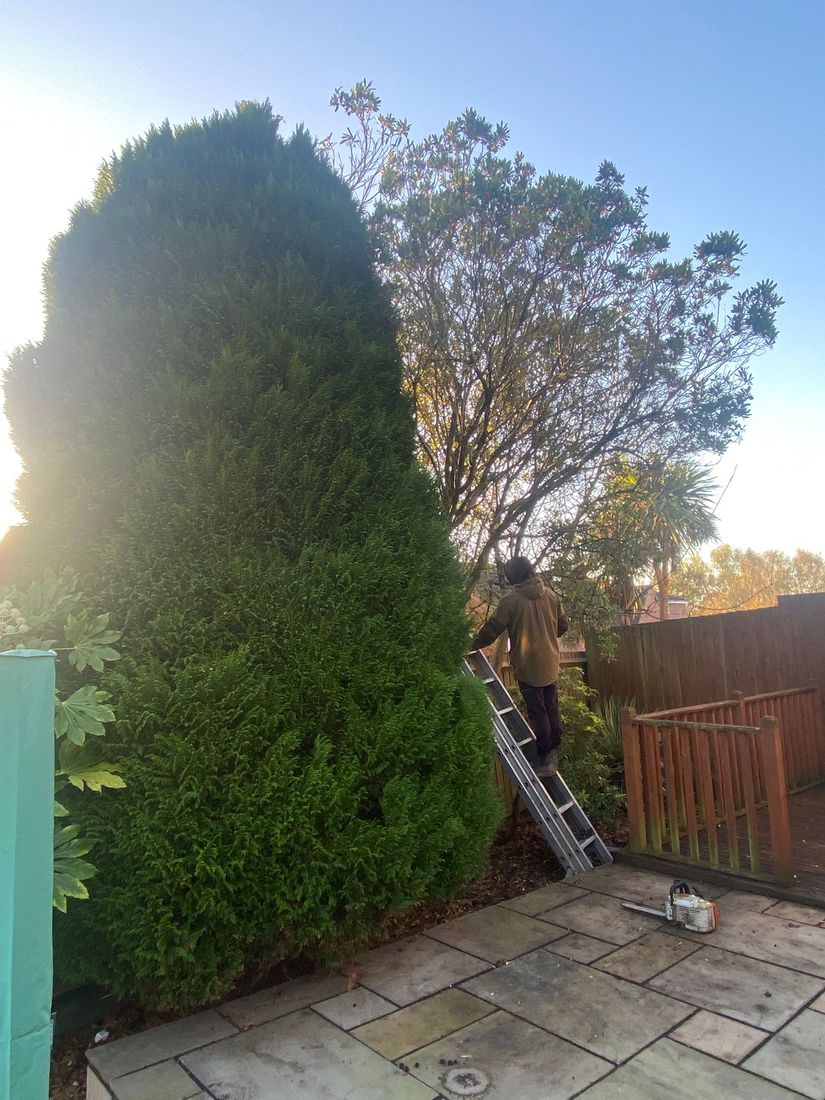
Constant coastal wind makes some trees lean and others grow thick and unbalanced on one side. Pruning can put that right. We shorten the heavy limbs, take out crossing branches and open the crown a little so the wind can pass through instead of pushing against a solid mass. The result is a tree that looks more even and carries less strain in a blow.
We never prune just to make a tree smaller, even in a small Barry yard. Every cut should have a reason, whether that is clearing a roofline, lifting light into a back garden or removing a branch that has died. In older terraced streets, where trees crowd small yards, we plan the work so each limb is lowered under control and nothing lands on neighbours or fences.
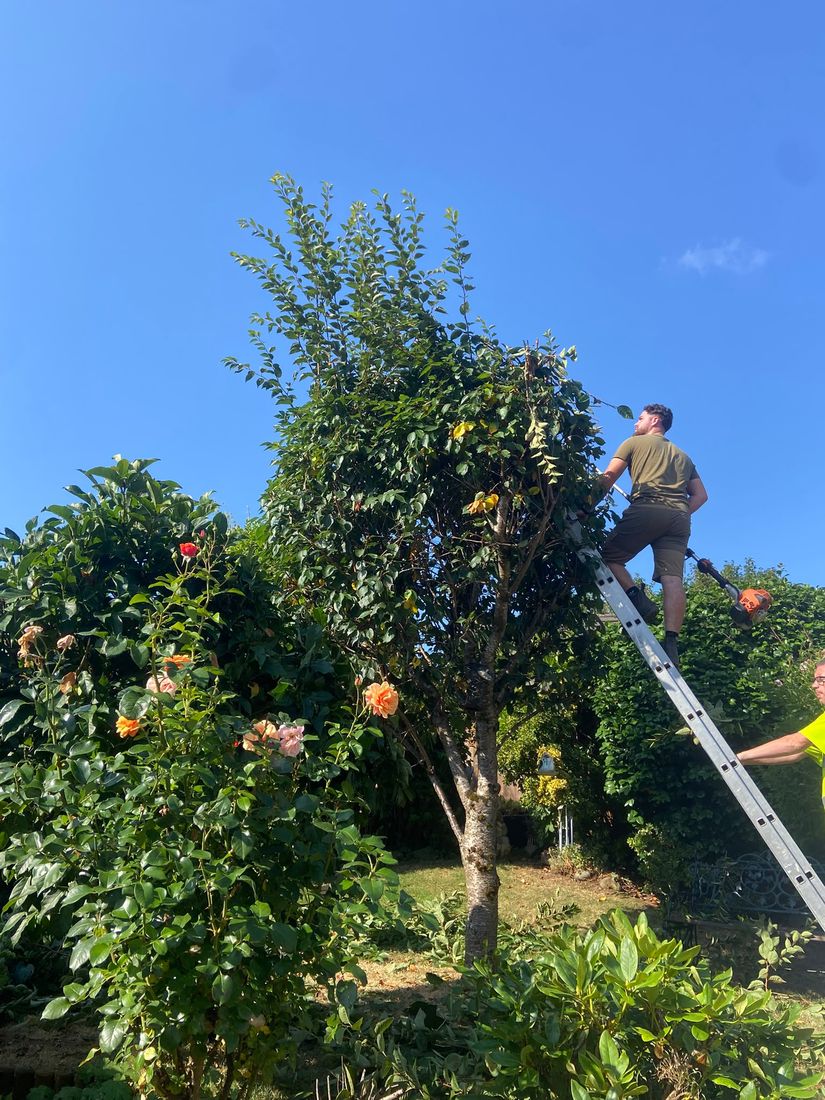
Conifers and Leylandii are common in Barry gardens, and they are often the trees people ask us about first. They grow quickly and block light, but they have one rule: they will not regrow from old bare wood. Cut back to the brown centre and the gap stays for good, so we reduce them only within the living green growth, keeping the tree tidy without damaging it.
If a conifer has already been left too long, we will tell you straight. Sometimes a modest reduction keeps it tidy for a good while, and sometimes the honest advice is that it has grown beyond reshaping. Broadleaf garden trees and fruit trees are more forgiving, and we prune them in the season that suits the species, usually winter, so the cuts heal cleanly and the shape stays easy to judge.
We try to avoid the nesting season, which matters in a town with so many gardens and hedges full of birds. Tell us about the tree, how it can be reached and whether anything sits close underneath, and we will explain how we would tackle it. We clear away all cuttings when finished. We also cover Penarth, Rhoose, Dinas Powys and Sully.
A few jobs we have completed. We also work in and around Barry.
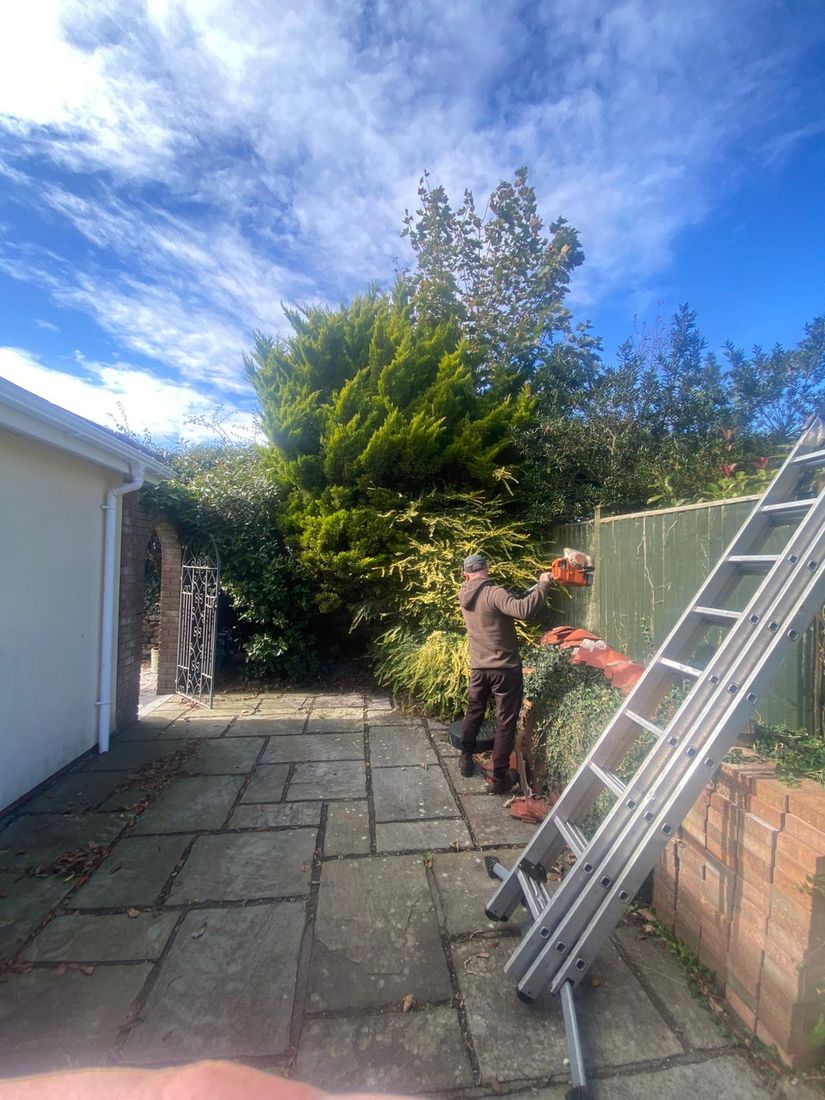 Tree Pruning
Cutting back a bushy evergreen from the ground beside a Bedwas patio, with a ladder ready against the wall for higher growth.
See the project →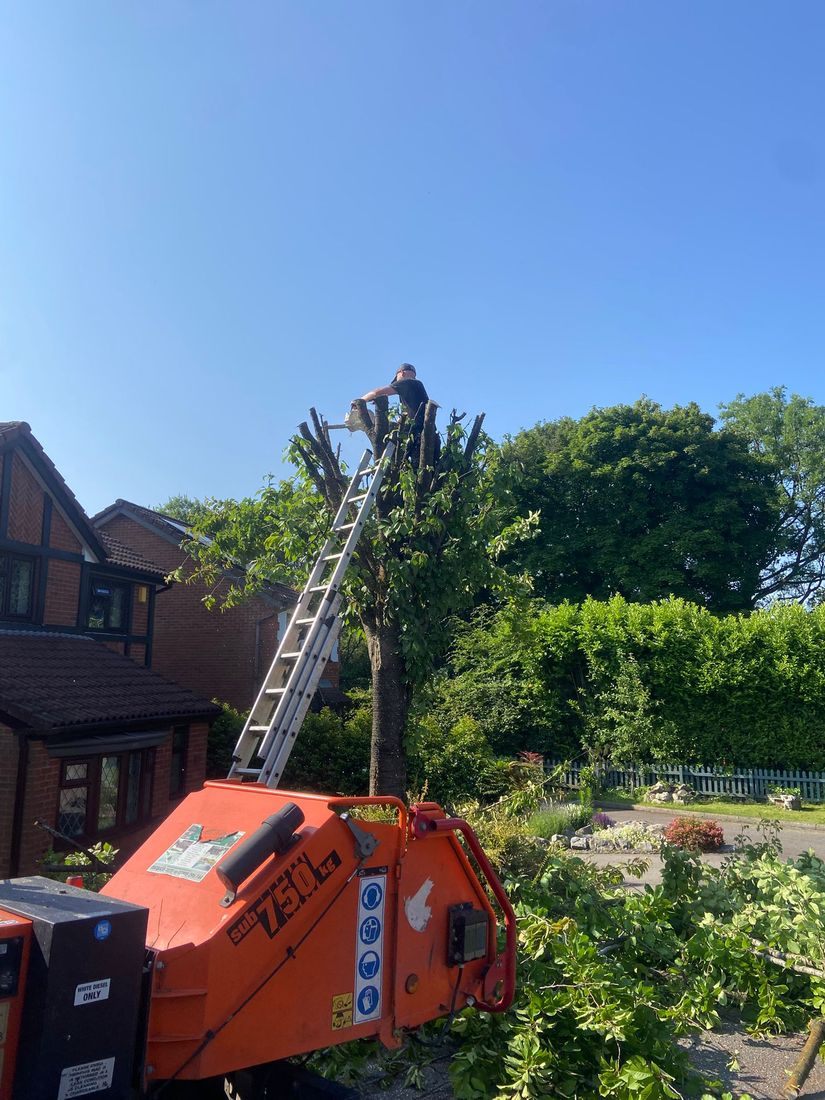 Tree Pruning
Cutting back a tree in a Blackwood front garden from a ladder, with the chipper beside the road taking the branches.
See the project →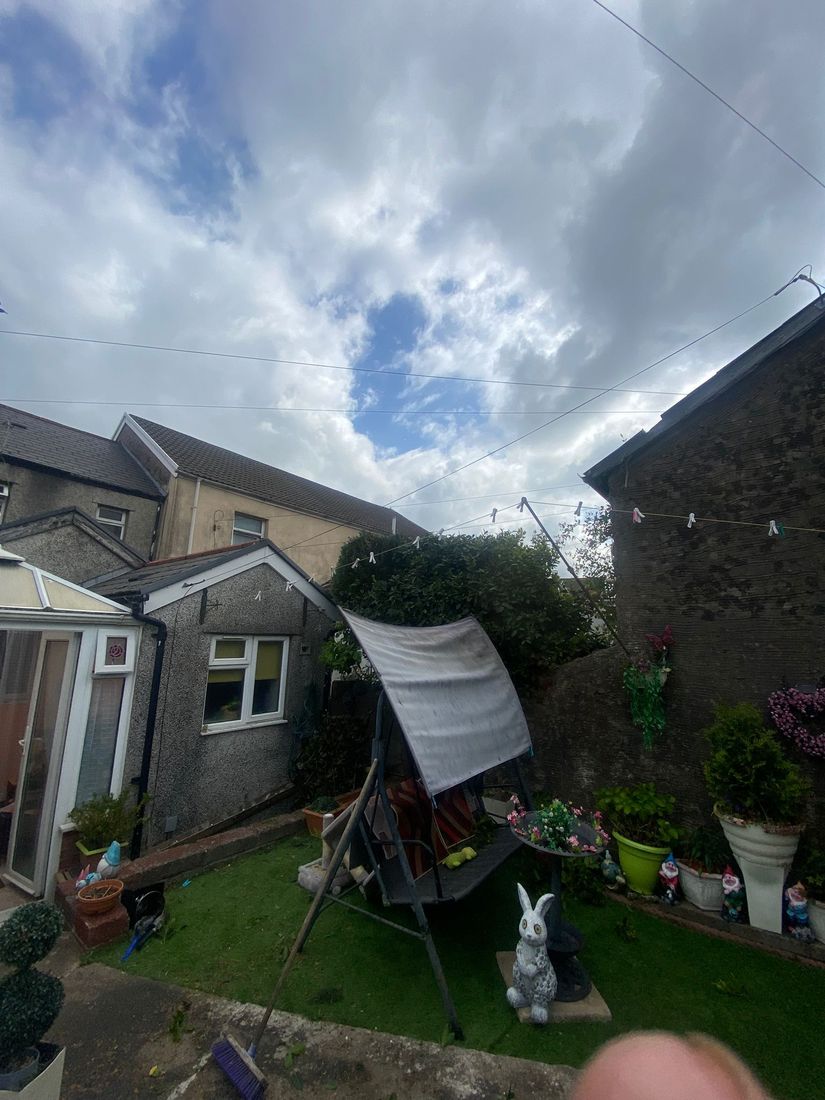 Tree Pruning
Pruning dense evergreen growth in a small terraced back garden in Caerphilly, working around a conservatory and a covered swing seat.
See the project →We work across South Wales. Pick your town to see how tree pruning works locally.
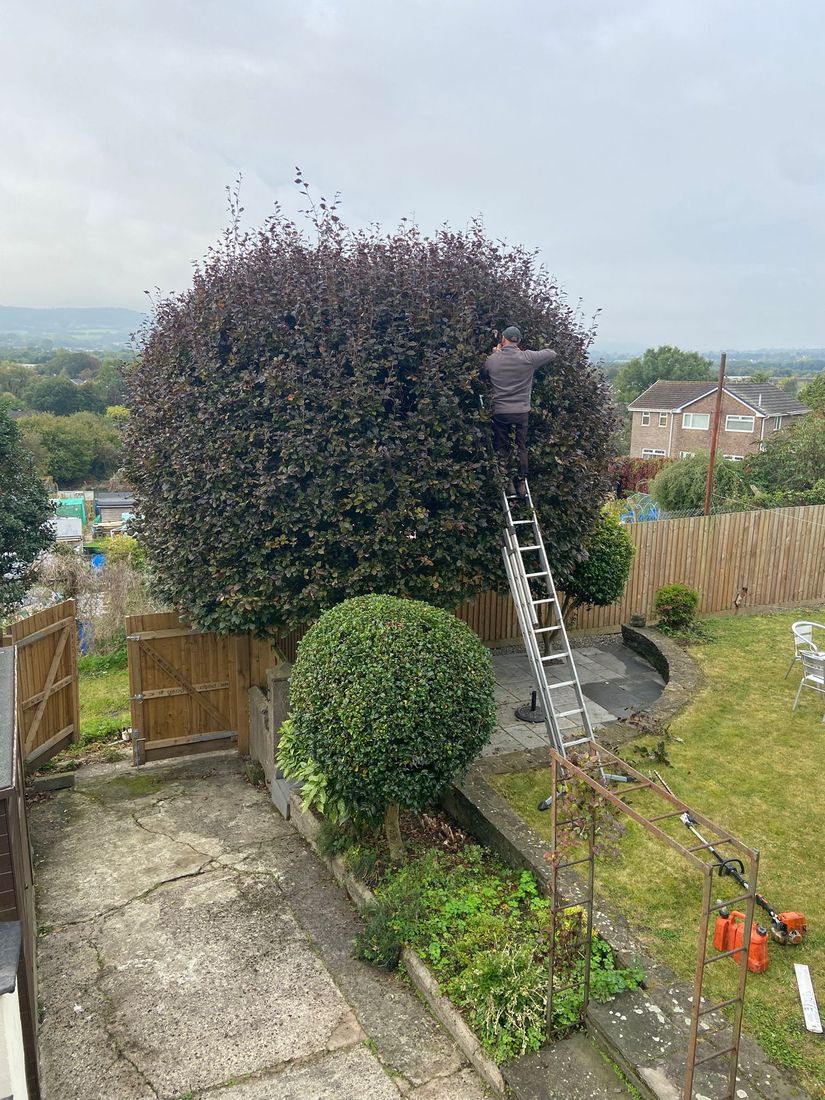
There is no single perfect month for every tree, but winter suits many species, and this guide shows how timing, nesting birds and weather affect the choice.
Read the guide →Tall conifers can often be reduced safely, but only back to living green growth, because most will never regrow from bare brown wood.
Read the guide →Regular pruning keeps trees safe, balanced and healthy, brings light back into gardens and buildings, and usually avoids the larger and more disruptive jobs that neglect leads to.
Read the guide →It can help. Removing crossing and overweight branches and thinning the crown lets wind pass through more easily, which reduces strain. We cannot promise a tree will never lose a branch, but a balanced crown is generally better placed to cope with a gale.
Only the green growth. Leylandii and similar conifers will not sprout from bare brown wood, so cutting too deep leaves a hole that never fills. We reduce to a sensible line within the green and explain what height is realistic for your tree.
Often, yes. Many Barry terraces have narrow passages, and we plan to lower branches in sections and carry them out by hand, so nothing is dragged across your garden. Mention the access when you contact us so we can bring the right equipment.
Tell us what needs doing and where. We will come back to you, or call 07766 919630 if it is urgent.