Barry has Victorian and Edwardian terraces, later estates, and many back gardens with tall conifers and Leylandii that were planted small and never stopped growing. When a Leylandii wall blocks the light or a tree has turned dangerous, felling is often the sensible answer. We take trees down across Barry safely, in sections where space is tight.
We explain what we plan before we start, including what happens to the stump and the wood, so there are no surprises on the day. If you are unsure whether a tree needs to come down at all, ask us to look at it first and tell you what we would do.
Leylandii and similar conifers are fast growers, and in a Barry garden a row planted as a screen can end up standing far above the fence line. They steal light, drop heavy debris and are awkward to cut back, because many do not regrow from bare wood. Removing the whole row is often more practical than trying to tame it, and we can take it down tree by tree.
We also fell broadleaf trees that are dead, diseased, storm-damaged or simply in the wrong place. Each tree is different, so we look at lean, rot and what is nearby before choosing a method. Where there is open ground we can drop a tree in one piece. Near houses and walls, we dismantle it in sections and lower each piece under control.
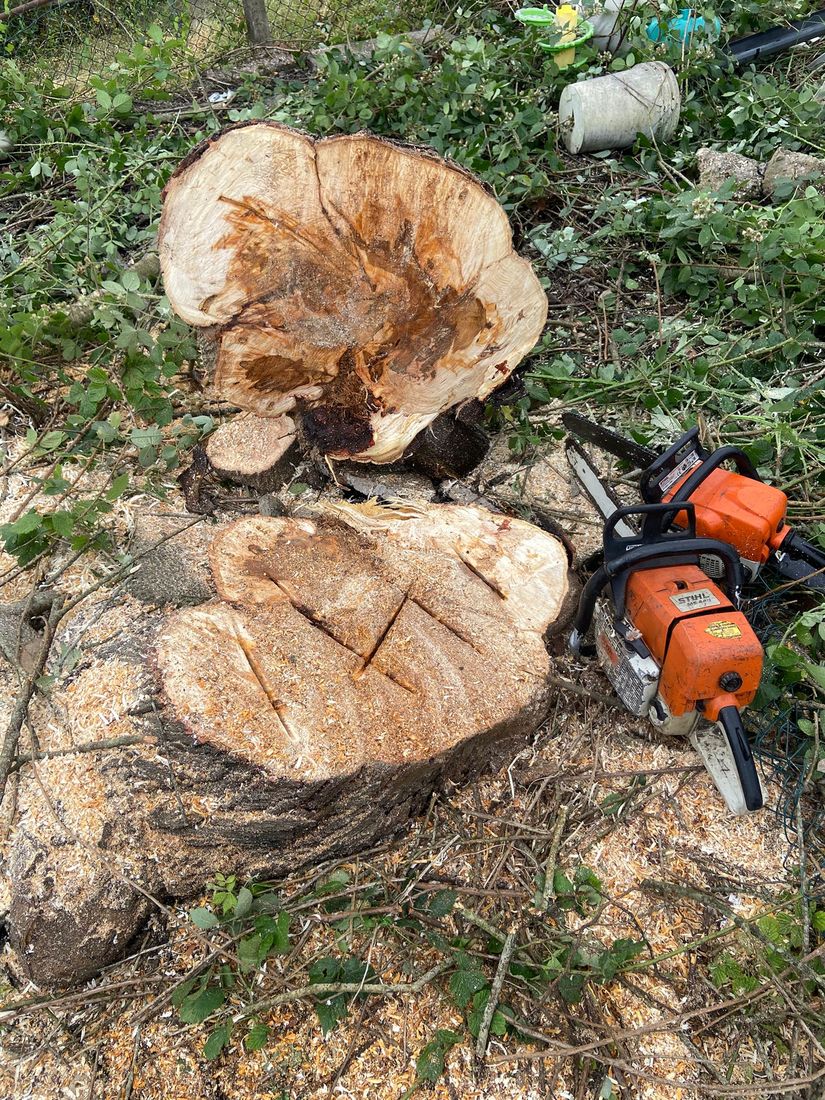
Once a tree is felled, you choose what happens to the stump. It can be left cut low, which suits borders and lawns that will be reshaped, or ground out by arrangement if you want the ground cleared for new planting or paving. We log the timber and take the green waste away, and the area is left clean. Barry gardens often need this choice made early.
Before you fell anything, check with the council whether a Tree Preservation Order or conservation area applies, because cutting a protected tree without consent is an offence. We can tell you what to ask, and we wait for the council's answer before we cut. Trees planted as a coastal windbreak are not exempt just because they are common, so it is worth asking about every one.
The same visit can cover shrubs and overgrown hedge trees, which saves repeat trips. If your Barry garden has an overgrown conifer boundary and a dead tree at the bottom, we can look at both together and agree the order of work. We also cover Penarth, Rhoose, Dinas Powys and Sully, so tell us which side of the town you are on.
A few jobs we have completed. We also work in and around Barry.
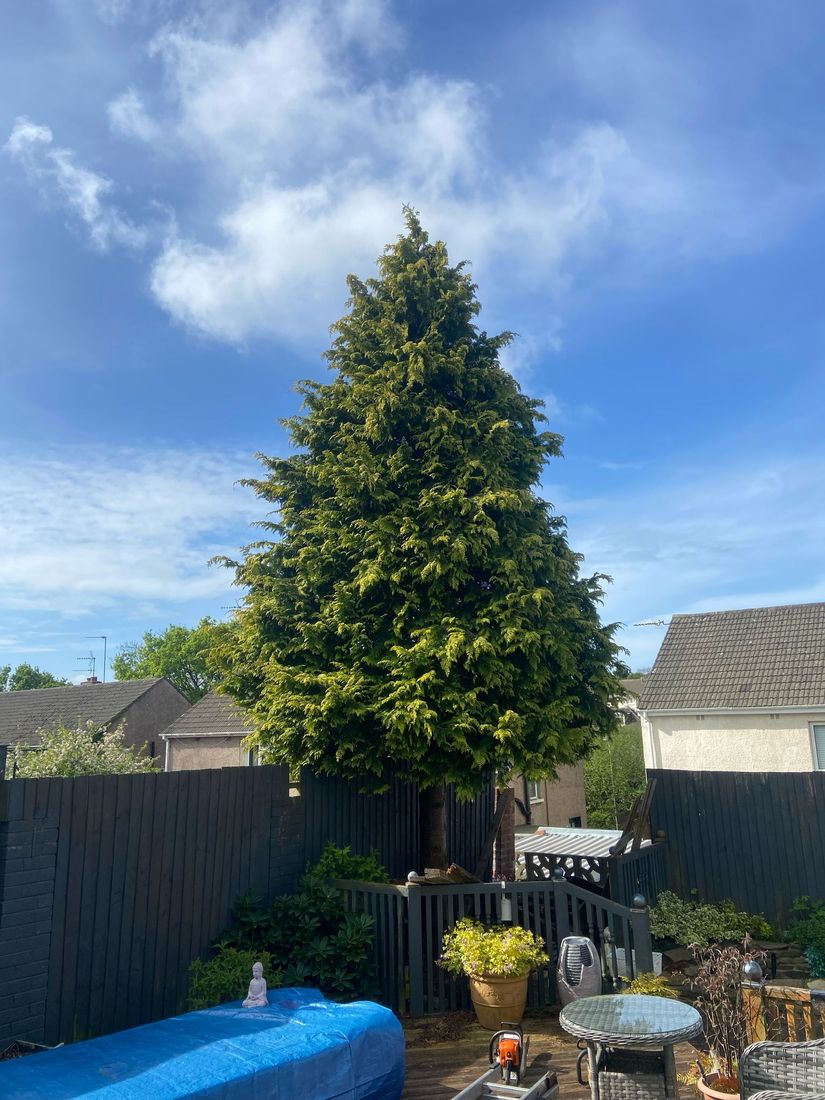
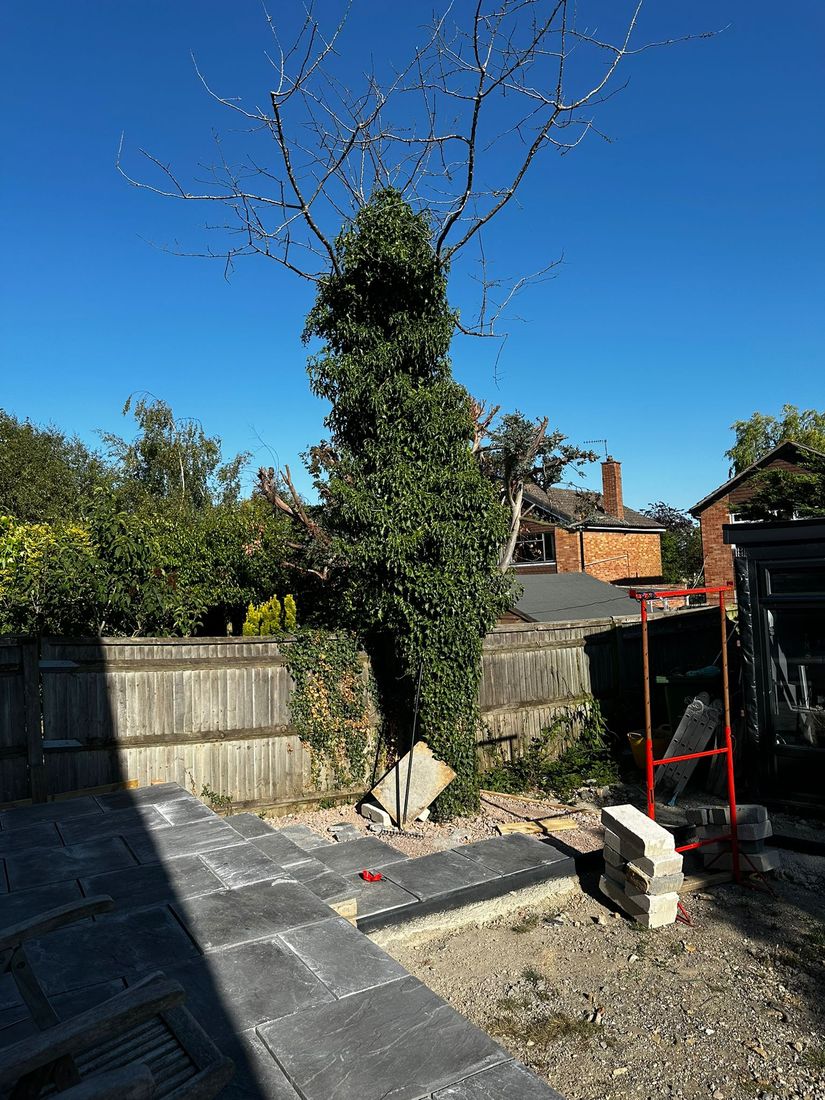
Tree FellingThis tall conifer stood in a Bridgend back garden beside dark fencing and a patio, before we took it down.
See the project →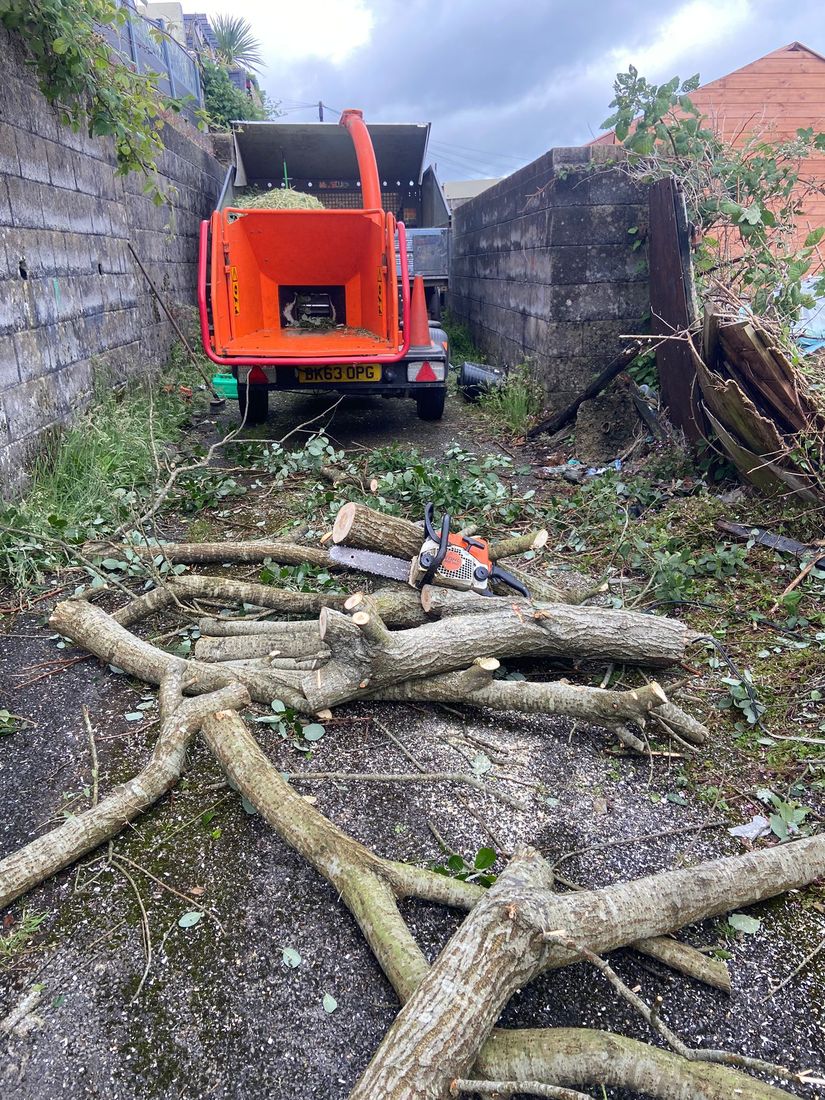 Tree Felling
We felled and cut up trees in a Caerphilly back garden, chipping the branches and leaving the plot cleared.
See the project →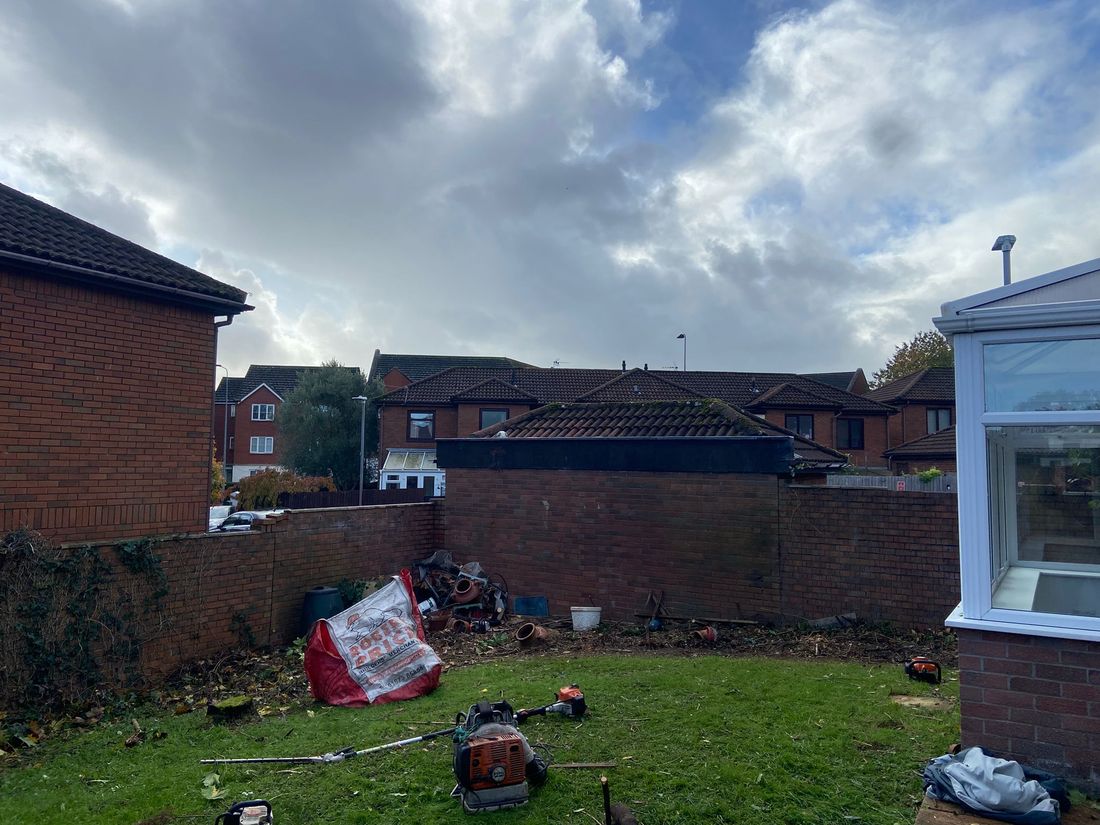 Tree Felling
We took out trees and shrubs from a walled Cardiff back garden, leaving an open lawn next to the conservatory.
See the project →We work across South Wales. Pick your town to see how tree felling works locally.
Often you can fell a garden tree freely, but protected trees and larger amounts of timber need checks first, and this guide explains who to ask.
Read the guide →Taking a tree down should rarely be the first choice, but sometimes it is the only responsible one, and knowing which situation you are in saves worry.
Read the guide →
Tree surgery is priced job by job rather than from a fixed list, so this guide explains what moves the cost up or down and how to get a firm figure.
Read the guide →Yes. We take them down tree by tree, cutting from the top and lowering sections so nothing lands on fences or neighbouring gardens. After that, the timber and green waste go away and we deal with the stumps by arrangement.
Most conifers like Leylandii do not regrow from bare wood, so a stump cut right back usually stays dead. Some other trees will sucker or regrow from the stump. We can tell you what to expect for your particular tree.
It depends on the plan. Leaving it cut low is simpler and suits gardens where it will not get in the way. If you intend to plant or pave there, grinding it out is usually more sensible. We talk through both.
Tell us what needs doing and where. We will come back to you, or call 07766 919630 if it is urgent.