
A tidy hedge makes a boundary look cared for, keeps paths and windows clear and gives a garden privacy without a wall or fence. Left alone, it gets taller, wider and thinner at the base. We trim hedges for homes, landlords, schools and businesses across South Wales, working on the sides and tops of privet, beech, laurel, conifer, Leylandii and mixed native hedges.
Some customers book regular visits so a hedge never gets out of hand. Others call once, when a neglected hedge has outgrown its space and needs bringing back under control. Either way we look at the job first, agree the work and the cost with you, do it and clear up.
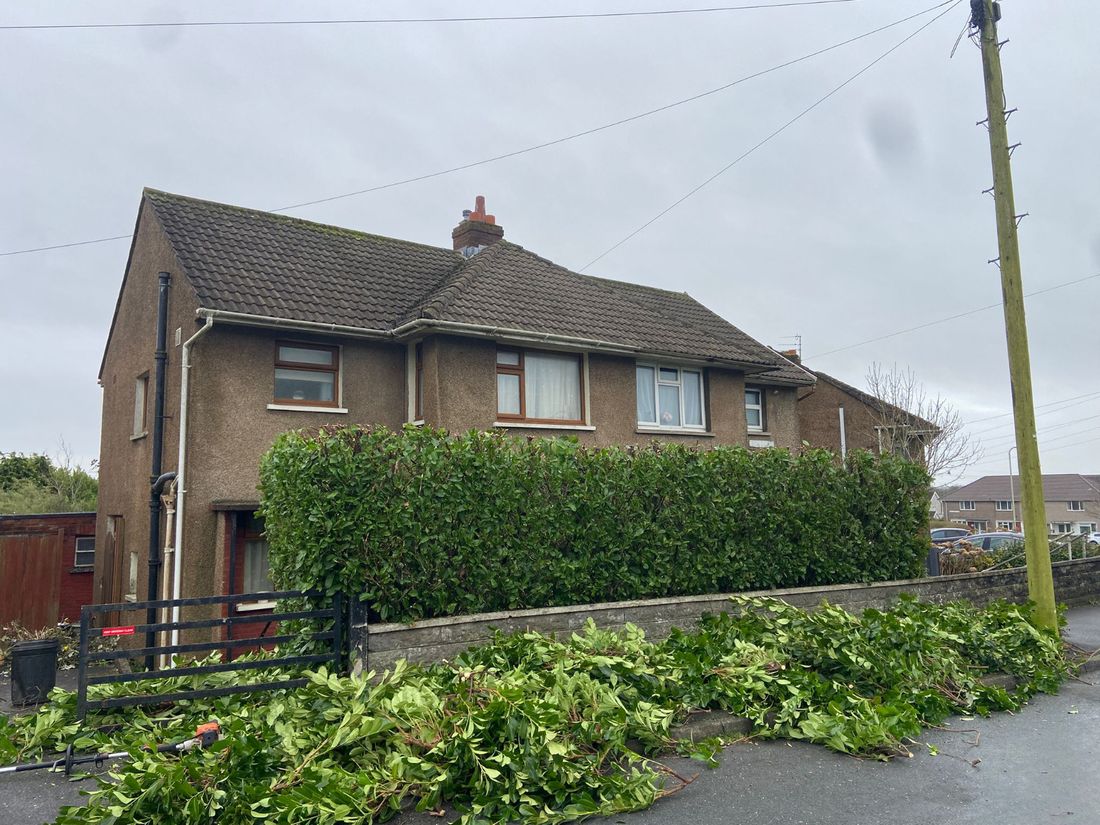
Most formal hedges want cutting at least once a year, and fast growers such as Leylandii and privet often need more. Signs it is time are shoots poking out of the shape, branches brushing the pavement or a neighbour's side, and a top that has become uneven. Waiting a little too long is common, and it is usually still easy to put right. If you are unsure, send us a photo or ask us to call and take a look.
Overgrown hedges are a different job. Cutting a tall conifer hard into bare wood can leave brown patches that do not recover, so we look closely at what is there before deciding how much to take off. Sometimes the sensible answer is a staged reduction over more than one visit, rather than one drastic cut that leaves the hedge looking worse. We explain the options plainly, so you can choose how bold to be.
We start by looking at the hedge with you, checking its length, height and width, the species, and how we can reach the top and the far side. Then we agree exactly what you want done and what it will cost, before any cutting begins. If you want it kept at the current size, or taken down by a set amount, we say so plainly and write it down.
Once the work is agreed we cut the sides and top to a clean line, working from steps or a platform where the ground or height calls for it. All the clippings are collected and taken away, and paths, drives and lawns are swept before we leave. Nothing is left piled up behind the hedge for you to deal with later. If anything surprising turns up, such as wire or a damaged fence inside the hedge, we tell you.
Hedges here face varied conditions. Valley terraces often have narrow back gardens with little room for a ladder, sloping plots make footing awkward, and coastal hedges take sea wind that thins and distorts growth. Farmland edges tend to have longer mixed hedges. We plan access and equipment around each place, and tell you about anything that affects how the work is done. Wind exposure can also mean we cut a little differently, to keep the shape tidy.
Birds nest in hedges from spring into summer, and it is an offence to disturb an active nest. We check before cutting and, if a nest is found, we leave that section alone and come back later. It is worth thinking about timing early, and about any conservation area or protected hedge rules that might apply, before you book. Landlords and businesses can ask for a regular schedule that fits their property.
Real jobs we have completed.
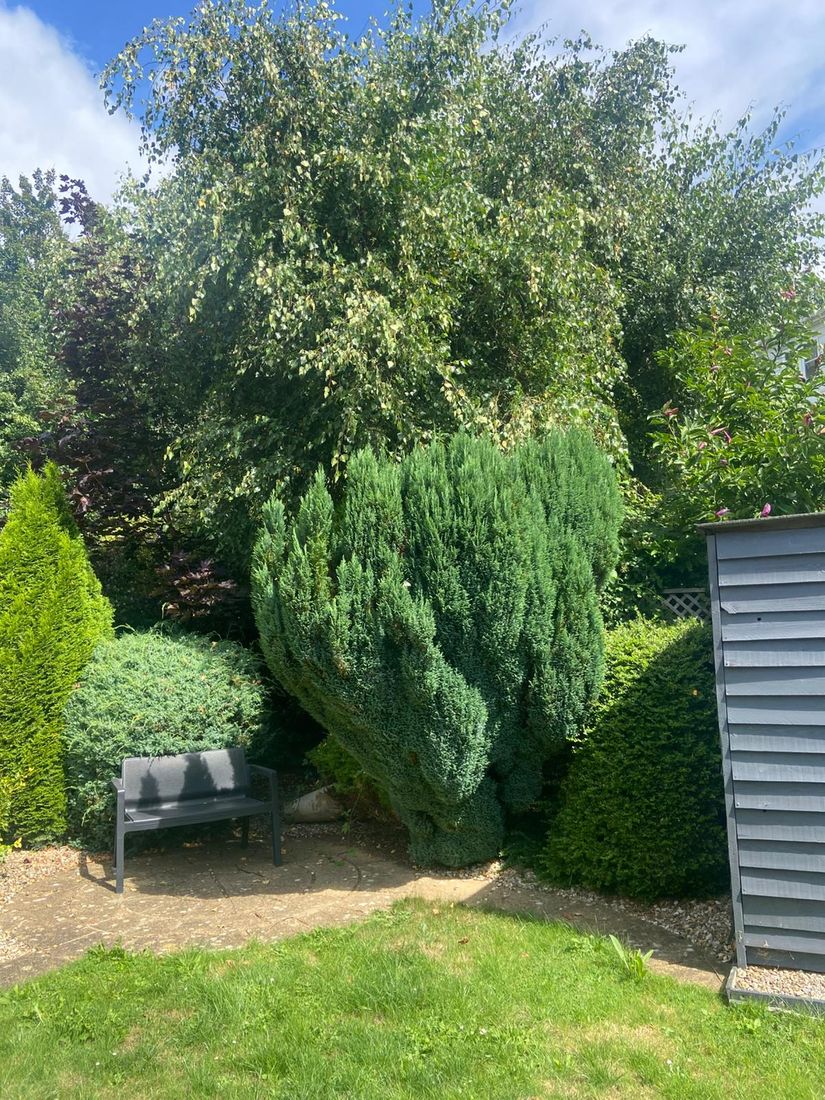 Hedge Trimming
Overgrown hedges, a leaning conifer and tall boundary growth along a narrow lane, tackled as one hedge trimming project in Abertillery.
See the project →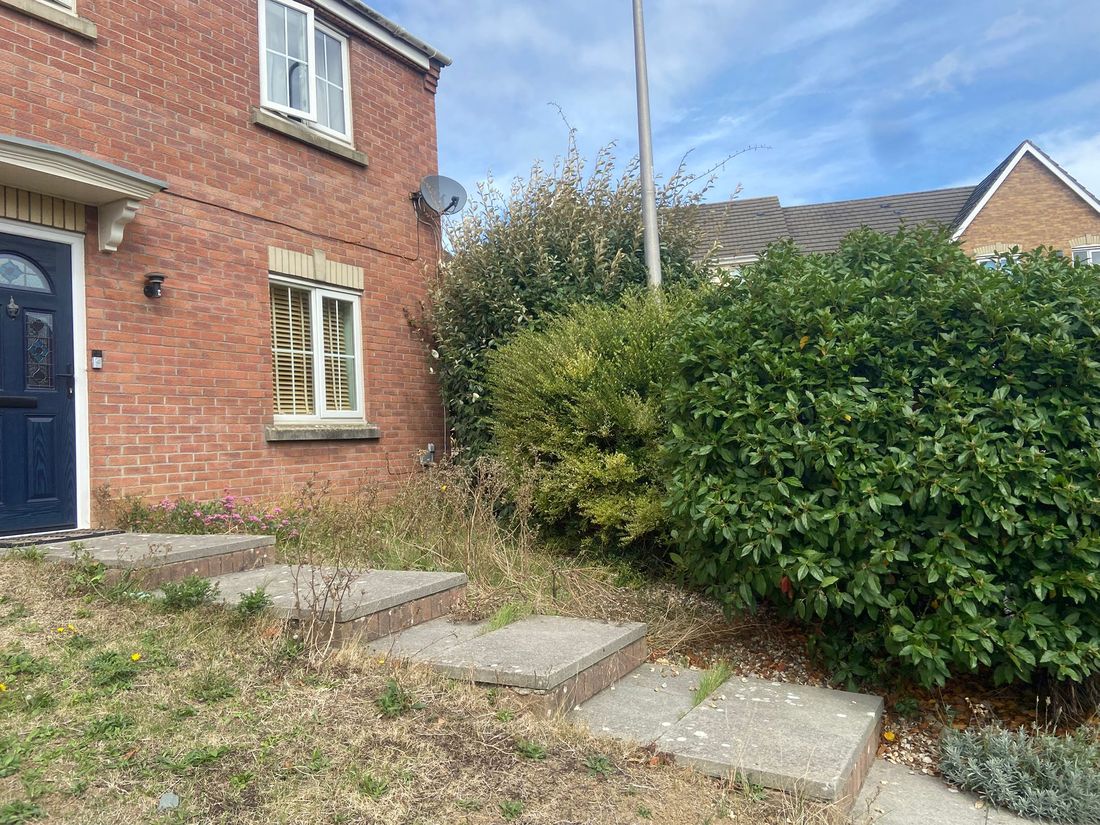 Hedge Trimming
Large evergreen hedges and shrubs pressing in on the front steps of a red-brick house in Barry, shown before cutting back.
See the project →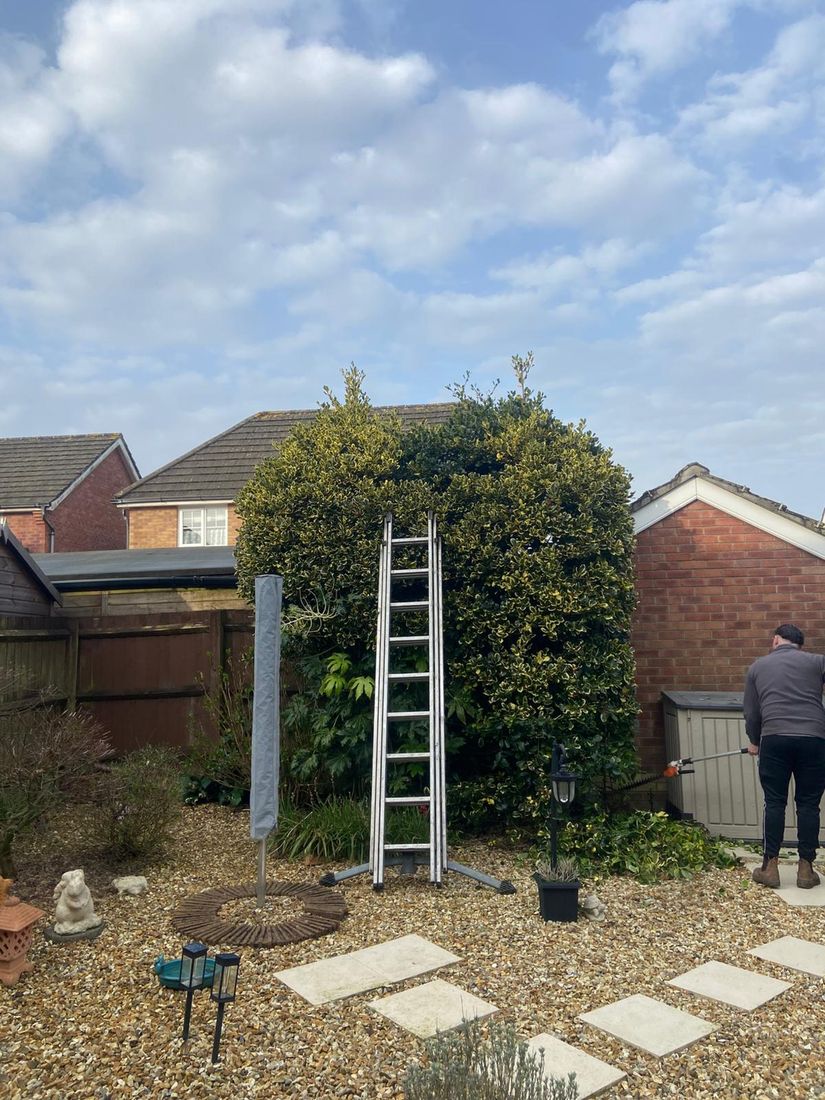 Hedge Trimming
A selection of hedge, climber and small tree trimming jobs in Bridgend, from a roadside laurel hedge to an overgrown back fence.
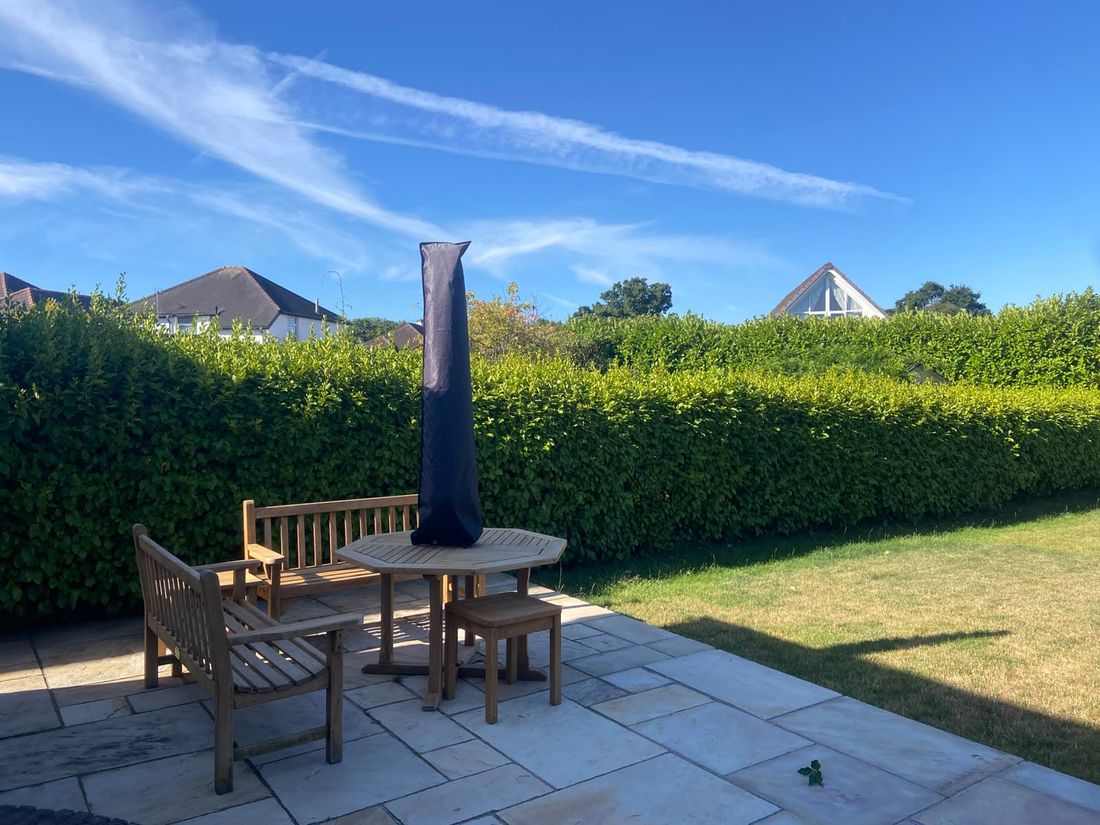
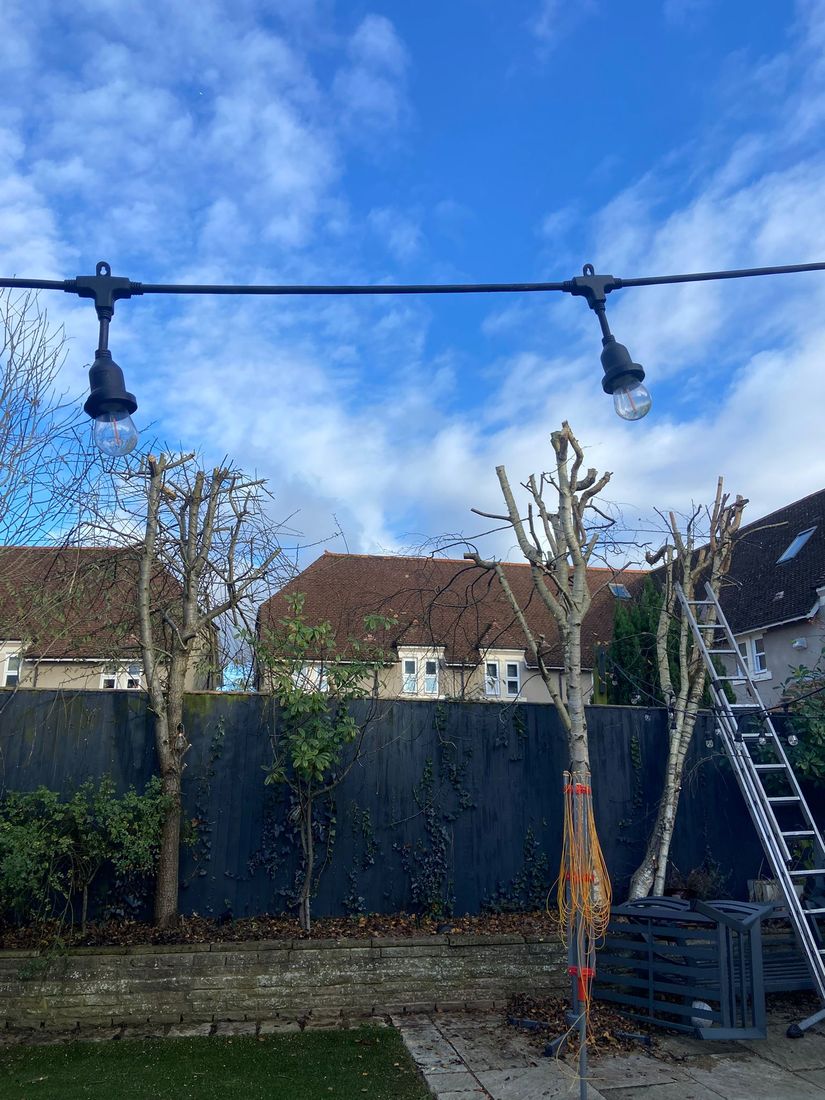
See the project →Hedge TrimmingA long clipped hedge beside a patio, a front hedge cut back at the kerb and a tall garden tree reduced from a ladder in Cardiff.
See the project →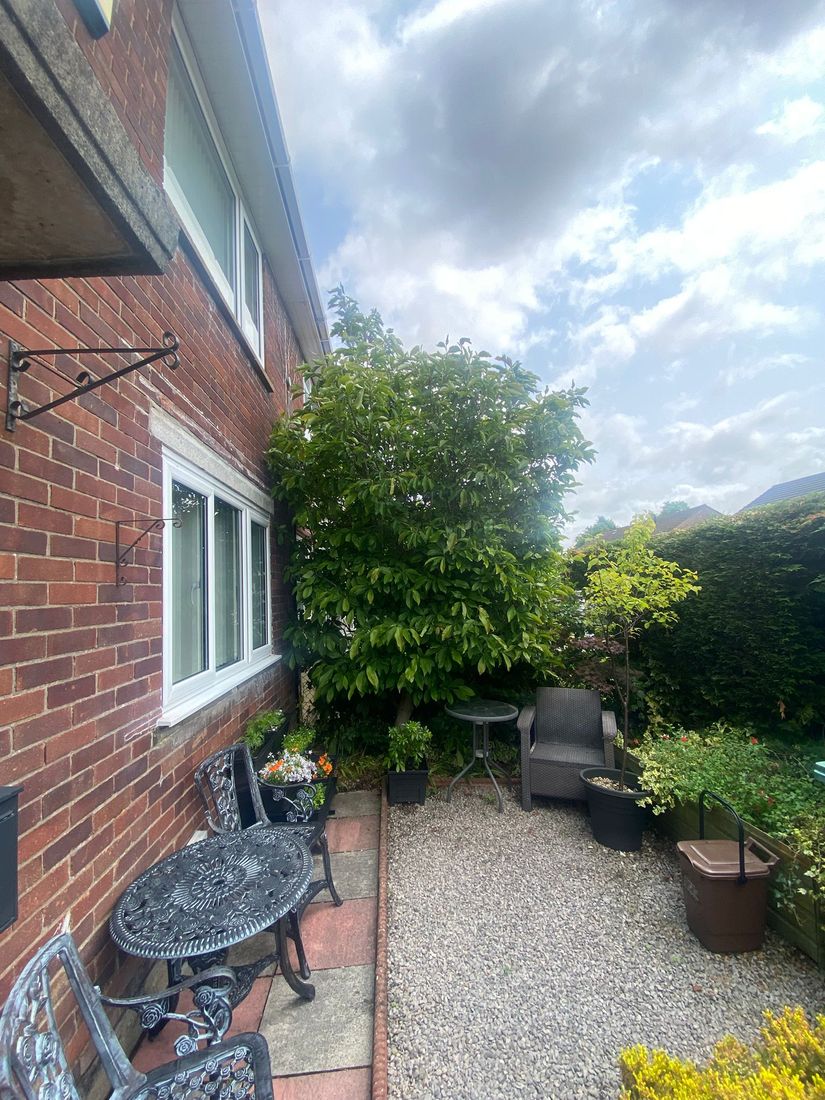 Hedge Trimming
A tall, leafy side-garden shrub next to a brick house and gravel seating area in Cwmbran, trimmed to keep the space usable.
See the project →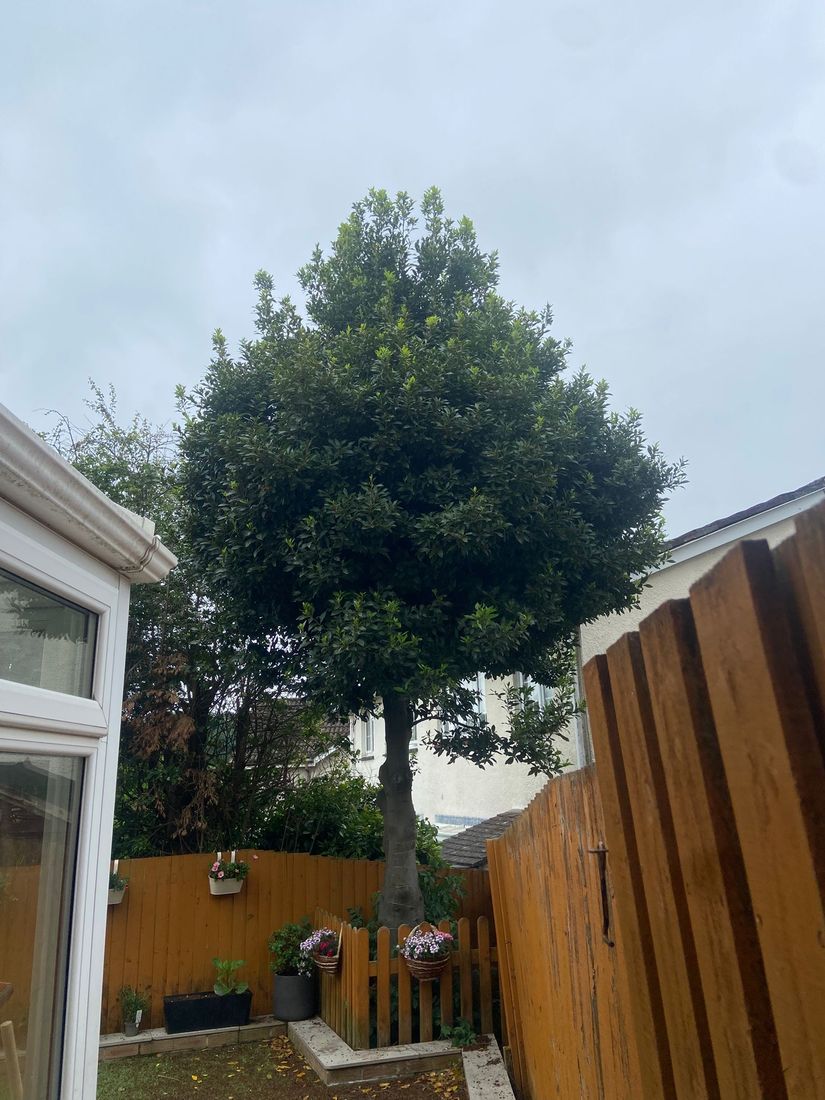 Hedge Trimming
A rounded garden tree trimmed beside a conservatory and ivy cut back from a roof-high outbuilding in Newport.
See the project →We work across South Wales. Pick your town to see how hedge trimming works locally.
Most garden hedges need cutting once or twice a year, but the right rhythm depends on the plant, the shape you want and the nesting season.
Read the guide →Hedge cutting is priced on the job in front of us, and a handful of practical factors explain why two hedges that look similar can need very different amounts of work.
Read the guide →Some hedges just need a single tidy-up, while others stay manageable only with planned visits, and the right choice depends on the hedge and how you use your garden.
Read the guide →It depends on the species and how neat you want it. Many formal hedges suit one or two cuts a year, while fast growers like Leylandii and privet may need more. We can look at yours and suggest a sensible routine, then set up regular visits if you would like them.
We take care in spring and summer, because disturbing an active nest is against the law. We check the hedge first. If birds are nesting we leave that part alone and return when it is clear, so the work may be split or moved to a later date.
Yes. We collect all the cuttings, take them away and sweep paths, drives and patios before we leave. The aim is that you only notice the hedge looks better, not that a pile of trimmings has been left behind for you to deal with.
Often we can, but it depends on the type. Some hedges, such as beech and privet, respond well to a firm cut, while conifers do not regrow from bare wood. We look at the hedge, explain what is realistic and agree the work and cost with you first.
Tell us what needs doing and where. We will come back to you, or call 07766 919630 if it is urgent.