Most garden hedges need cutting once or twice a year, but the right rhythm depends on the plant, the shape you want and the nesting season.
How often a hedge needs cutting depends on what it is made of and how tidy you want it. A fast-growing conifer hedge behaves very differently from a slow beech one. As a general guide, most hedges do well with one proper cut a year, and quicker-growing or formal hedges benefit from two or three lighter trims. Our mild, damp South Wales climate keeps growth going for much of the year, so many hedges run away faster than people expect.
Know what you are growing, because the plant decides the timetable. Hedges that look similar from the road can behave very differently once the clippers come out, and what suits a privet hedge can ruin a conifer one. Here is a rough idea of how common hedges behave when it comes to trimming, though local conditions and the age of the hedge also play a part.
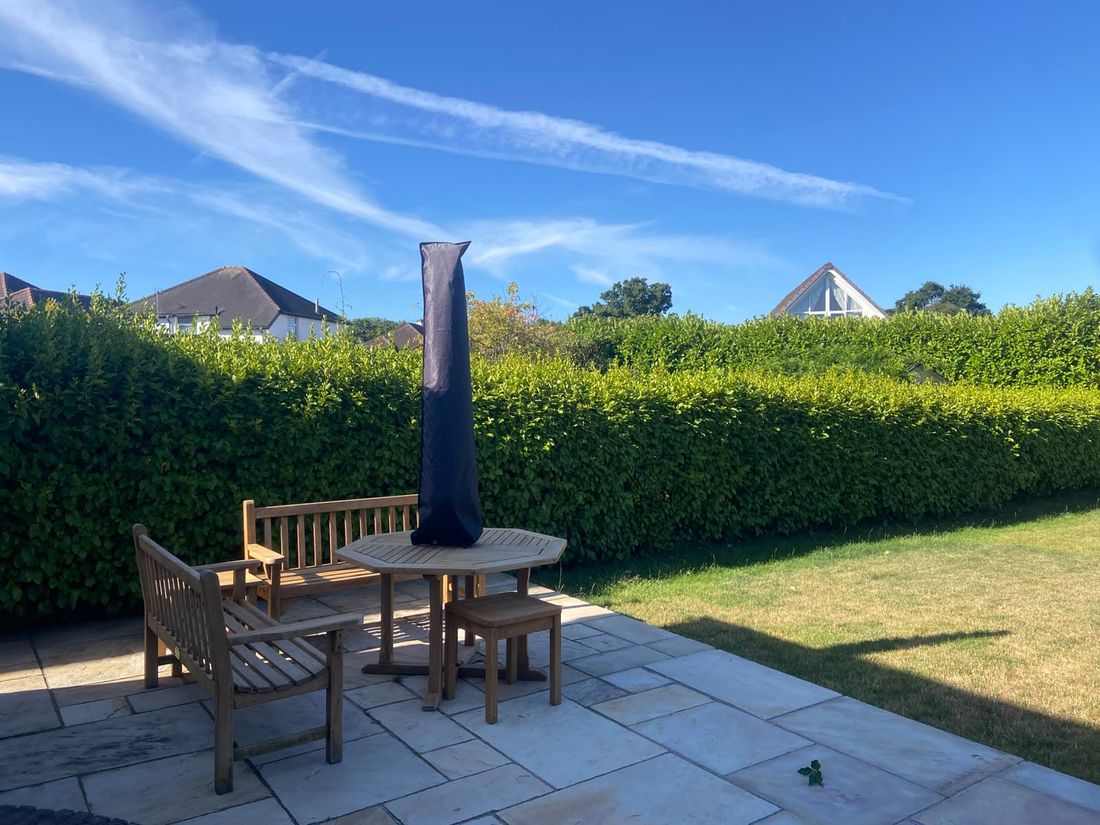
Between roughly March and August, birds nest in hedges, and it is an offence to disturb active nests, eggs or young. For that reason we avoid heavy cutting in this period, and we check carefully before any work. If you can, plan the main cut for late summer or autumn, or late winter. If a hedge simply must be trimmed in spring or summer, a careful look for nests comes first.
A light trim that takes off the soft new growth keeps a hedge dense and neat, and it avoids exposing bare patches. Leaving it for years and then cutting hard is where problems arise, particularly with conifers, which will not regrow from old brown wood. Regular visits also keep the height and width in check, stop a hedge spreading into paths and neighbours' gardens, and make each cut quicker and easier.
If a hedge has been neglected, do not cut it back in one drastic go. Some species, such as privet, beech and hornbeam, will tolerate hard cutting and shoot again. Conifers, including Leylandii, usually will not, so cutting beyond the green growth leaves permanent gaps. We look at the plant, reduce the width and height in stages where we can, and tell you honestly if a hedge is better replaced.
Trimming a low hedge from the ground with sharp shears or a hedge trimmer is within reach of most householders, as long as you wear eye protection and keep the cable away from the blade. Tall hedges are different. Working from ladders with powered cutters is a common cause of injury, and hedges near power lines or on steep slopes should be left to professionals. We have the equipment and know-how to do it safely.
Some customers prefer to have us come on a regular schedule so the hedge never gets out of hand, while others book a one-off cut or a reduction. We take away the clippings and sweep the paths afterwards. For a free quotation, we look at the hedge, discuss the height and the finish you want, and agree a plan that suits the plant.
We will visit, tell you honestly what is needed and give you a free, no-obligation quotation.
For most hedges, late summer is a good time, once nesting is over and the new growth has finished. A light trim in early summer can suit fast-growing types. Native mixed hedges are often cut in late winter. Always check for nests before cutting at any time of year.
It is risky. Wild birds, nests, eggs and young are protected, and disturbing active nests can lead to prosecution. We avoid heavy cutting between spring and late summer and check carefully for nests first. If you are unsure, wait or ask us.
Never cut into brown, leafless wood, because it will not grow back. Keep cuts within the green growth. If a conifer hedge has already grown too tall, we may reduce it in stages, or advise on replacing it with a more manageable hedge.
Yes. We remove the green waste and sweep up the paths and borders when we have finished, so you are not left with piles of clippings. If you would like to keep some for composting, just let us know before we start.
Hedge cutting is priced on the job in front of us, and a handful of practical factors explain why two hedges that look similar can need very different amounts of work.
Read the guide →Some hedges just need a single tidy-up, while others stay manageable only with planned visits, and the right choice depends on the hedge and how you use your garden.
Read the guide →
Tree surgery is priced job by job rather than from a fixed list, so this guide explains what moves the cost up or down and how to get a firm figure.
Read the guide →Tell us what needs doing and where. We will come back to you, or call 07766 919630 if it is urgent.