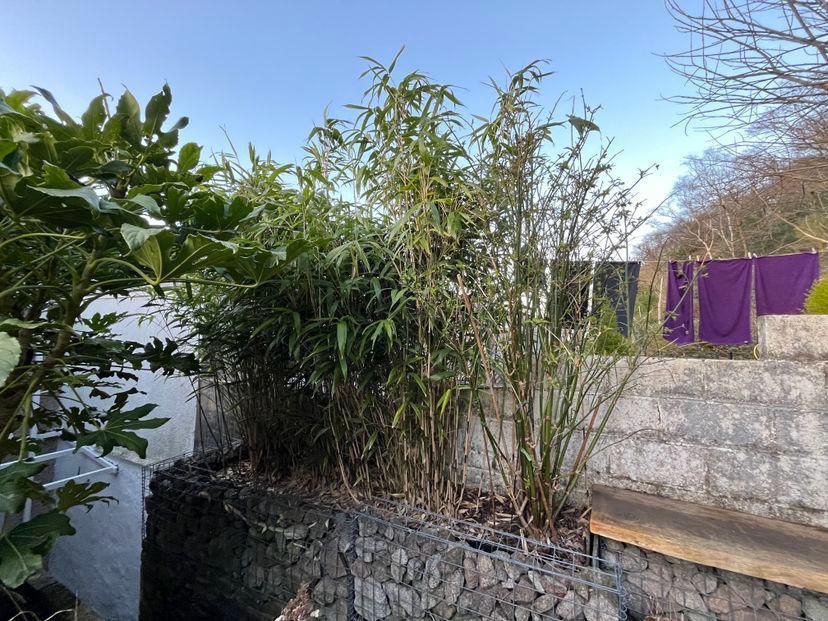

Bamboo is easy to plant and very hard to get rid of. We remove spreading bamboo from gardens across South Wales by cutting down the canes, digging out the rhizomes and roots, and taking all the waste away. It is heavy, physical work, and doing it thoroughly matters far more than doing it quickly. We explain what that means for your plot before we start.
We work for homeowners, landlords and anyone dealing with bamboo they have inherited or that has crept in from next door, whether it is a few canes at the back fence or a thick stand that has taken over the whole plot. Whichever it is, we will talk through what is realistic.
There are two broad kinds. Clumping bamboo grows in a slowly widening clump and is relatively well behaved. Running bamboo sends underground stems called rhizomes sideways, and new canes can pop up metres away, in lawns, borders, neighbouring gardens and gaps in paving. Many of the problem plants in gardens are the running type. Knowing which type you have shapes how we tackle it. That mix of types is why we always ask what you are seeing first.
Left alone, rhizomes can lift patios, push against walls and find their way into cracks around drains and foundations. The canes cast dense shade and choke out other planting. Because every fragment of rhizome left in the ground can grow again, a quick cut-down on its own rarely solves the problem for more than a season. That is why digging out the root system matters so much.
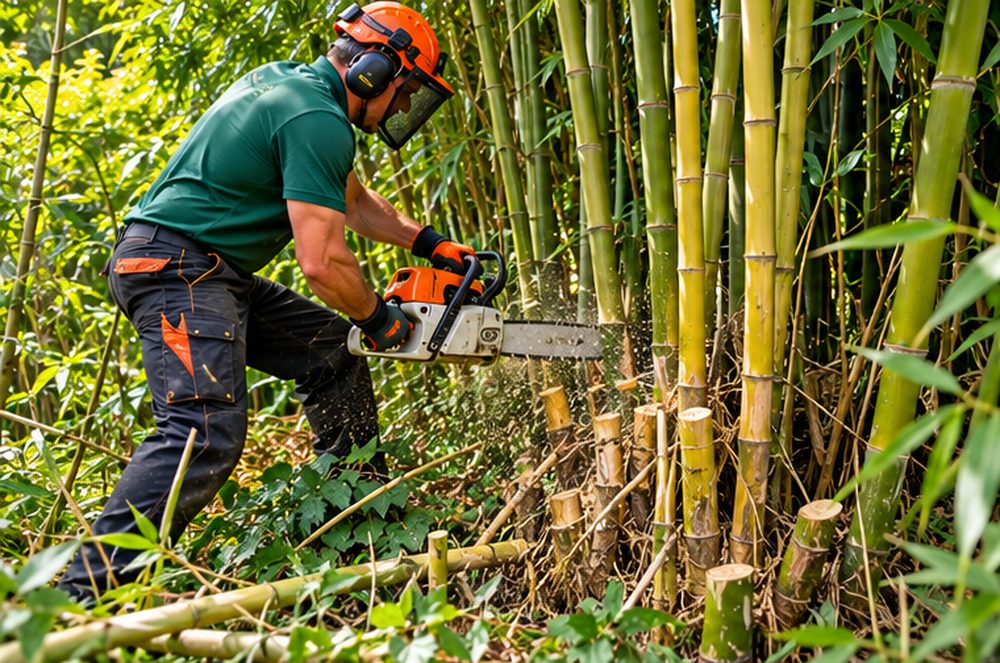
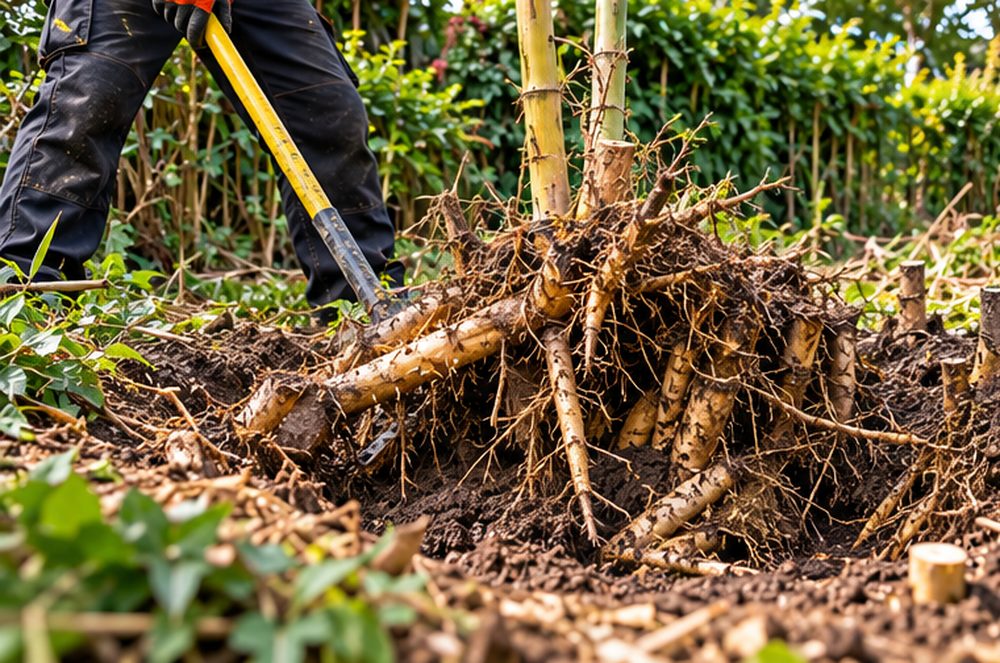
We start by looking at how far the bamboo has spread, what it is close to, and how we can get barrows and equipment to it. Then we agree the work and the cost with you. The canes are cut down first, which opens up the ground, and then we dig out the rhizomes and roots by hand or with suitable equipment. Where bamboo sits against a wall or drain, we dig with extra care around it.
We work through the soil carefully, because small fragments left behind can regrow. All cut canes and dug-out roots are taken away, and we tidy and level the ground as we finish. We also recommend checking the area over the following months, and we are happy to come back and look at any regrowth with you. Regrowth is manageable when it is caught early. You will know where things stand.
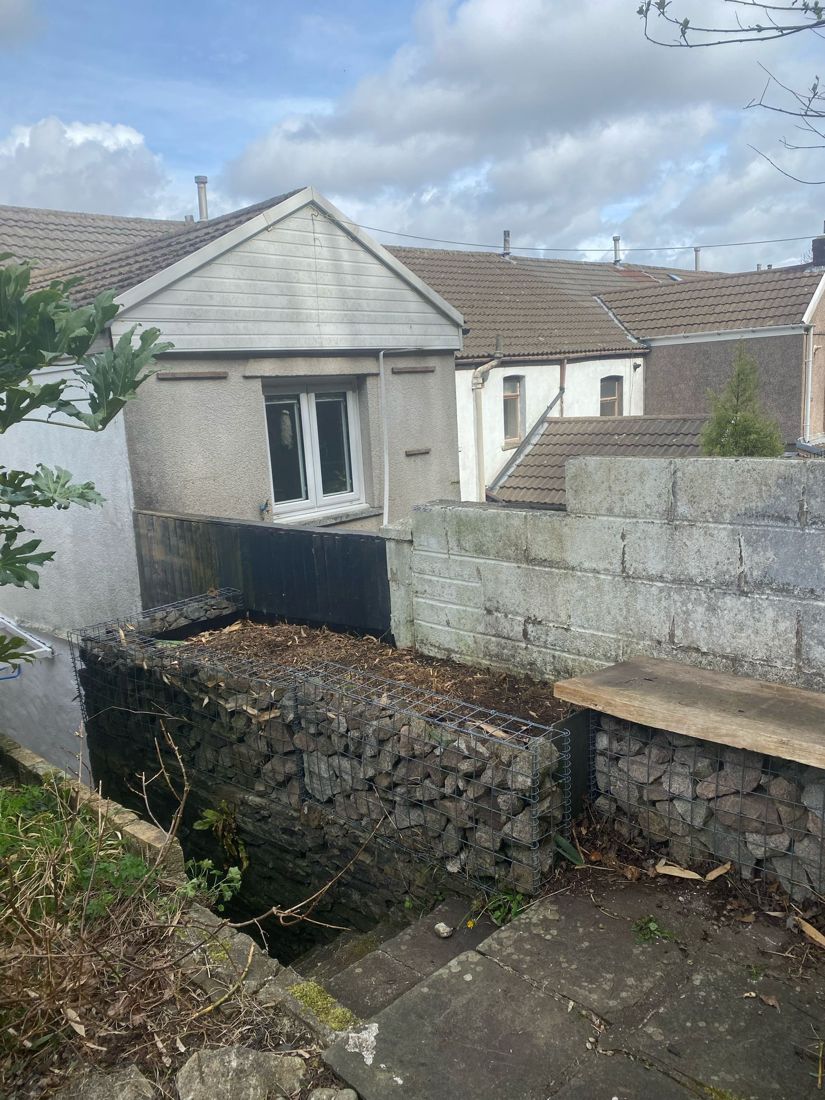
Gardens in South Wales often have sloping ground, retaining walls and tight terraces where bamboo has been planted as a screen against neighbours. Digging near walls, drains and patios needs care, and on steep sites the removed material has to be moved by hand. Damp valley soils and mild coastal conditions suit bamboo well, which is part of why it spreads so readily here. Where the plant sits tight to a boundary wall, we take extra care when digging beside it.
Decide what you want in the space afterwards, because it affects how deep and wide we dig. Find out whether the bamboo started on a neighbour's land, as you may want to talk with them so that it does not return. Be ready for some regrowth and a follow-up check, even after careful work. A little patience after the main work saves trouble later. We will be straight about how likely that is.
Real jobs we have completed.
We work across South Wales. Pick your town to see how bamboo removal works locally.
Running bamboo spreads through underground stems called rhizomes, and stopping it means digging them out thoroughly rather than just cutting down the canes.
Read the guide →Spreading bamboo can lift paving, push into wall joints and block drains, so it helps to know which type you have and when to act.
Read the guide →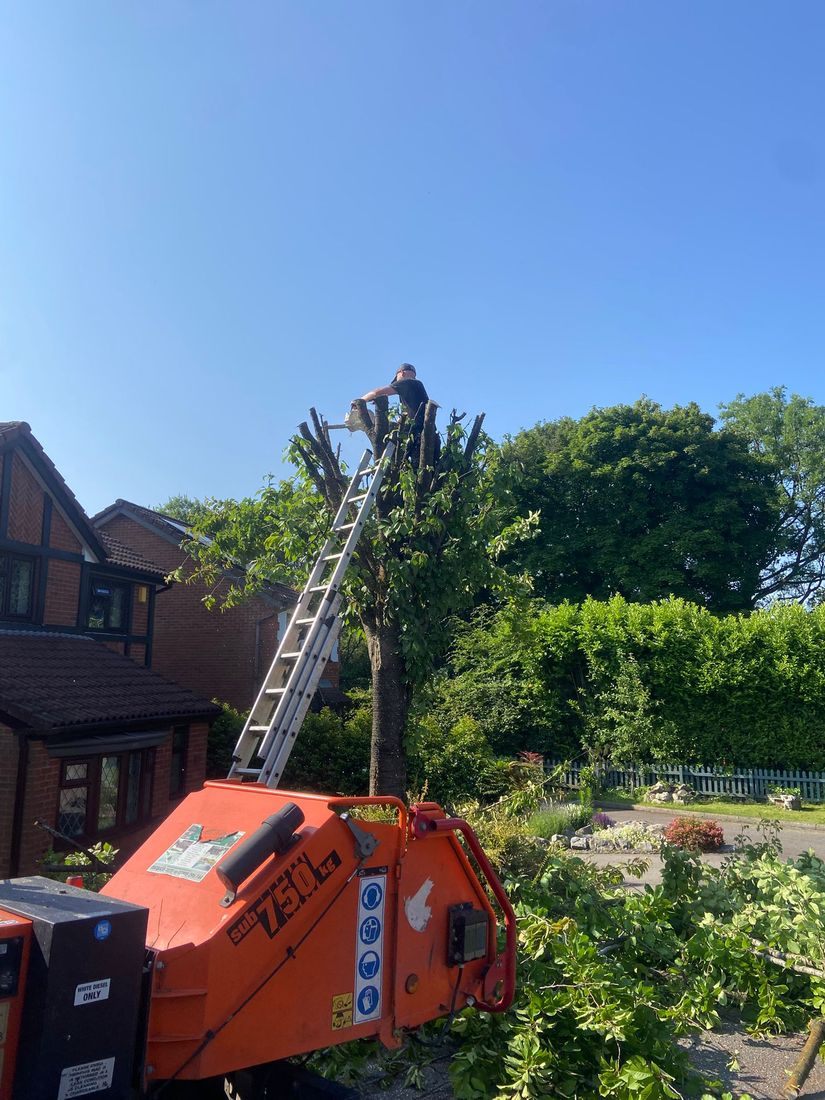
Tree surgery is priced job by job rather than from a fixed list, so this guide explains what moves the cost up or down and how to get a firm figure.
Read the guide →Cutting the canes alone rarely works, because the underground rhizomes keep growing and send up new shoots. For running bamboo, the rhizomes and roots need digging out as well. Cutting down is a useful first step, but it is only the start of proper removal.
Running bamboo throws up canes some distance from the main plant, sometimes in lawns, borders or next door. Clumping bamboo stays in a tight, slowly growing clump. If you are unsure, we can usually tell when we look at the job on site.
Small fragments of rhizome left in the soil can regrow, so we dig thoroughly and recommend watching the area afterwards. If shoots appear, we can look at them with you. No removal can promise that nothing will ever return, but careful digging gives you the strongest chance.
It can. Rhizomes push into gaps and cracks and can lift paving or press against walls and pipework. If bamboo is close to a patio, wall or drain, tell us when we look at the job so that we can plan the digging with proper care.
Tell us what needs doing and where. We will come back to you, or call 07766 919630 if it is urgent.