
Spreading bamboo can lift paving, push into wall joints and block drains, so it helps to know which type you have and when to act.
Yes, some bamboo can damage hard surfaces, though not all of it. The trouble comes from the underground stems, called rhizomes, which travel sideways looking for space and moisture. They are tough, pointed and surprisingly strong, so they exploit any weakness they meet: a gap between slabs, a crack in a mortar joint, a loose edging stone.
Much of the damage is gradual. A new shoot appears in the middle of the patio one spring, then a slab starts to rock, then a joint opens up. By the time the problem is obvious, the rhizome network underneath is usually far bigger than the shoots above ground suggest, and that hidden part is what has to be dealt with.
The type matters a great deal. Running bamboo sends rhizomes out across the garden, often several metres from the parent plant, and pops up new canes wherever it likes. Clumping bamboo grows in a slowly widening tight mass and is far better behaved, although a very old clump can still become large, dense and heavy.
Many gardens in South Wales inherited their bamboo from a previous owner, with no label to say which kind it is. A simple clue is how it behaves: if canes are appearing in a lawn, a border, a gravel path or next door's garden, it is almost certainly a running type and worth tackling sooner rather than later.
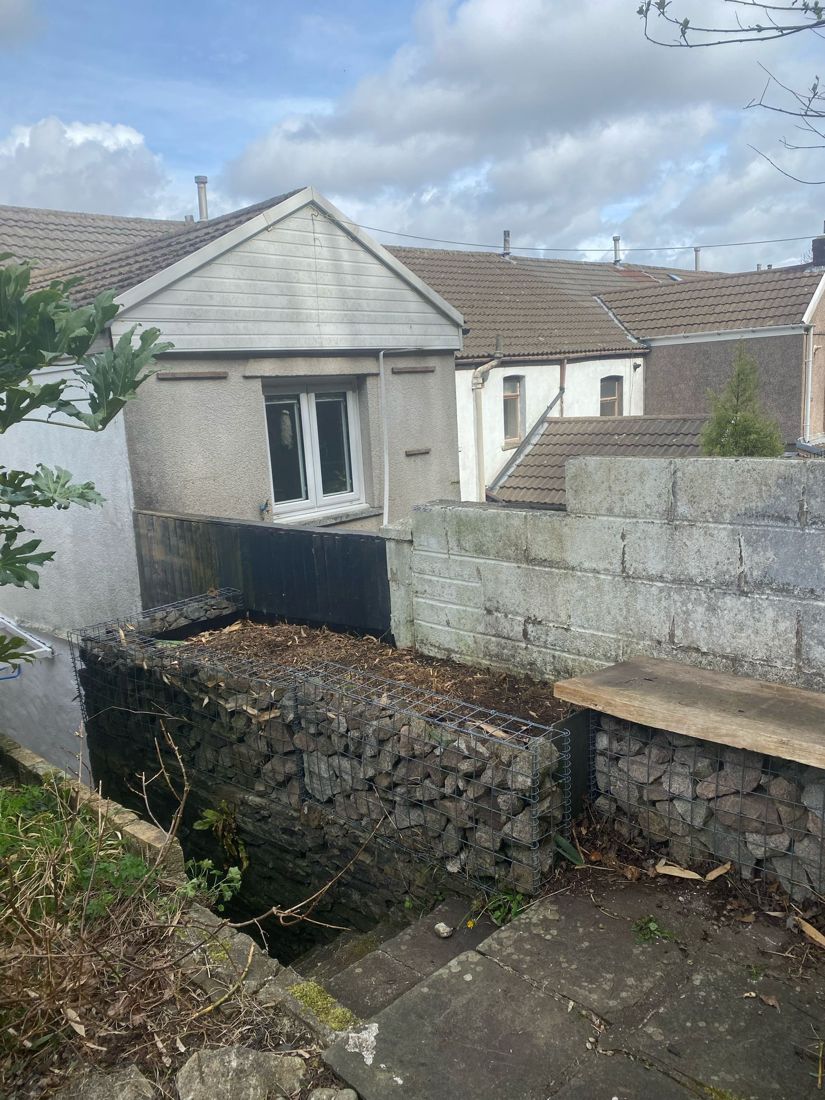
Rhizomes do not usually crush a sound, well-laid patio. What they do is find the weak points and then thicken, which lifts and tilts slabs over time. Patios laid on a thin or poorly compacted base are the most vulnerable, and so are older paths and steps. Garden walls are affected differently: dry stone and older lime-mortared walls can be pushed apart as canes and rhizomes grow through the gaps.
Sloping gardens and valley terraces make things trickier. Rhizomes follow the easiest route, and on a slope that is often along retaining walls, steps and the soil behind them, where movement is hardest to spot and most difficult to put right. Shared boundaries are another worry, because bamboo happily travels under a fence into the neighbouring plot and can become a dispute.
Damp ground and mild winters mean bamboo rarely struggles in Wales, so waiting for it to stop of its own accord is not a plan. If anything, a wet summer simply gives it more energy to spread, and a stand that looked manageable a few seasons ago can quickly double its reach across the garden.
If the patch is small and clearly not near a wall, drain or boundary, you can start by cutting the canes back to ground level and clearing the cut material. Do this regularly and watch for new shoots, because each one weakens the rhizomes a little more. Wear gloves and eye protection, as cut canes are sharp.
Be wary of promises that cutting alone will solve it. Cutting canes does not kill the plant, and rhizome fragments left in the soil can sprout again. Avoid digging deeply right beside a wall or patio edge, as that can cause the very movement you are trying to prevent. If in doubt, stop and ask us to take a look.
Thorough removal means cutting the canes and then digging out the rhizome mass, which can be deep, dense and heavy work. A large or mature clump, anything close to a house, drain or retaining wall, and any bamboo spreading across a boundary are all jobs most safely handled with proper equipment and plenty of labour.
We cut and remove the canes, dig out the rhizomes and roots, take the waste away and then check the area for regrowth afterwards. Any damaged paving can then be repaired or relaid, and in some cases we can build a new patio on a fresh, well-compacted base, so the repair is done once and done properly.
Late winter and spring suit removal well, as fresh growth shows you where the rhizomes are heading. The size of the stand, how far it has spread, access for machinery, ground conditions and how much waste there is to dispose of will all shape the work involved. Heavy clay, stony soil or a steep bank can slow the digging considerably.
The reliable way to know the cost is for us to see it. We offer a free quotation after looking at the garden, and we will explain what we would dig out, what we would leave and what to watch for in the following months, so there are no surprises when the work begins and you know what to expect on the day.
We will visit, tell you honestly what is needed and give you a free, no-obligation quotation.
Solid, thick concrete is rarely broken through, but rhizomes will use cracks, joints and the edges of slabs. Thin or aged concrete, tarmac and paving laid on a weak base are more vulnerable. Once a crack exists, the rhizome thickens and widens it over the seasons.
Not on its own. The rhizomes underground store energy and push up new shoots, sometimes for several years in a row, so the plant keeps coming back. Repeated cutting weakens the plant, but removing the rhizome mass by digging is the dependable way to stop it returning.
That can depend on the circumstances, and a polite conversation is the sensible first step, ideally before the bamboo spreads much further. If damage is already happening, it is worth taking advice on your position. Whatever the outcome of that conversation, removing the bamboo thoroughly from your own side will stop it spreading further.
It can, because small fragments of rhizome left in the soil may sprout. That is why careful digging matters, and why we check the area for regrowth afterwards. Any shoots that do appear are usually weak and easy to deal with promptly.
Running bamboo spreads through underground stems called rhizomes, and stopping it means digging them out thoroughly rather than just cutting down the canes.
Read the guide →
Tree surgery is priced job by job rather than from a fixed list, so this guide explains what moves the cost up or down and how to get a firm figure.
Read the guide →
There is no single perfect month for every tree, but winter suits many species, and this guide shows how timing, nesting birds and weather affect the choice.
Read the guide →Tell us what needs doing and where. We will come back to you, or call 07766 919630 if it is urgent.