Hedges in Abergavenny put on plenty of growth in a season, particularly in the damp Usk valley where gardens sit beneath Sugar Loaf and the Blorenge. We cut and shape hedges for homeowners across the town, from tidy front boundaries on period terraces to long screens around larger villa plots. Whether you want a regular tidy or a single cut, we arrive with the right equipment and leave the garden neat.
We trim sides and tops, reduce height and width, and bring back hedges that have been left for a few seasons. Privet, beech, laurel, conifer and mixed boundaries are all familiar work for us. Cuttings are taken away and paths are swept before we go, so you are not left with a pile of clippings to deal with yourself.
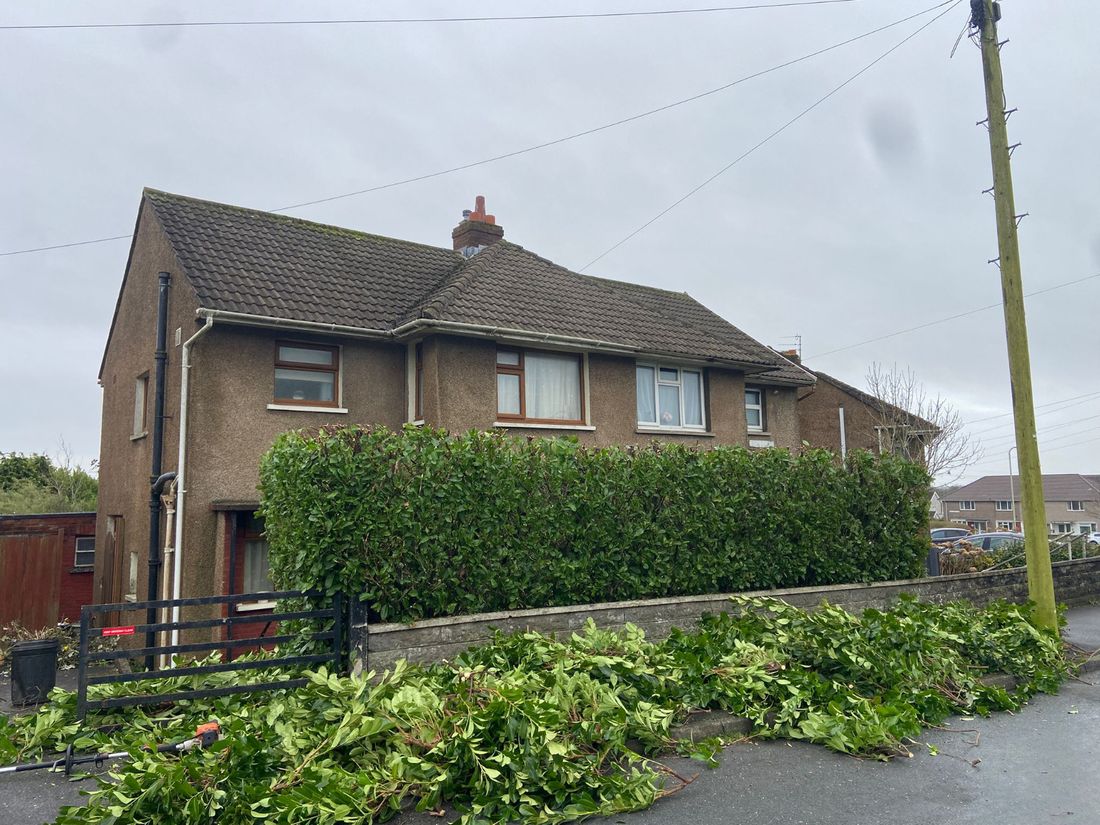
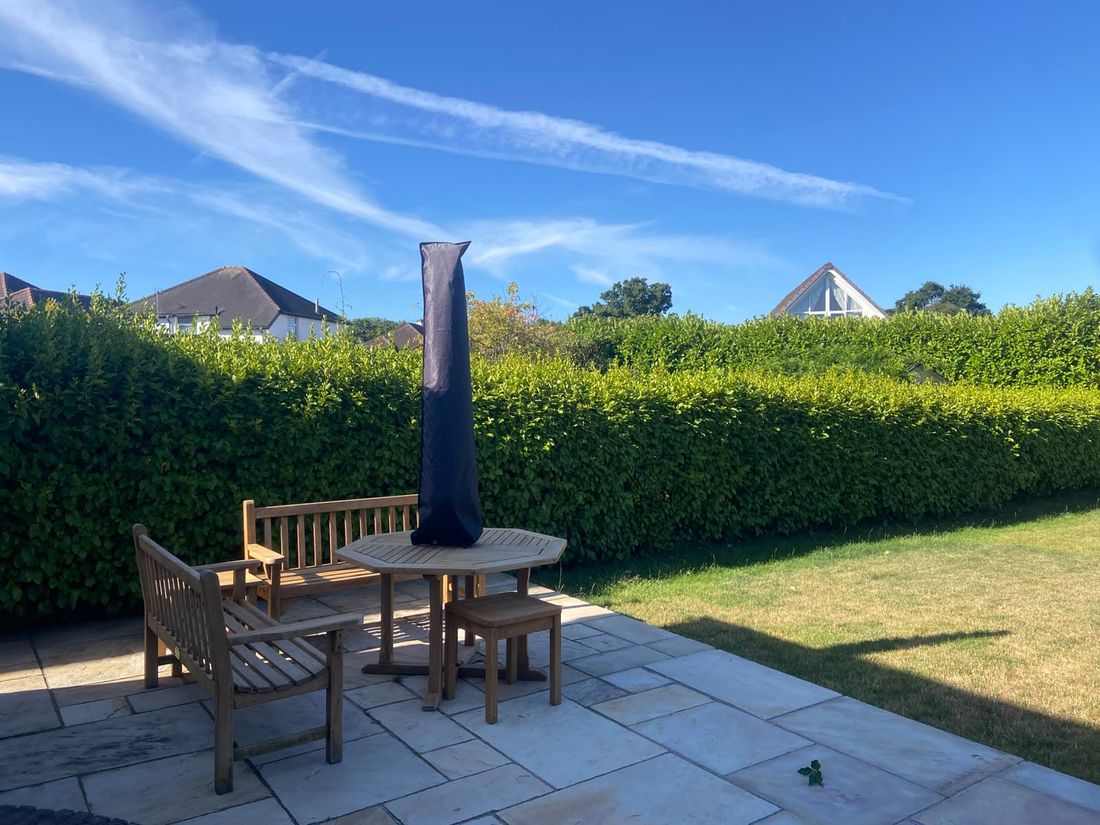
Many of the gardens in Abergavenny belong to period terraces and villas, and the hedges that go with them have often been growing for decades. A formal privet or beech boundary needs a steady hand and a clean line, because it frames the whole front of the house. We work along a string line or by eye where the hedge allows, keeping tops level and sides slightly narrower at the top so light reaches the lower branches.
Older hedges tend to thicken at the edges and thin out inside, which is why a hedge that has been left too long can look bare once it is cut back hard. We talk this through before starting. Sometimes a gradual reduction over two or three visits is kinder to the plant than one severe cut, and we will say so plainly if that is the sensible route.
Abergavenny has a lot of mature garden and hedgerow trees, and hedges often grow tangled up with them. Brambles, ivy and self-seeded saplings push through a boundary and make it harder to cut cleanly. We clear what is in the way, cut around larger stems carefully, and separate genuine hedge plants from weed growth so the boundary you keep is the one you meant to have.
Gardens close to the edge of the National Park also tend to meet field boundaries and open ground, where hedges are longer and wilder. We are happy to cut these to a practical shape that still suits the setting. If the hedge is shared with a neighbour, it helps to let them know beforehand, and we can suggest how to approach that conversation.
Some Abergavenny customers book us once a year to keep a boundary under control, while others prefer two visits to hold a formal shape. Either approach works, and we can agree a pattern that suits your garden and how much you want to do yourself. We are careful during bird nesting season and will check a hedge before cutting it. We also cover Llanfoist, Govilon and Crickhowell if your property is just outside town.
A few jobs we have completed. We also work in and around Abergavenny.
 Hedge Trimming
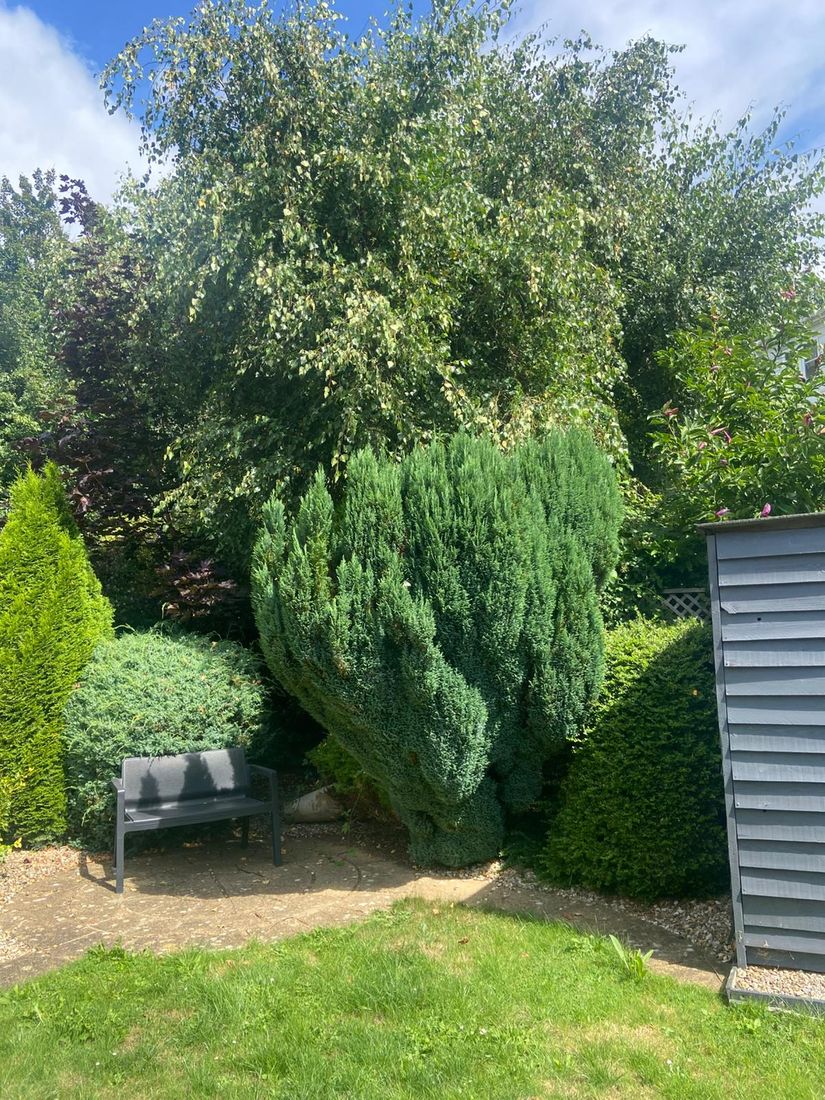
Overgrown hedges, a leaning conifer and tall boundary growth along a narrow lane, tackled as one hedge trimming project in Abertillery.
See the project →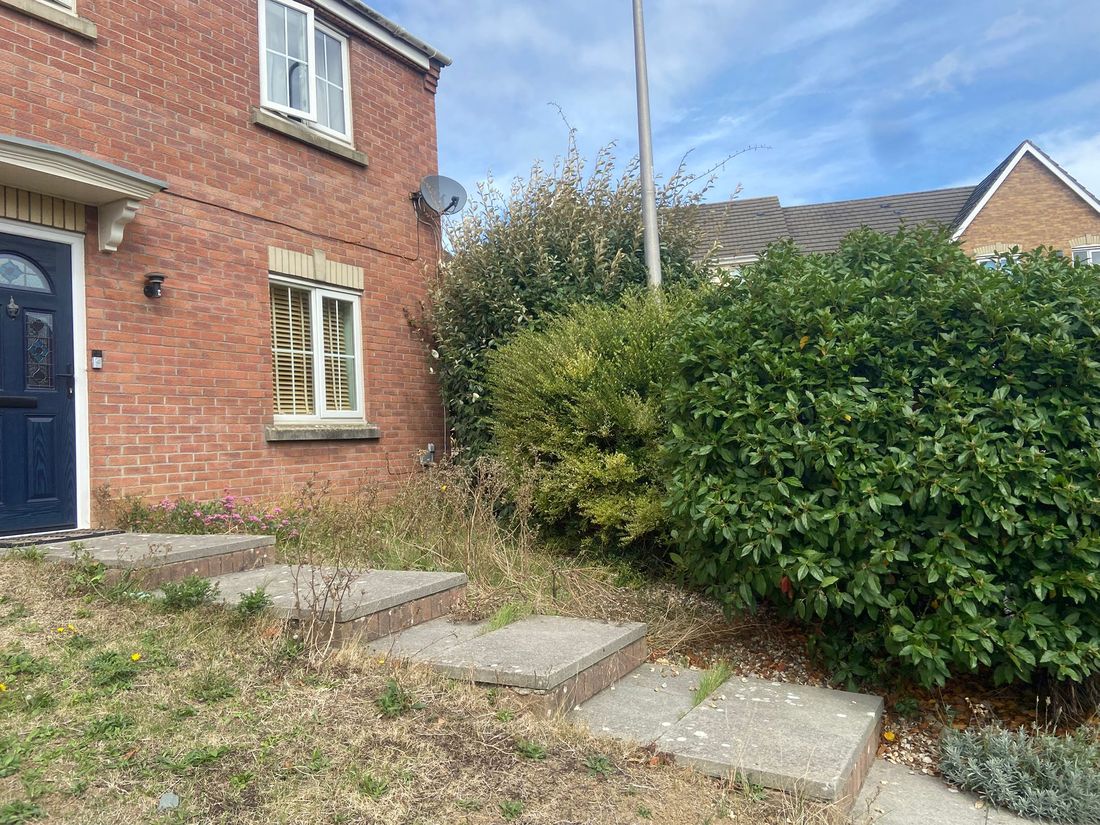 Hedge Trimming
Large evergreen hedges and shrubs pressing in on the front steps of a red-brick house in Barry, shown before cutting back.
See the project →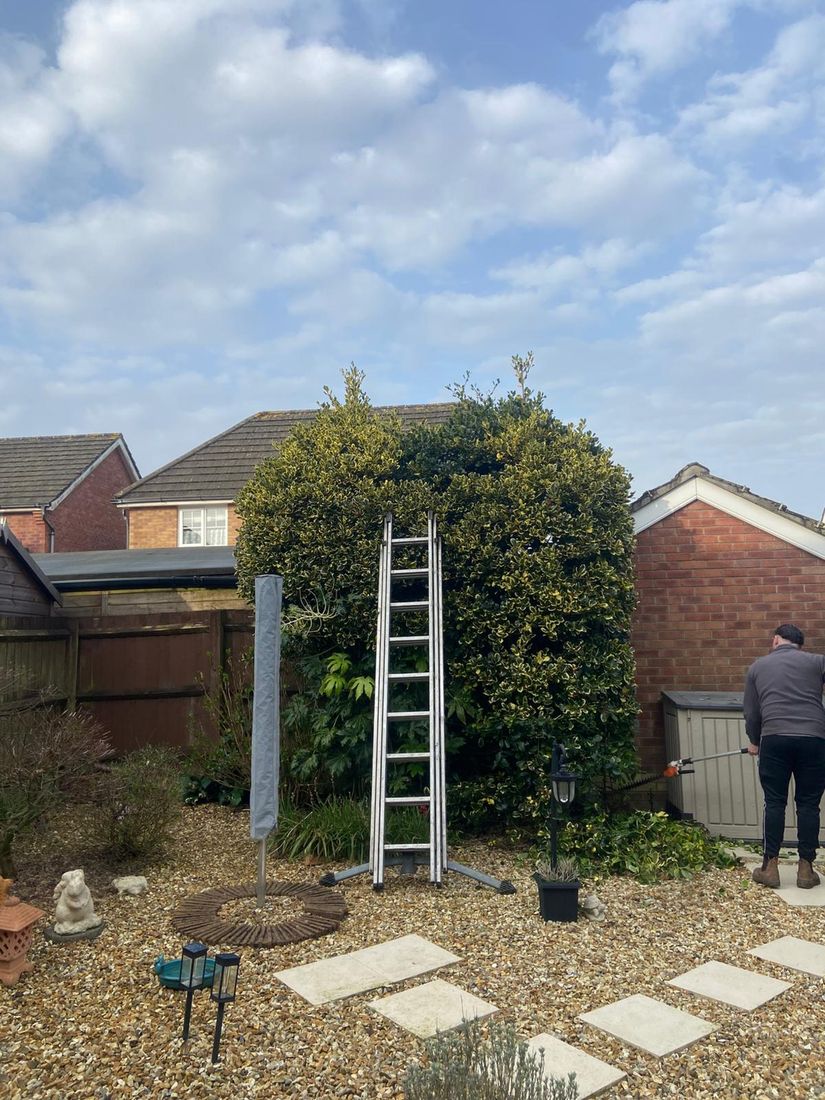 Hedge Trimming
A selection of hedge, climber and small tree trimming jobs in Bridgend, from a roadside laurel hedge to an overgrown back fence.
See the project →We work across South Wales. Pick your town to see how hedge trimming works locally.
Most garden hedges need cutting once or twice a year, but the right rhythm depends on the plant, the shape you want and the nesting season.
Read the guide →Hedge cutting is priced on the job in front of us, and a handful of practical factors explain why two hedges that look similar can need very different amounts of work.
Read the guide →Some hedges just need a single tidy-up, while others stay manageable only with planned visits, and the right choice depends on the hedge and how you use your garden.
Read the guide →For most hedges, late summer or early autumn suits a main cut, with a lighter tidy earlier in the year if needed. Spring and early summer are when birds may be nesting, so we check carefully and avoid disturbing active nests. Tell us what hedge you have and we will suggest timing.
Often yes, though it depends on the plant. Some hedges, such as privet and beech, regrow well from hard cutting, while many conifers will not shoot from bare wood. We look at it first, explain what is likely to work, and suggest a staged reduction where that is safer.
Yes. We collect the cuttings, remove them from site and sweep paths and drives before leaving. If you would like some material kept for composting or mulch, just mention it beforehand and we can leave it where you want it.
Tell us what needs doing and where. We will come back to you, or call 07766 919630 if it is urgent.