Tredegar stretches along the Sirhowy valley, with Bedwellty Park at its heart and streets of terraces climbing the hill. Gardens slope, and the trees in them often lean toward the light or the open valley. We prune them to bring the crown back into balance, reduce weight where it is not wanted and clear dead or damaged branches.
We are practical about it: cut what the tree needs, protect what is around it, and leave nothing behind. We cut with an eye to how the tree will look and behave over the next few seasons, not only on the day we finish.
A tree on sloping ground rarely grows evenly. One side stretches out for the light, and the other stays short or sparse. Over the years that can leave a heavy crown reaching toward a path or a neighbour's wall. By reducing the long side and thinning inside the crown we aim to even up the weight, and the tree looks calmer, more natural and easier on the slope it grows on.
Where branches cross or rub, one has to go, otherwise the bark wears away and decay can start. We choose the weaker or badly placed branch, cut back to the collar and leave a clean wound. In Tredegar we see plenty of trees that simply need these small decisions made before they turn into bigger problems, such as a split limb or a branch coming down in the first storm of winter.
Garden space on the terraces is tight, so a single tree can hang over several properties at once. We talk through what is practical and what the neighbours might expect, then prune only what we can reach from your side, and we do not cut into a neighbour's garden without their agreement. Fruit trees and ornamentals in small gardens are kept compact by regular light work rather than rare heavy cuts, which also keeps them fruiting where they are meant to and keeps them easier to manage.
Larger trees need the branches lowered in stages, so nothing swings into a wall or fence. On a steep plot we plan the route out before the first cut. Conifers are always treated within their green growth, as old brown wood does not regrow, and a deep cut would leave a hole that never fills in. In Tredegar's smaller gardens that is easy to get wrong.
We choose a sensible season for the species, stay out of the nesting period, and check for protection orders before cutting. If a Tredegar tree stands near the park or in a conservation area, that check matters even more. We also cover Ebbw Vale, Rhymney, Sirhowy and Georgetown, and every visit ends with the branches cleared and the ground raked over.
A few jobs we have completed. We also work in and around Tredegar.
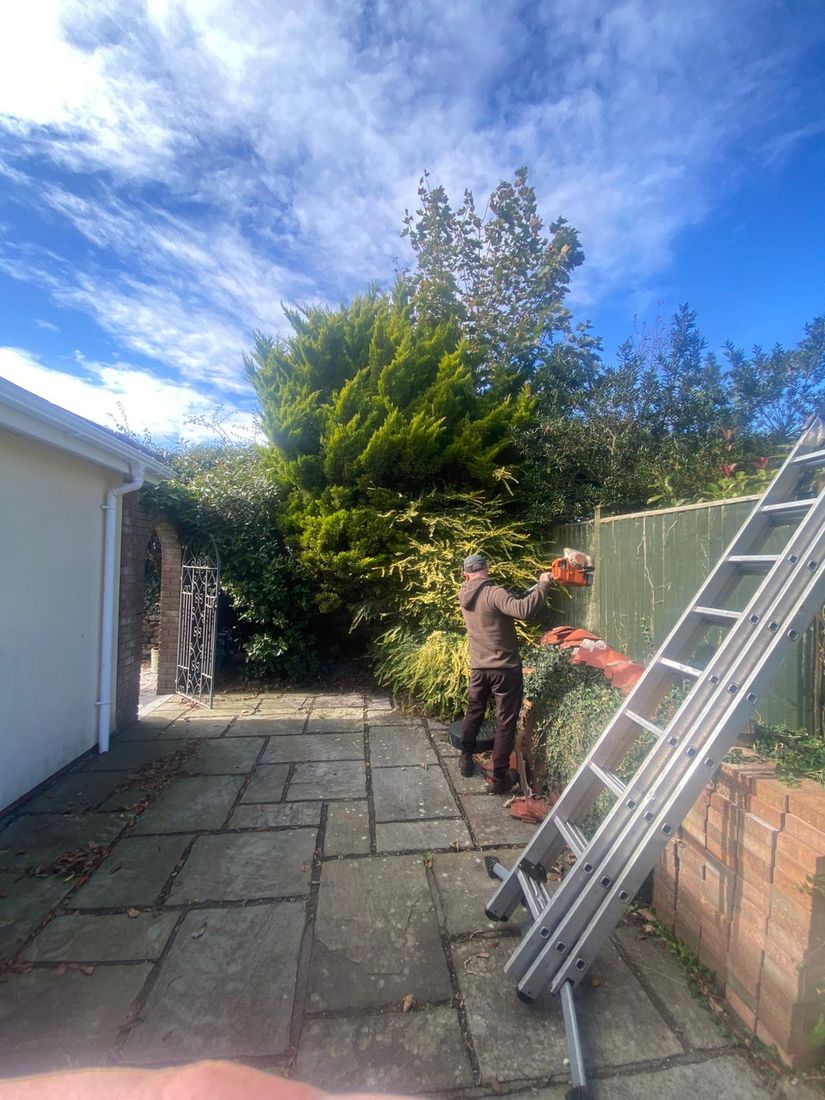 Tree Pruning
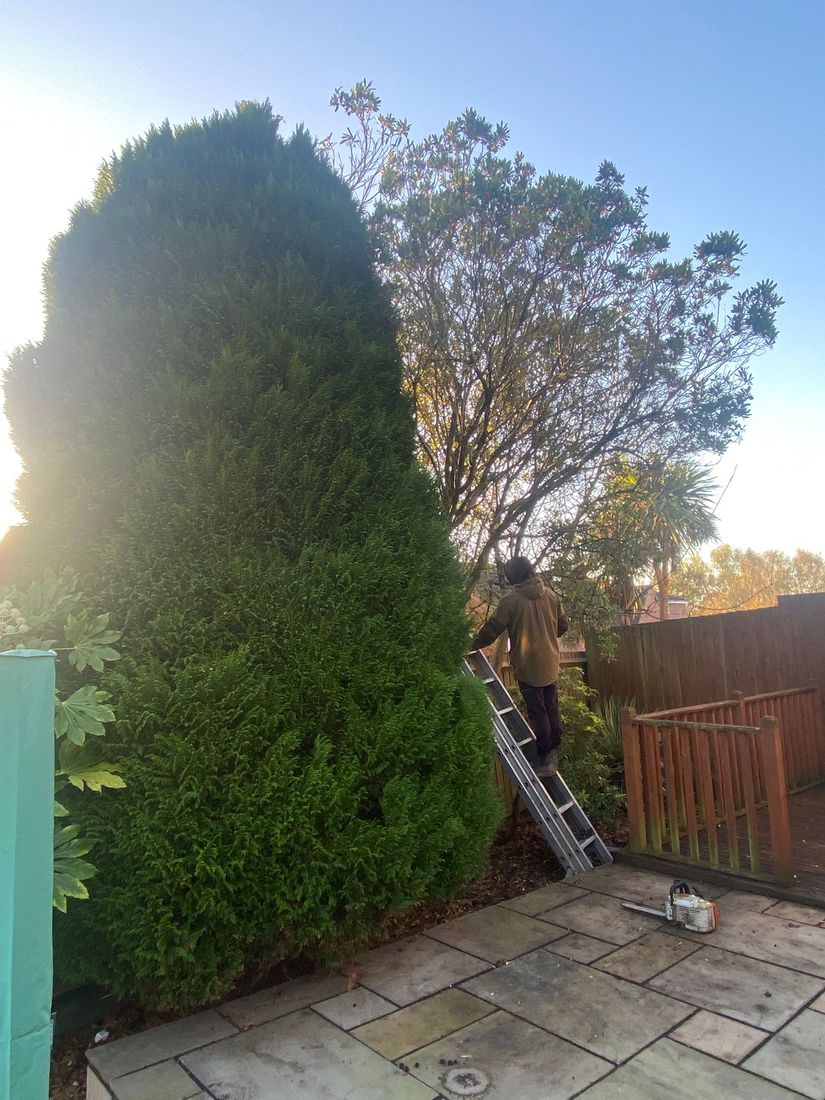
Cutting back a bushy evergreen from the ground beside a Bedwas patio, with a ladder ready against the wall for higher growth.
See the project →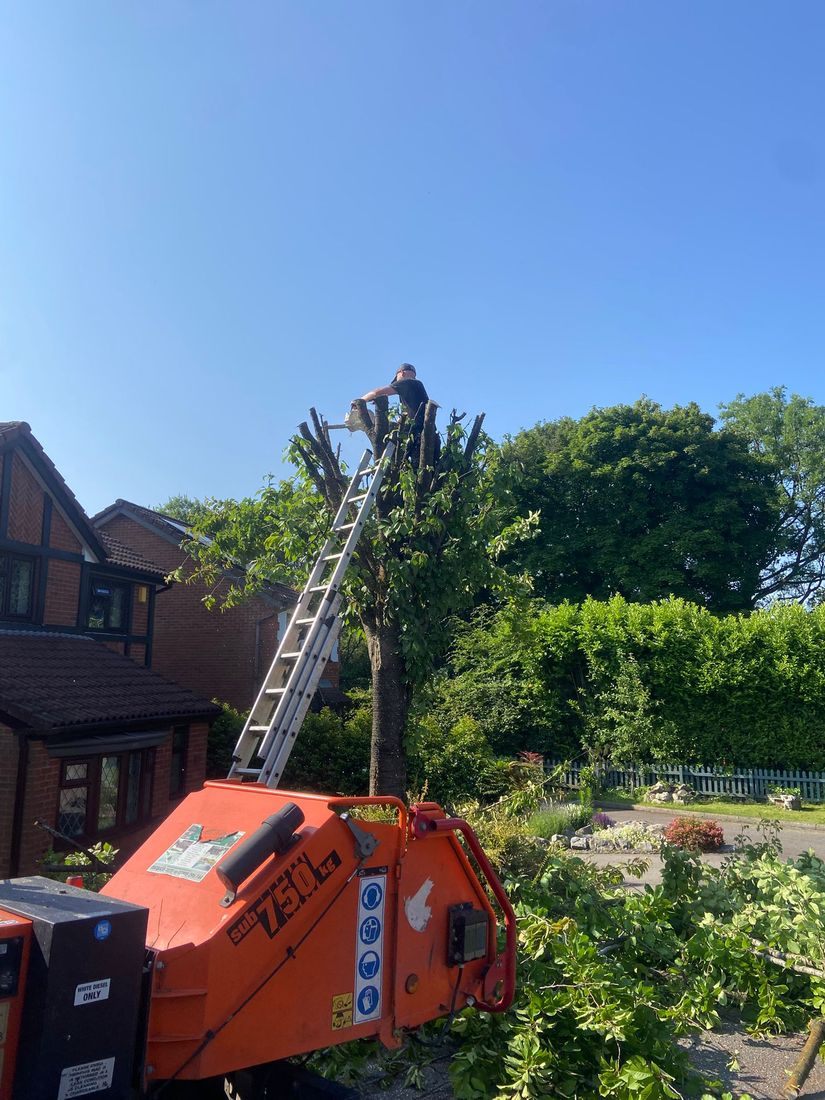 Tree Pruning
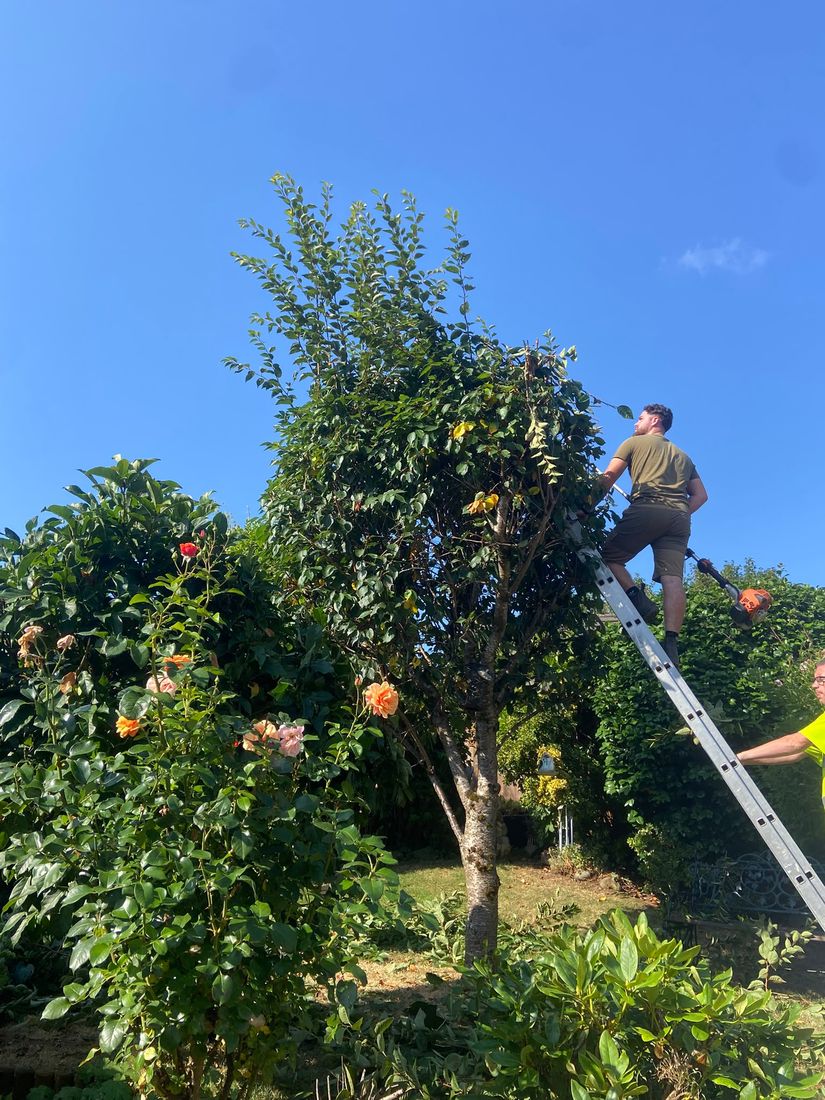
Cutting back a tree in a Blackwood front garden from a ladder, with the chipper beside the road taking the branches.
See the project →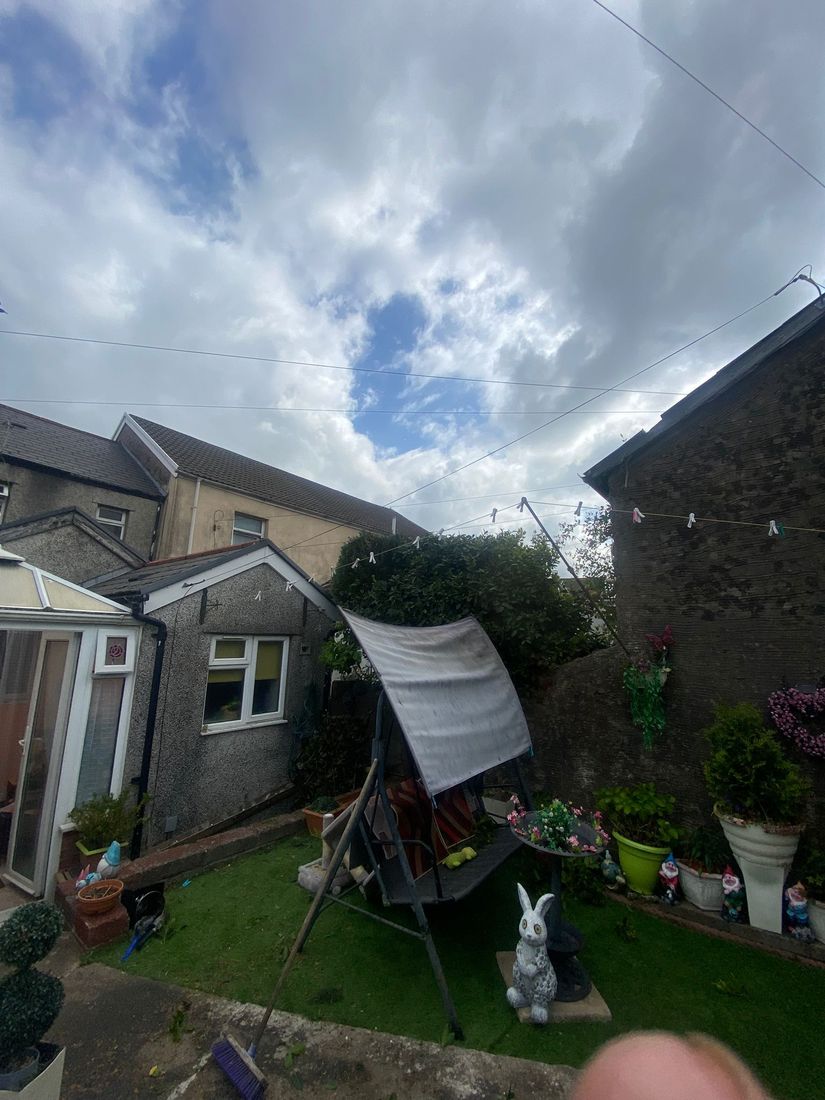 Tree Pruning
Pruning dense evergreen growth in a small terraced back garden in Caerphilly, working around a conservatory and a covered swing seat.
See the project →We work across South Wales. Pick your town to see how tree pruning works locally.
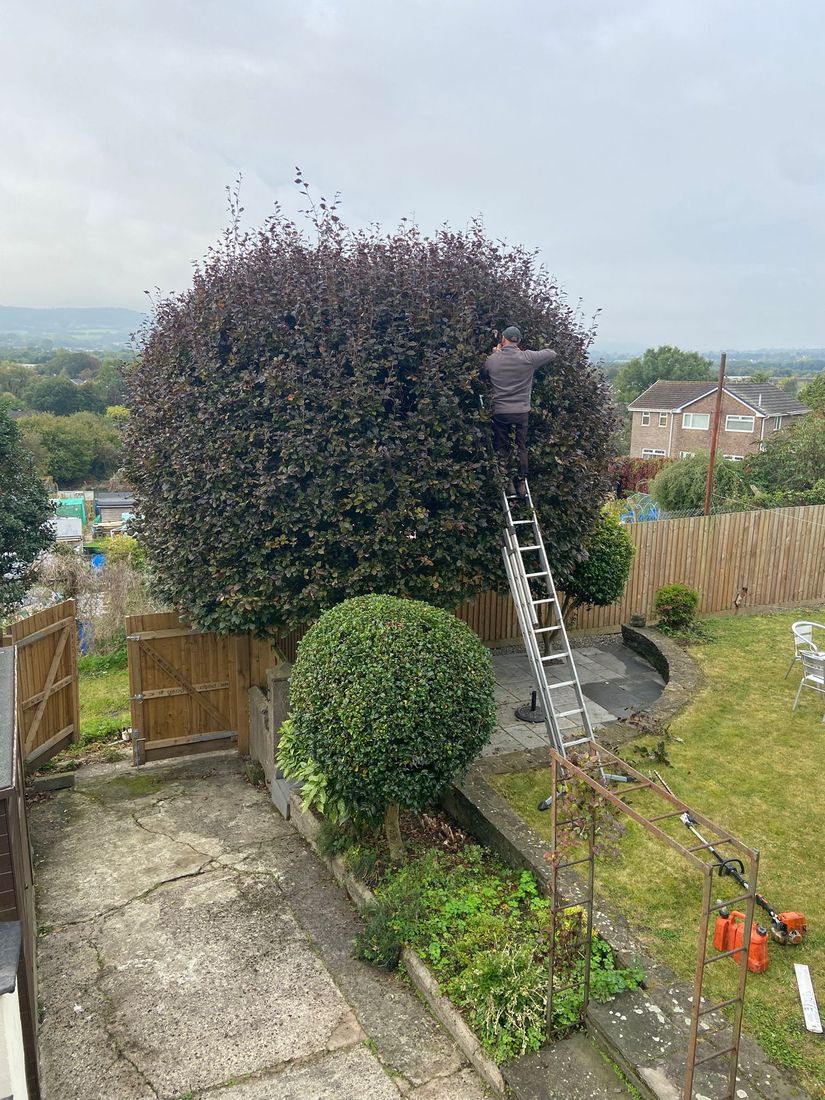
There is no single perfect month for every tree, but winter suits many species, and this guide shows how timing, nesting birds and weather affect the choice.
Read the guide →Tall conifers can often be reduced safely, but only back to living green growth, because most will never regrow from bare brown wood.
Read the guide →Regular pruning keeps trees safe, balanced and healthy, brings light back into gardens and buildings, and usually avoids the larger and more disruptive jobs that neglect leads to.
Read the guide →It varies. Fruit trees often benefit from light attention most years, while many ornamental and larger trees can go longer between visits. We can look at your tree and suggest a sensible routine rather than cutting for the sake of it.
Small branches you can reach from the ground are fine with the right tools. Anything high, heavy or near buildings and wires is a different matter, and poor cuts can harm the tree. We are happy to take on the larger work.
Dead, crossed or overloaded branches fail most easily, especially on exposed hillsides. Removing deadwood and thinning the crown reduces the risk, though we cannot make any tree completely safe, and we will advise if something looks structurally weak.
Tell us what needs doing and where. We will come back to you, or call 07766 919630 if it is urgent.