Monmouth has plenty of gardens where trees have been growing for decades. Behind the period town houses and along the edges of the Wye and Monnow you find big old apples, ornamentals and tall boundary trees that need steady attention. We prune them to shape, thin out crowded growth, take out deadwood and keep each tree in proportion with the garden around it.
Good pruning is mostly about restraint. We look at how the tree grows, decide what the job really needs, and cut cleanly so the tree keeps its natural character instead of ending up as a stump with a few stubs.
A large Monmouth garden often holds a tree that has simply grown past the plan. The branches may be crossing, rubbing together or crowding the centre so light and air cannot get through. Thinning that dense growth lets the crown breathe, and it usually makes the tree look lighter and tidier without changing its overall shape in any dramatic way, which is what most owners want.
Deadwood is the other regular job. Dead and dying branches turn brittle, and over a path, patio, parked car or neighbour's fence they are worth removing in good time. We take them back to sound wood, make clean cuts just outside the branch collar, and leave the live structure of the tree alone so each wound can seal over and heal properly in the following seasons.
Fruit trees respond well to regular, sensible pruning, and many older town gardens still have an apple or pear that has not been touched for years. We open up the crown, remove weak or tangled shoots and aim for a balanced framework of branches. Ornamental trees are treated more lightly, because heavy cutting spoils the shape people planted them for in the first place.
Conifers need a different approach. They will not regrow from old bare wood, so we never cut back into brown, leafless growth, as that part simply stays bare. Where a fir in Monmouth has grown too big we reduce it carefully within the green growth, and we will tell you plainly if a tree is past sensible reduction and would be better left or replaced.
Timing matters. Many species are pruned in winter, and we avoid cutting in the nesting season so birds are not disturbed. If your Monmouth tree has a protection order or sits in a conservation area, we will point out that a check is needed before any work starts. We also cover Rockfield, Dixton, Overmonnow and Trellech, and we clear away all the cut material when we finish.
A few jobs we have completed. We also work in and around Monmouth.
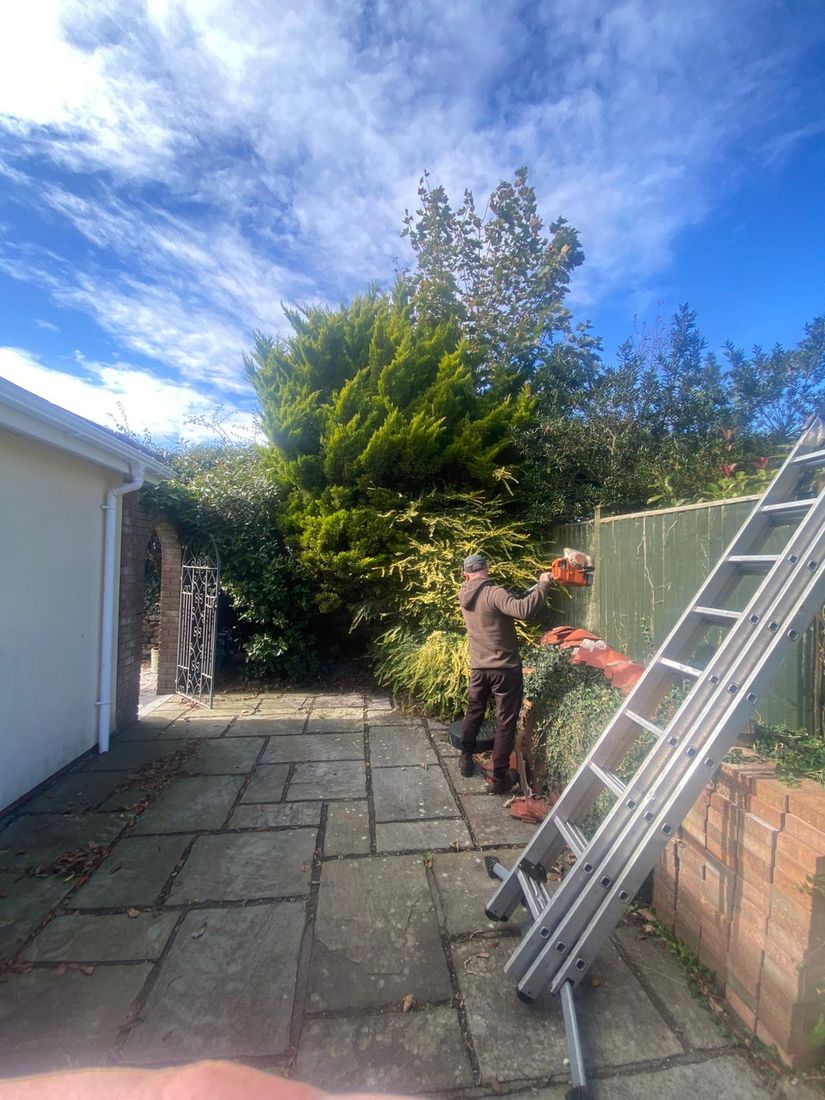 Tree Pruning
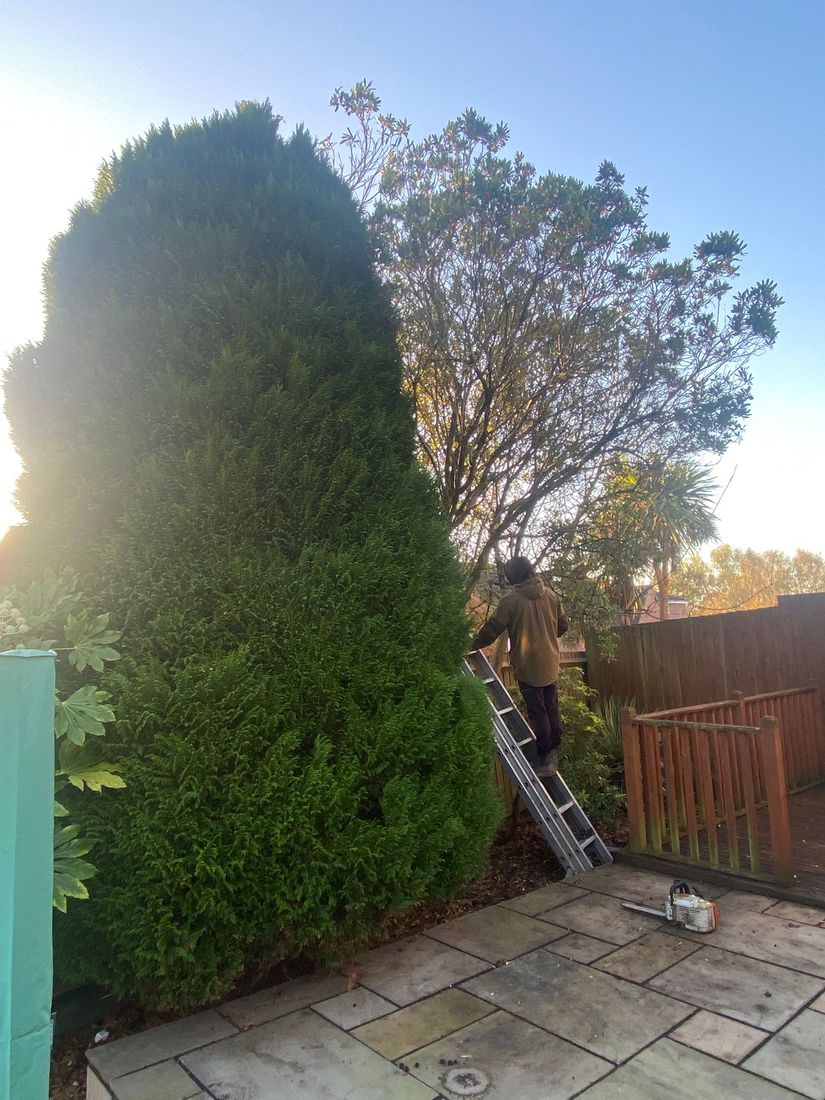
Cutting back a bushy evergreen from the ground beside a Bedwas patio, with a ladder ready against the wall for higher growth.
See the project →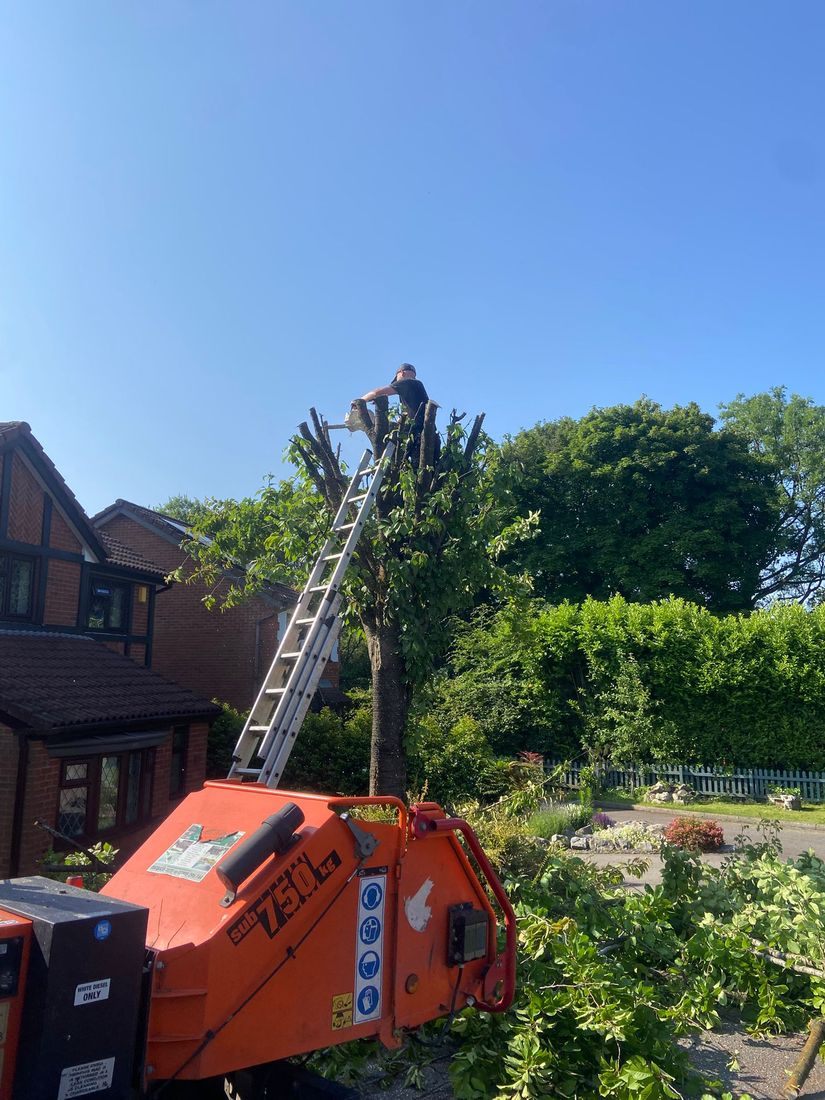 Tree Pruning
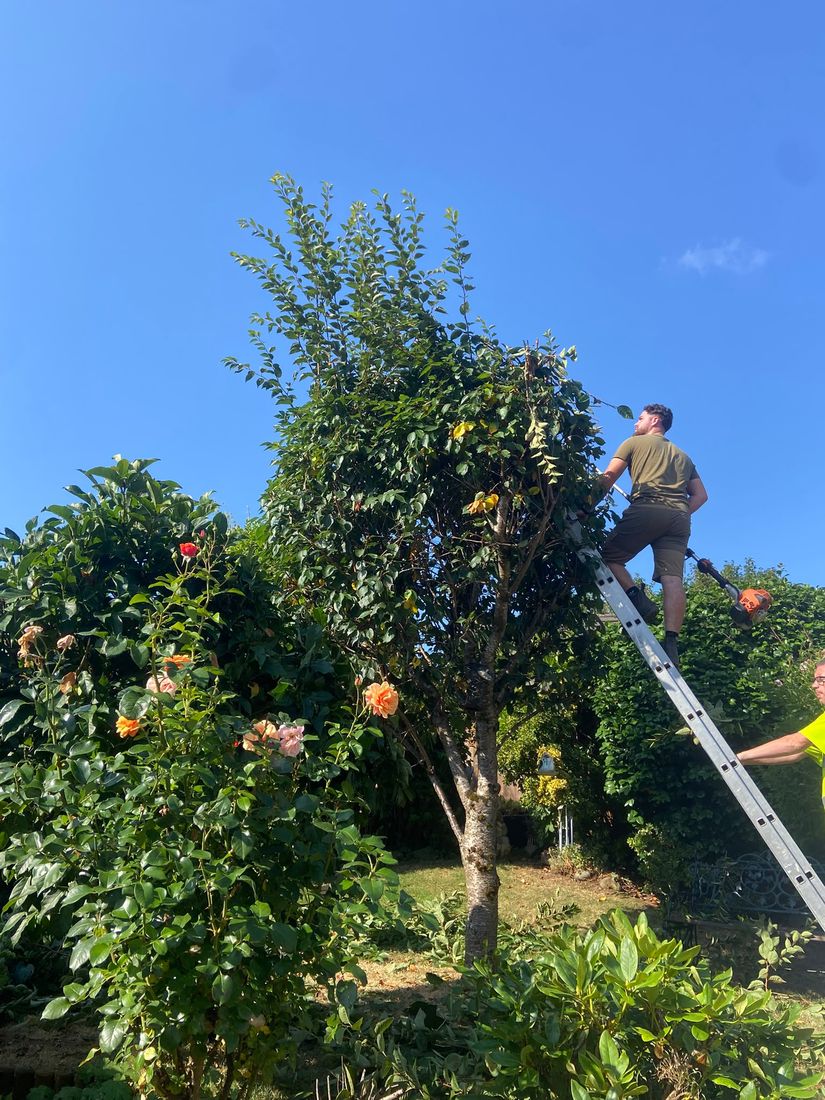
Cutting back a tree in a Blackwood front garden from a ladder, with the chipper beside the road taking the branches.
See the project →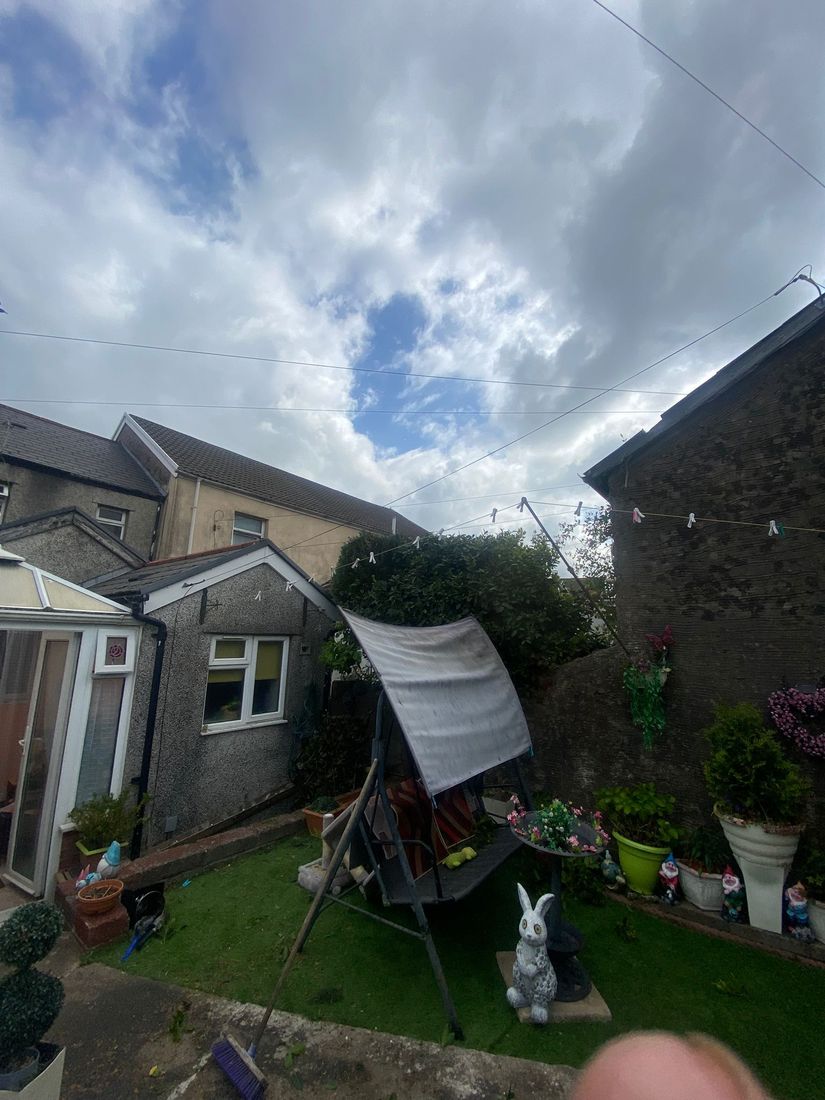 Tree Pruning
Pruning dense evergreen growth in a small terraced back garden in Caerphilly, working around a conservatory and a covered swing seat.
See the project →We work across South Wales. Pick your town to see how tree pruning works locally.
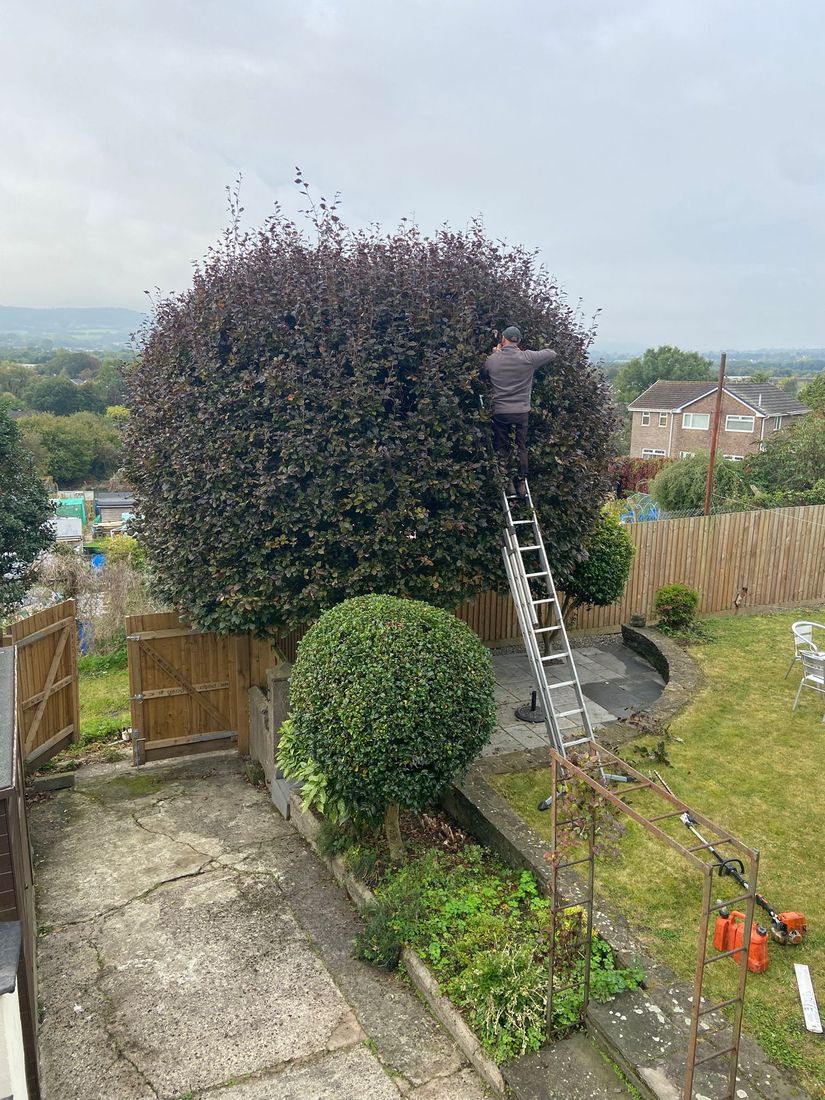
There is no single perfect month for every tree, but winter suits many species, and this guide shows how timing, nesting birds and weather affect the choice.
Read the guide →Tall conifers can often be reduced safely, but only back to living green growth, because most will never regrow from bare brown wood.
Read the guide →Regular pruning keeps trees safe, balanced and healthy, brings light back into gardens and buildings, and usually avoids the larger and more disruptive jobs that neglect leads to.
Read the guide →It depends on the species. Many trees are pruned in the colder months when they are dormant, while some fruit and flowering trees prefer different timing. We always avoid the bird nesting season, so we will suggest a sensible window once we have seen your tree.
Yes, we can shape and reduce the branches on your side so they stop crossing the boundary. We advise talking to your neighbour first, and we only remove what the tree can comfortably lose, so it stays healthy and keeps a natural outline.
Sensible thinning lets more light and air into the crown, which often helps fruit trees stay healthy and productive. We cannot promise a particular crop, but removing deadwood and crowded shoots gives the tree a better chance of doing well.
Tell us what needs doing and where. We will come back to you, or call 07766 919630 if it is urgent.