

Maesteg sits in the Llynfi valley, and most gardens there have a tilt to them, with terraced streets below and wooded slopes rising above. A fence on that kind of ground has to deal with a slope, run-off after rain and the occasional blustery day. We fit new fencing in Maesteg that is set out to suit the ground, from one-off panel repairs to complete boundary renewals.
Ring or message us with what you have in mind and we will arrange a time to look at the garden, check the slope and the access, and talk through the options so you know what to expect before any work is agreed.
The first job on a sloping Maesteg garden is deciding how the fence meets the ground. Stepped panels give a clean, level top line with small triangular gaps below, which gravel boards can close. Raked panels follow the slope more closely. Each suits a different garden, and we explain both so you can choose the look you prefer, with a full view of the practical side.
Post depth is critical when the ground slopes, as soil tends to creep and water finds its way along the line. We dig properly, set each post firmly and check that it stands true before moving on. That makes a visible difference after a wet season, when weaker fences begin to lean downhill and open gaps. Slow, careful setting out is what keeps the line straight.
Many Maesteg gardens back onto wooded slopes, with leaf fall and damp air that can shorten the life of a fence. We recommend gravel boards to lift the panels clear of wet ground, and we leave room for air to move around the timber. We also take care not to disturb the roots of trees on the bank above. Good airflow is simple to build in and it pays off.
Privacy is the usual reason for a new fence, but light matters too. On tight terraced plots a very tall solid fence can make a small garden feel closed in, so we talk through height and style with you, and where it suits, suggest a lower solid section with a lighter, more open finish above it. Either way, you will know the plan first.
Terraced streets in Maesteg often share a boundary, so it helps to agree the line and ownership with your neighbour before the old fence comes down. Heights near a road are also worth checking with the council. When we finish, we take away the old panels and posts so the garden is left clear. We also cover Caerau, Nantyffyllon, Pontycymmer and Llangynwyd.
A few jobs we have completed. We also work in and around Maesteg.
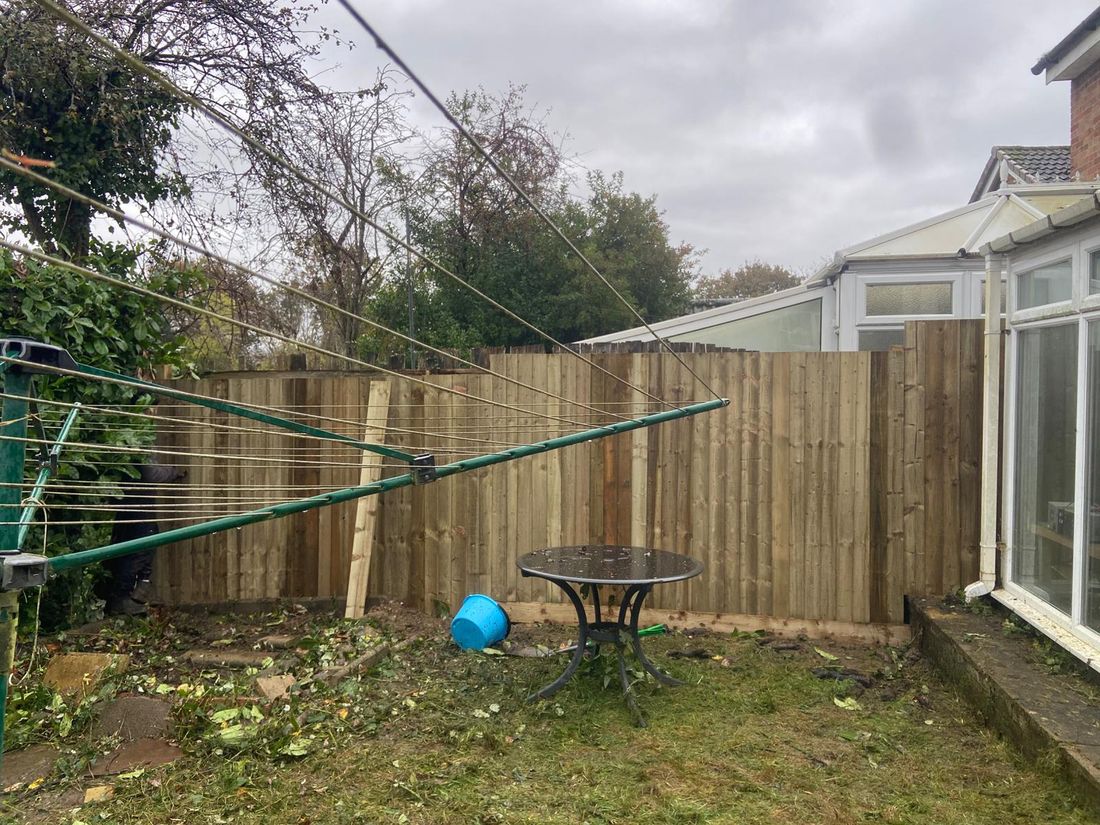
Garden FencingOld weathered fence panels taken down and new close-boarded fencing fitted beside a conservatory in a Cardiff back garden.
See the project →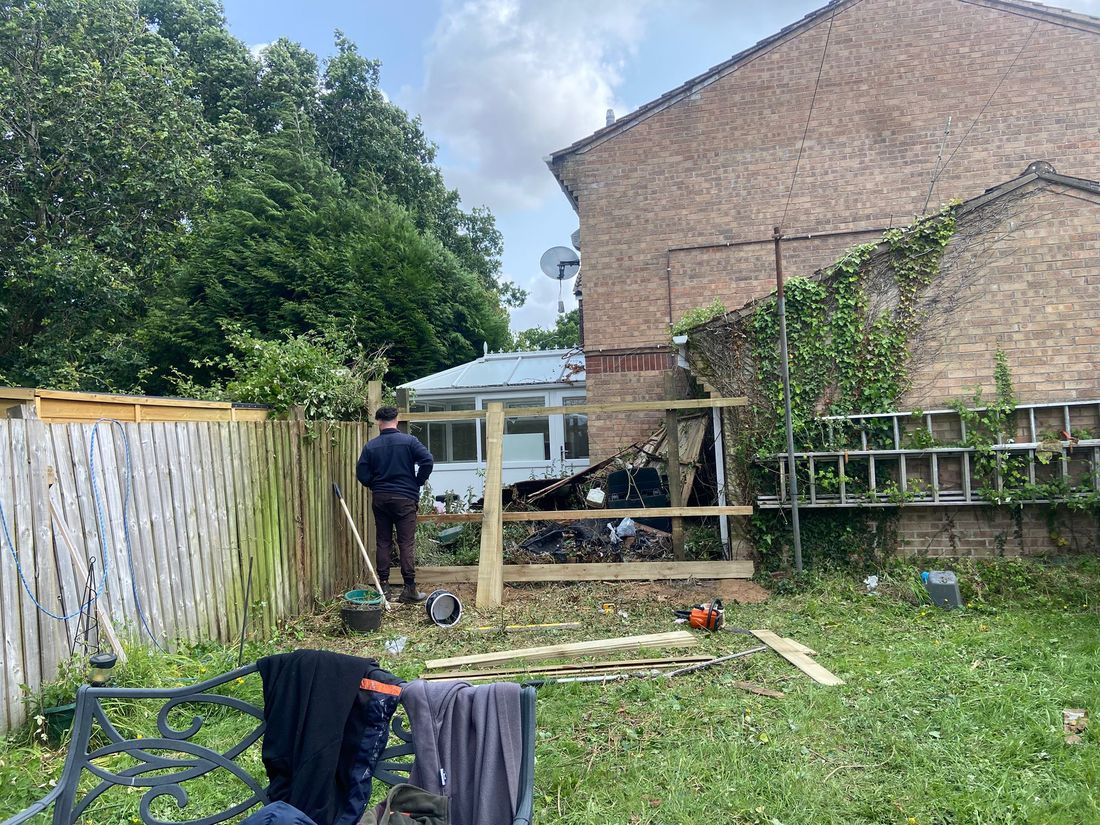 Garden Fencing
A fence replacement part-way through in a Cwmbran garden, with fresh posts and rails standing in the gap beside a brick house.
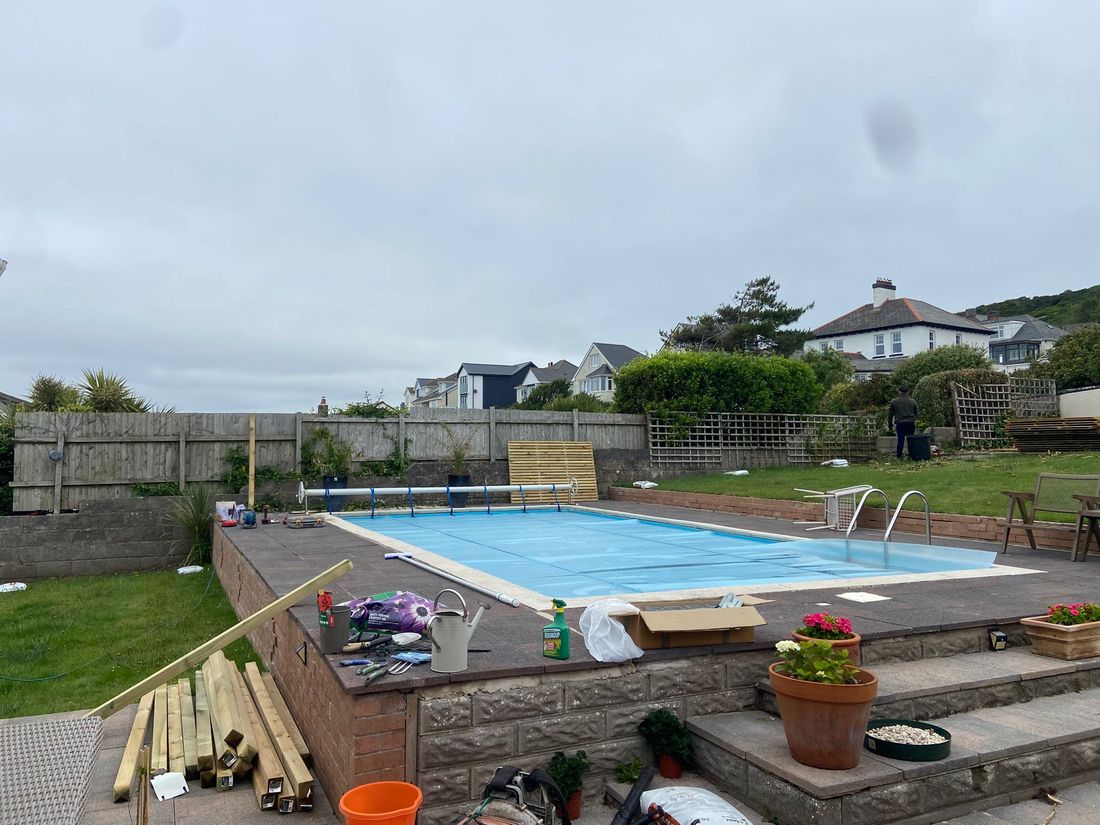
See the project →Garden FencingNew fence posts and a panel laid out beside a swimming pool in an Ogmore-by-Sea garden at the start of a fencing job.
See the project →We work across South Wales. Pick your town to see how garden fencing works locally.
For privacy, solid timber close-board or well-made lapped panels on firm posts usually work well, provided the fence suits your wind, slope and boundary.
Read the guide →Timber is the familiar, adaptable choice for most gardens, while composite trades a higher outlay for less upkeep, so the right answer depends on your priorities.
Read the guide →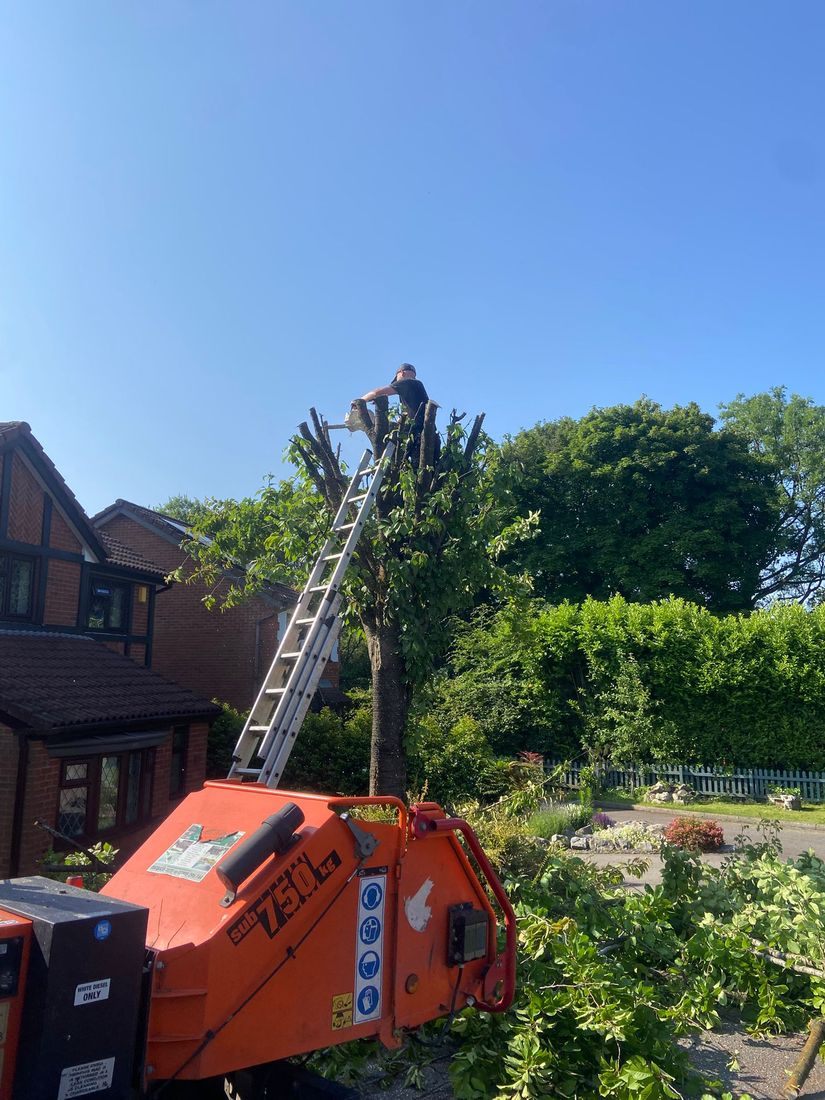
Tree surgery is priced job by job rather than from a fixed list, so this guide explains what moves the cost up or down and how to get a firm figure.
Read the guide →Stepped panels can leave small gaps where the ground falls away, but gravel boards or a neat infill close most of them. If you prefer a continuous line, raked panels follow the slope instead. We will show you which suits the garden.
Keep the timber clear of wet soil. Gravel boards lift the panels off the ground, and posts set properly with good drainage last longer. Trimming back plants and leaf litter near the base also helps the fence dry out.
Often we can, but it depends on the ground. We check how firm the bank is and where the roots run. If a fence at the top or at the base suits better, we will explain the reasons and agree it with you.
Tell us what needs doing and where. We will come back to you, or call 07766 919630 if it is urgent.