
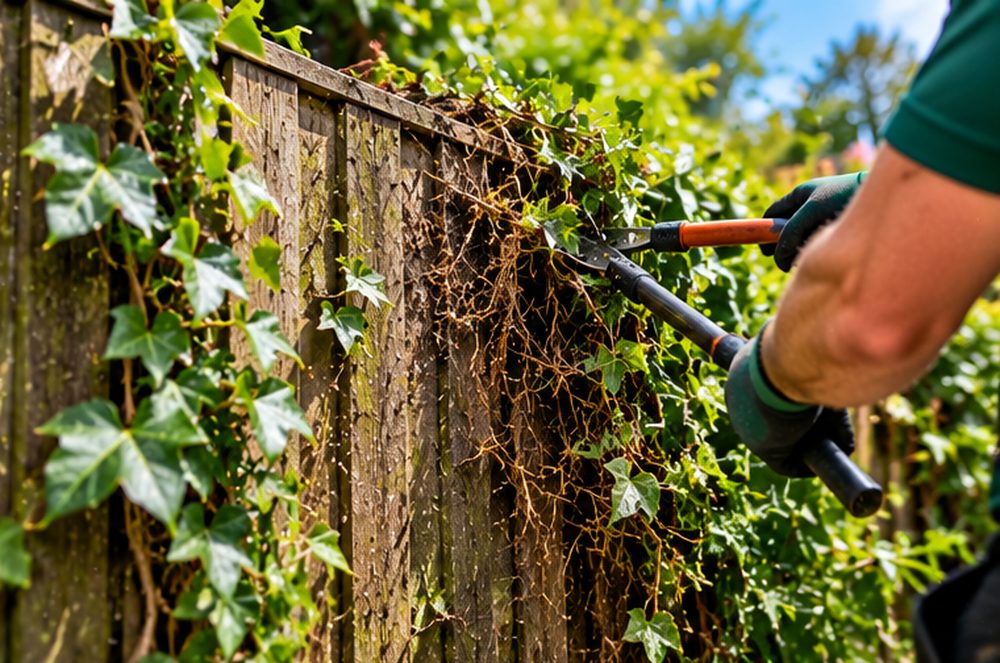
Ivy grows quickly on the wooded hillsides around Caerphilly, and it finds its way into gardens easily. We remove it from walls, fences, sheds, chimneys and trees, starting by cutting the stems at the base so the plant is cut off from its roots. The growth above is then taken down once it has died back and loosened.
We work across Caerphilly and nearby areas such as Bedwas, Machen and Llanbradach. If your ivy is coming in from neighbouring woodland or an unmanaged bank, we can look at what is practical to clear. We can also advise on regrowth.
Caerphilly has terraced streets in the older parts, newer estates on the edges and some large gardens on the slopes. Ivy appears in all of them. On a terrace it often covers a rear wall or a gable end. On an estate, it climbs timber fences. In larger gardens it takes over outbuildings and old trees where nobody has been looking. Each property gets its own plan.
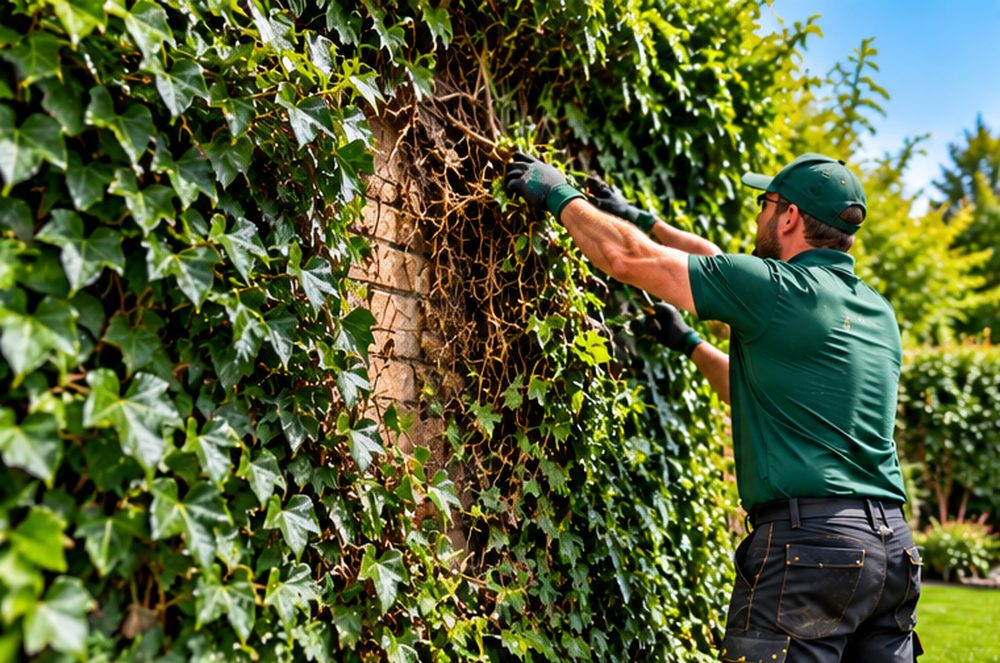
We tailor the approach to each. A stone wall needs patience, so the ivy dies back before it is lifted. A fence panel may come clean sooner. In every case the cuttings are bagged and taken away, and the base of the wall or fence is left clear. Nothing is left stacked against the house or fence when we finish, and we take care not to scuff the surface as we go.
When a garden backs onto wooded ground, ivy does not stop at the boundary. It runs along the ground, climbs the fence and spreads up the first available wall or tree. We can cut the stems back to your boundary and remove the growth inside it, which gives you a clear edge to maintain. In Caerphilly, where so many gardens meet wooded slopes, this is a very common request.
We cannot clear land that is not yours, and we will not pretend that one visit stops woodland ivy coming back. It will try again. A tidy cut line and a quick trim now and then are usually enough to keep it in check, and we are happy to explain what that involves. We will tell you honestly what a realistic outcome looks like.
Ivy on a Caerphilly chimney stack or gable can hide loose pointing, so we look carefully as we clear it and tell you what we see. We also check for nesting birds before cutting, since thick ivy is popular in spring and summer. Sticky roots left on masonry may stay visible for a while, and we explain that before we begin.
A few jobs we have completed. We also work in and around Caerphilly.
 Ivy Removal
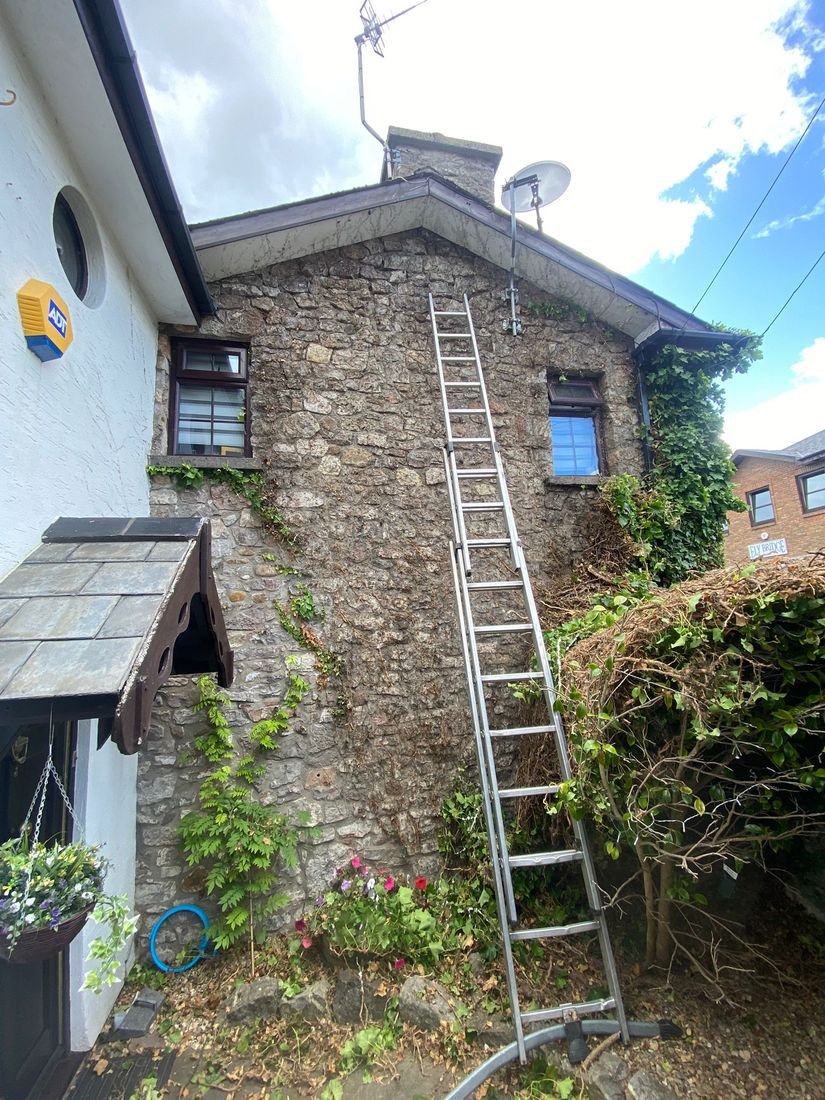
Ivy being cut back from the stone gable of a cottage in Cardiff, with a long ladder up the wall beside the windows.
See the project →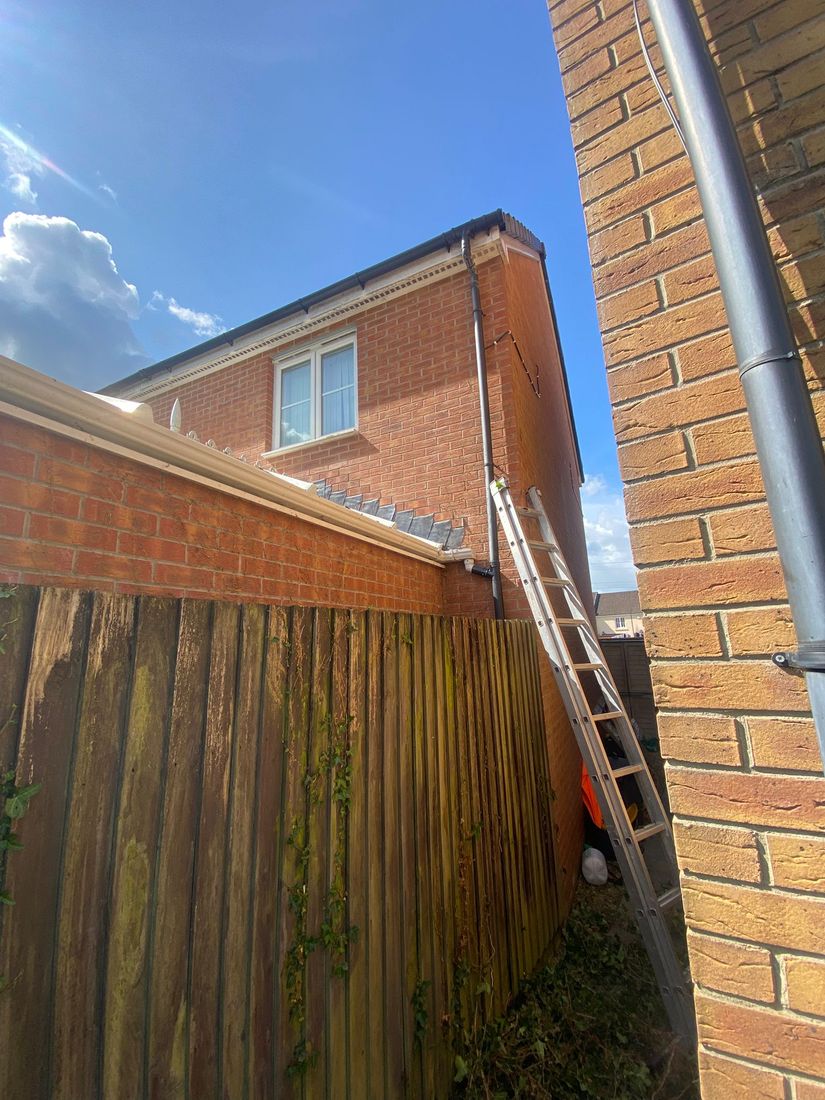 Ivy Removal
We cleared ivy from a close-boarded garden fence and the side of a brick house in Swansea, working from a ladder.
See the project →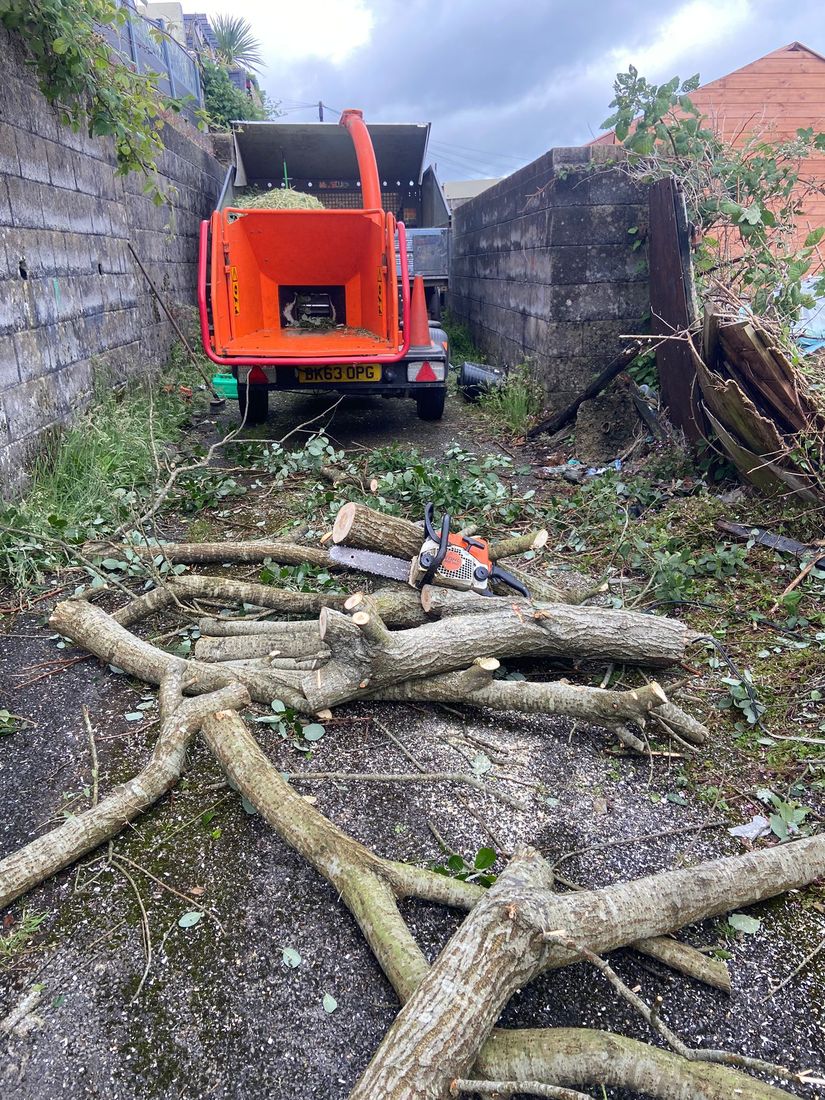 Tree Felling
We felled and cut up trees in a Caerphilly back garden, chipping the branches and leaving the plot cleared.
See the project →We work across South Wales. Pick your town to see how ivy removal works locally.
Ivy comes off brickwork most cleanly when it is cut at the base and left to die back first, rather than ripped away while still alive.
Read the guide →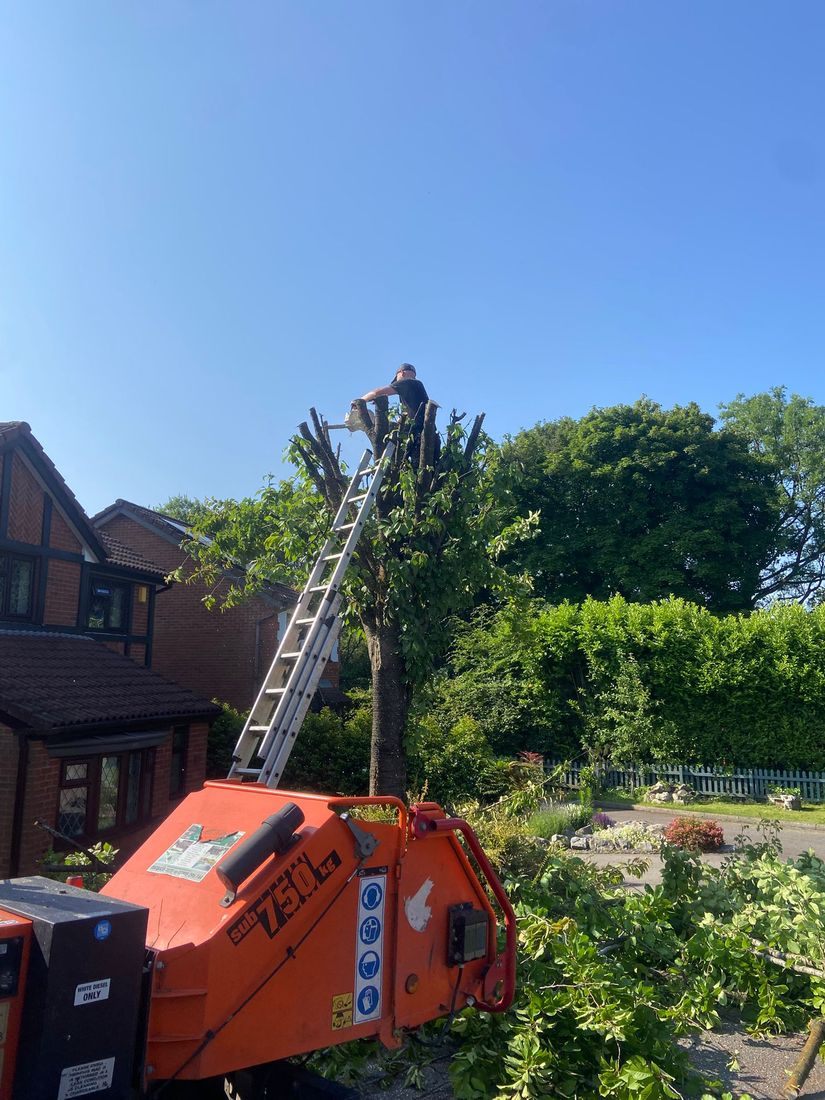
Tree surgery is priced job by job rather than from a fixed list, so this guide explains what moves the cost up or down and how to get a firm figure.
Read the guide →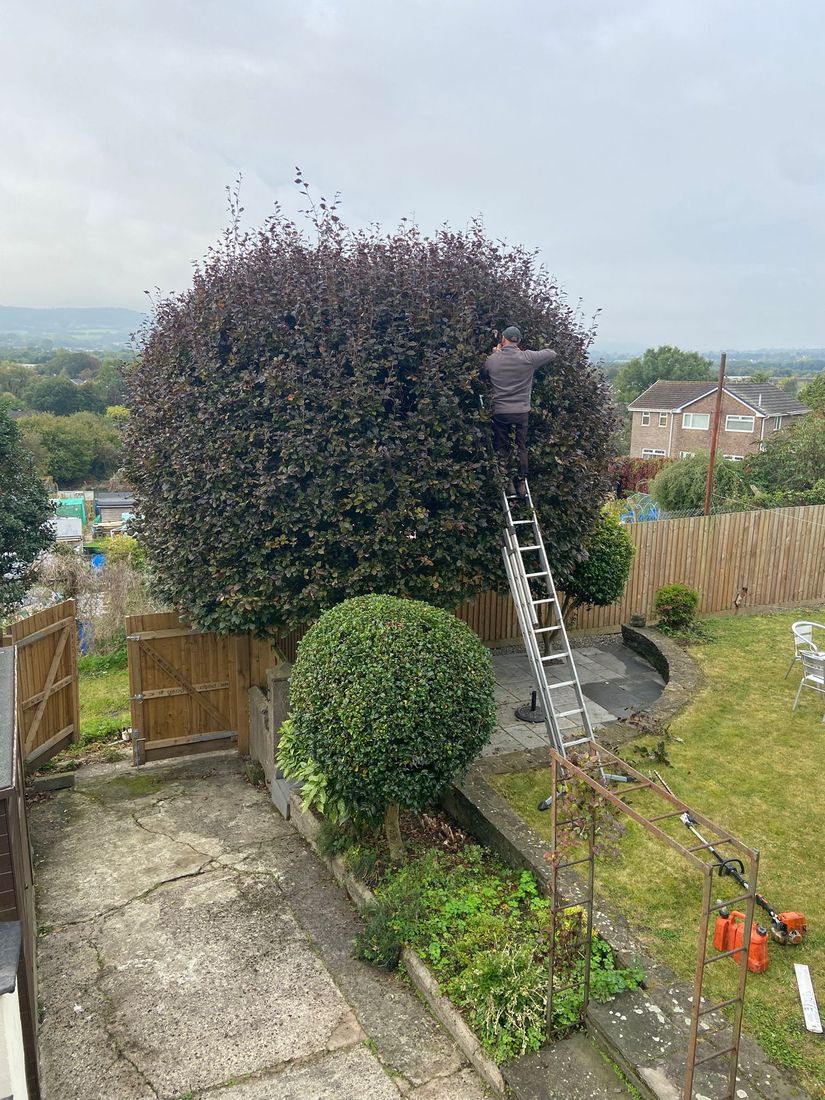
There is no single perfect month for every tree, but winter suits many species, and this guide shows how timing, nesting birds and weather affect the choice.
Read the guide →Yes. Rear walls, gable ends and yard boundaries are common jobs. We check access first, cut the stems at the base, remove the growth when it is ready and carry the waste out through the house or a rear lane.
We can cut it back to your boundary and clear it from your side, which gives you a clean edge. It may return from the woodland, so occasional trimming helps. We cannot clear land that belongs to someone else.
It is worth removing, because ivy can push into joints and hide damage. We can clear it where access is safe, then tell you what we can see. If the stack looks poor, a builder should take a look.
Tell us what needs doing and where. We will come back to you, or call 07766 919630 if it is urgent.