Ivy comes off brickwork most cleanly when it is cut at the base and left to die back first, rather than ripped away while still alive.
Ivy climbs using small aerial rootlets that grip into every rough surface and crevice, much like tiny anchors. On sound, modern brick and good pointing, these hold lightly and cause little harm. On older walls, soft bricks, crumbling mortar or render, they can find their way in and take bits of the surface with them when pulled.
That is why the most common mistake is yanking living ivy straight off the wall. It feels satisfying, but it can strip pointing and leave a patchwork of damage while the tiny rootlets stay stuck exactly where they were, now harder to remove than before, and the wall looks far worse for the effort, with bare patches and scars in the pointing.
Before cutting anything, take a few minutes to look closely at the wall and the ivy together. Ivy often hides cracks, loose bricks and failed pointing, and it may be growing into gutters, soffits and roof edges. If the wall is old, leaning or already crumbling, expect some repair work once the ivy is gone.
Ivy is also a popular nesting spot. Between spring and late summer, birds may be using it, and disturbing active nests is something to avoid. Autumn and winter are the most comfortable times to take it down, and a careful look before you start is always sensible, as an unseen nest can turn a simple job into a problem.
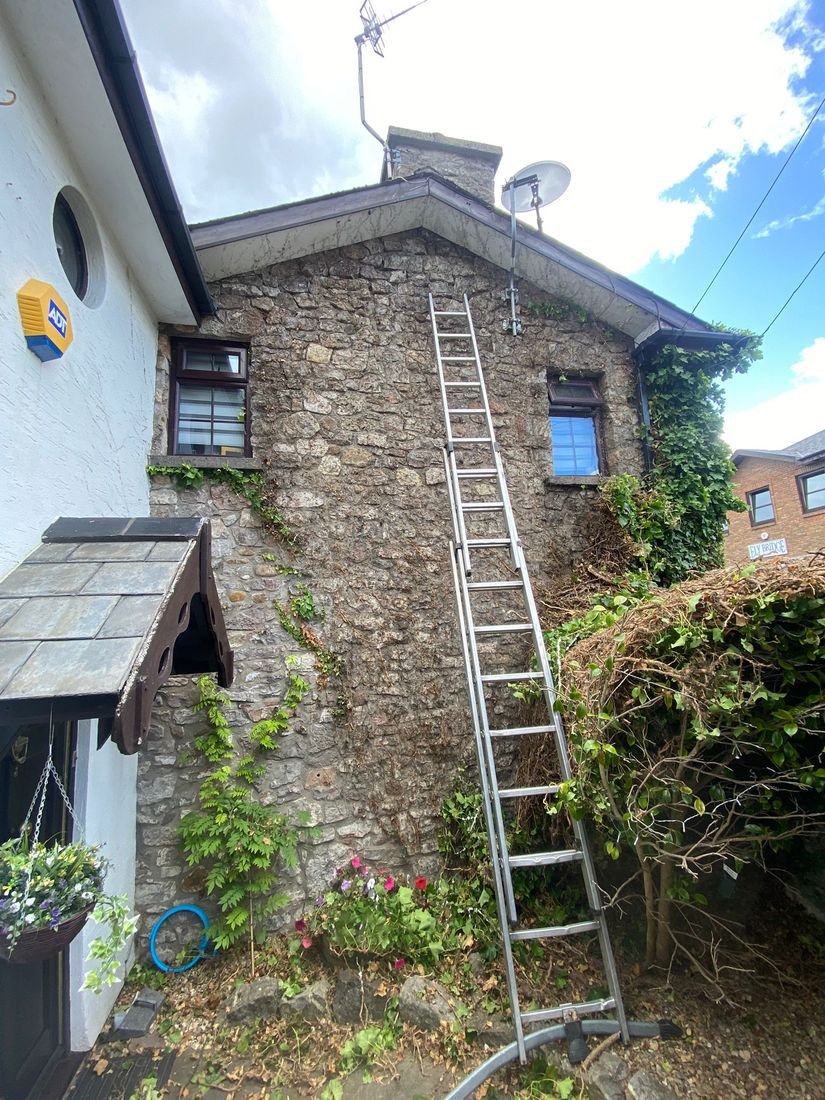
The safest approach works in stages, and patience is the key ingredient. Cut through each main stem near the base, then remove a short section so the severed top cannot reconnect with the roots. Leave the growth on the wall to die and dry out for a few weeks, ideally a couple of months. Once the ivy is brown and brittle, it releases far more easily and with less damage to the surface.
Even after the main growth is off, grey hairy rootlets often remain on the brick. They are mainly cosmetic and will weather and fade in time, but they can be loosened by soaking and brushing gently with a stiff, non-metal brush. Avoid wire brushes entirely and harsh scraping, which scar the face of soft brick.
A low-pressure wash can help on tougher surfaces, though high pressure can blast out mortar and should be avoided on older or softer brickwork. If you want the wall cleaned fully, it is worth asking a professional to judge what the surface will stand before anything powerful is used, particularly on older brick that crumbles easily.
Ivy on a tall gable, on a chimney, over a roofline or tangled with gutters and cables is not a job to tackle from a ladder. Working at height with cutting tools is risky and not something we would suggest anyone attempts, and so is anything close to overhead wires. Heavy ivy can also be surprisingly weighty, especially when wet.
We cut ivy back and remove it from walls, fences, sheds, chimneys and trees, taking the waste away with us. We can also deal with ivy that has grown into a hedge or fence, where it is often hard to untangle from the host plant without damaging it, which usually means slow, careful hand work.
Many South Wales homes have older brick or stone walls, often in terraces with shared or retaining boundaries. Damp, shaded conditions let ivy grow thickly and keep the wall wet underneath it, which can speed up decay of soft mortar and brick. In a conservation area there may be extra care needed for historic walls, so it is worth asking the council if you are unsure.
Boundary walls shared with a neighbour also deserve a quick conversation before any work begins, as the ivy may be rooted on the other side, and removing it affects them too. Agreeing a plan together avoids awkward surprises later and keeps the neighbourly peace. A shared wall is a shared responsibility, and a friendly word first is always worthwhile.
How much work is involved depends on height, how thick the growth is, how easy the access is, the condition of the wall and how much waste there is to take away. Photographs help, but a visit lets us see how firmly the ivy is attached and what lies beneath it, which is often the deciding factor in how careful the removal needs to be.
We offer a free quotation once we have seen the wall, and we will tell you honestly if any pointing or brickwork looks as though it needs a bricklayer's attention afterwards, so you can plan any follow-up repairs properly. Wall repairs are generally better done before winter weather sets in, when wet and frost make mortar harder to work.
We will visit, tell you honestly what is needed and give you a free, no-obligation quotation.
On sound brick with good mortar, ivy usually does little harm. On old, soft or crumbling walls it can work into joints, hold moisture and hide defects. The bigger risk is often the removal itself, when pulling live ivy takes pointing and surface with it, leaving costly repairs behind.
Ivy has glossy, waxy leaves that shrug off many treatments, so results can be poor. Cutting the stems at the base is the dependable first step. Using chemicals near other plants, ponds or boundaries needs care, so we would rather talk it through with you first.
Autumn and winter suit most walls because birds are not nesting. Cut the stems early so the growth has time to die back before you peel it away. Spring work is possible, but nests must be checked for carefully beforehand, and cutting should stop if birds are found.
Ivy can resprout from roots or stems left in the ground, so removing the base thoroughly and checking for new shoots matters. Any regrowth is usually weak and slow, so it is easy to snip off before it takes hold again. and easy to cut. A quick check every few weeks through the first season keeps it under control.
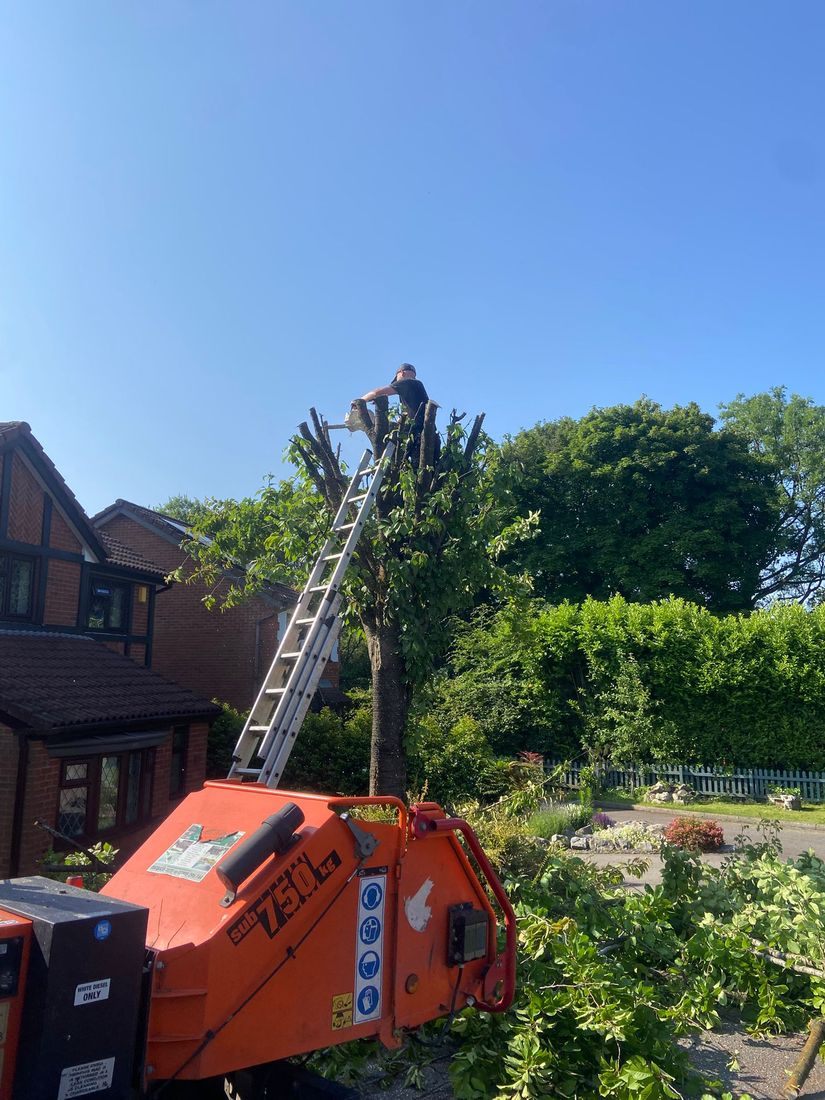
Tree surgery is priced job by job rather than from a fixed list, so this guide explains what moves the cost up or down and how to get a firm figure.
Read the guide →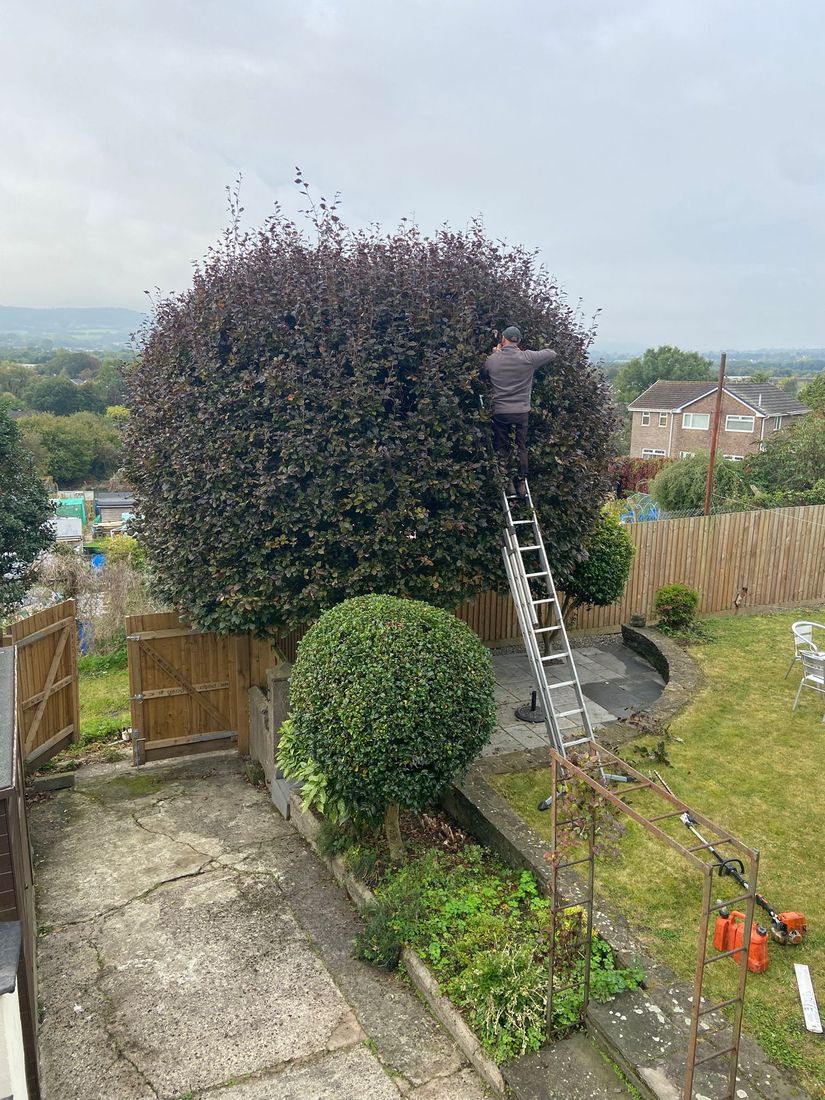
There is no single perfect month for every tree, but winter suits many species, and this guide shows how timing, nesting birds and weather affect the choice.
Read the guide →Most trees are perfectly safe, but certain signs suggest a tree is weakened, and knowing what to look for helps you act before something falls.
Read the guide →Tell us what needs doing and where. We will come back to you, or call 07766 919630 if it is urgent.