Chepstow sits on the edge of the Wye Valley, and many of its gardens climb steeply among tall, long-standing trees. When the lower branches start to press on a roofline, shade a patio or cut off a view of the river, we lift the crown and take away only what is in the way.
We remove low limbs cleanly, keep the shape of the tree natural and check for protection orders before we begin. If we think a lighter cut will do, we say so. Wooded hillsides need a steady hand and a sensible plan, and that is how we approach every job.
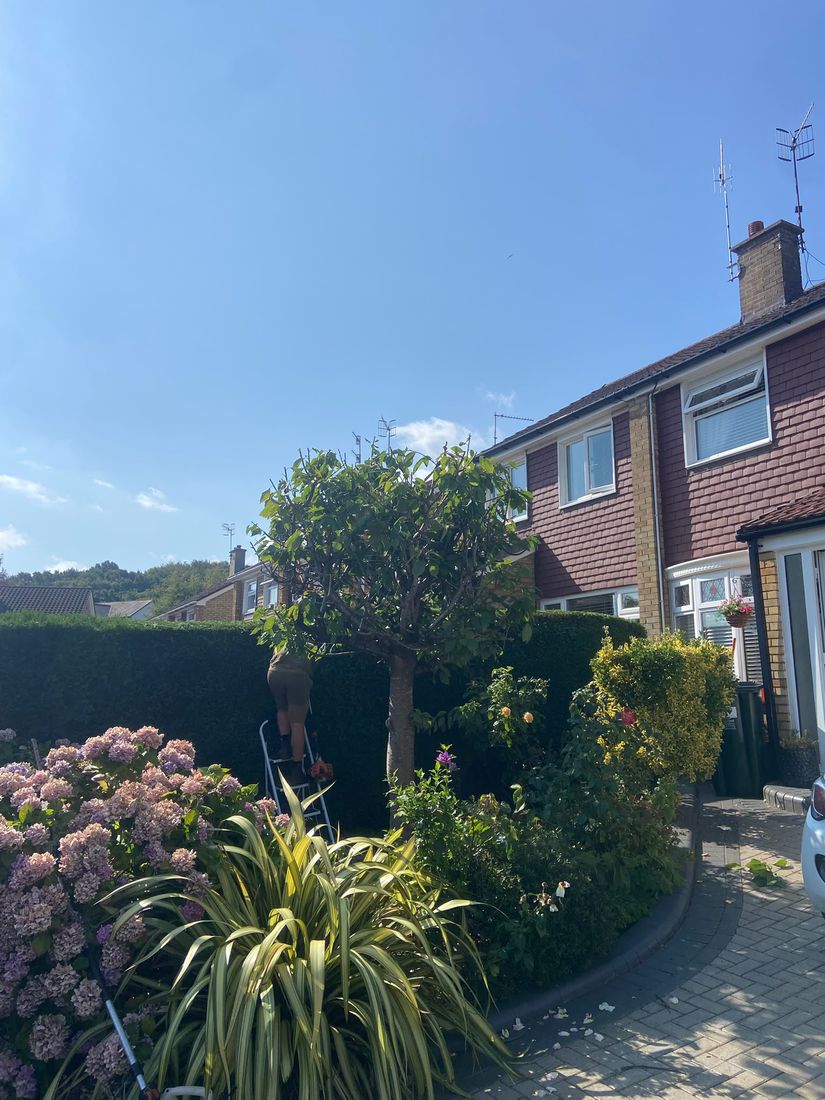
Older houses in Chepstow often stand close to large trees that were planted or self-seeded long ago. Over time the lower limbs reach out over slate roofs, chimneys, bay windows and narrow lanes. Lifting the canopy gives the building room and lets light reach rooms that have slowly grown dim. Many of these trees pre-date the houses nearby, so they are tall and well rooted, and a light lift often does far more than you would expect.
Because the ground here is often sloping, a branch that looks high from the bottom of the garden can be only a short step above the path at the top. We judge the clearance from where people actually walk and park, then lift to a height that suits the way the garden is used. This is especially true on narrow streets, where cars, bins and passers-by all share the same few feet of clear space.
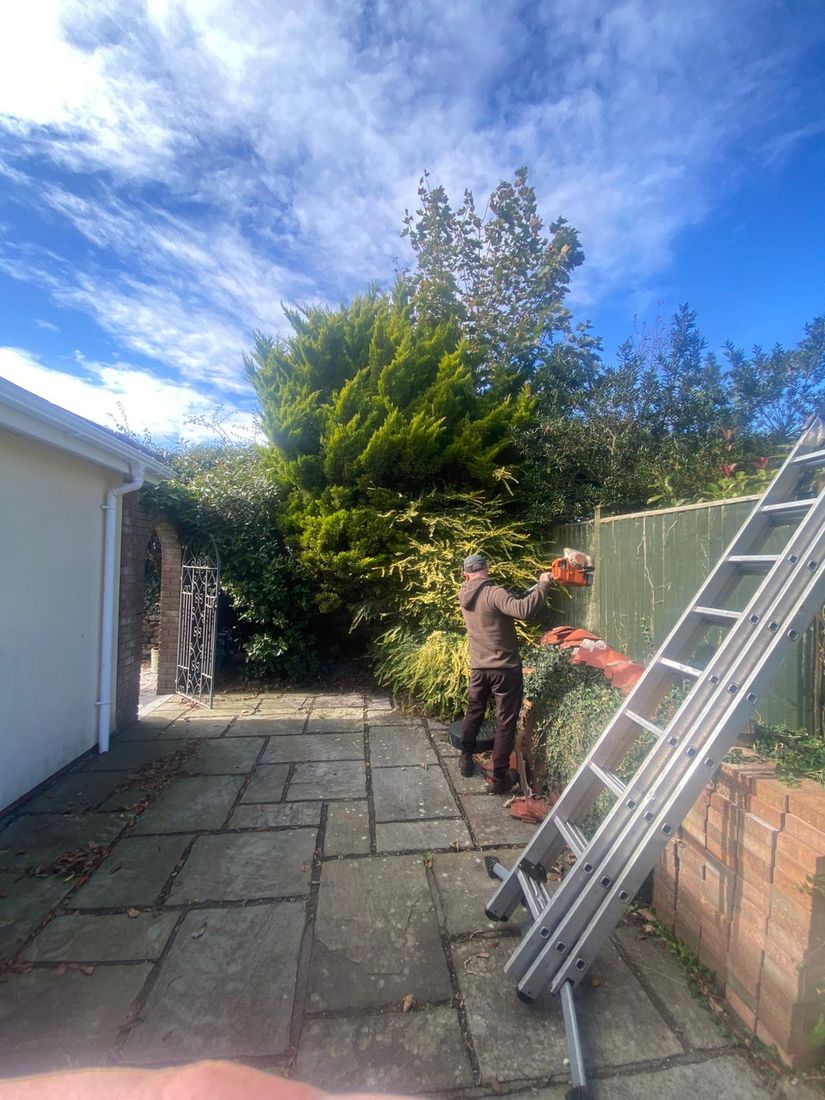
Steep, wooded ground changes how we plan the job. Access can be awkward, so we think about where each branch will fall, how to lower it safely and how to keep soil, planting and neighbouring boundaries undisturbed. Larger limbs are cut in sections and lowered rather than dropped. Ropes and slings do much of the work on sites like this, because there is rarely room to drop anything, and every piece has to be controlled all the way down.
The cuts themselves follow the same principles on any tree. We cut back to the branch collar, avoid leaving stubs, and keep enough foliage on the lower trunk for the tree to stay in balance. Taking a little less is nearly always kinder to the tree than taking a lot. Mature oaks and beeches in Chepstow can look very different once lifted, so we keep an eye on the tree from a distance while we work.
Parts of Chepstow lie close to the Wye Valley National Landscape and several streets have protected trees, so we check for a preservation order or conservation area status before any cutting. If consent is needed, we can explain what to ask for. We also cover Tutshill, Mathern, Caerwent and Shirenewton for crown lifting. If the tree sits close to woodland or a boundary with a neighbour, we also check who owns it and talk through what is practical before booking a date.
We work across South Wales. Pick your town to see how crown lifting works locally.
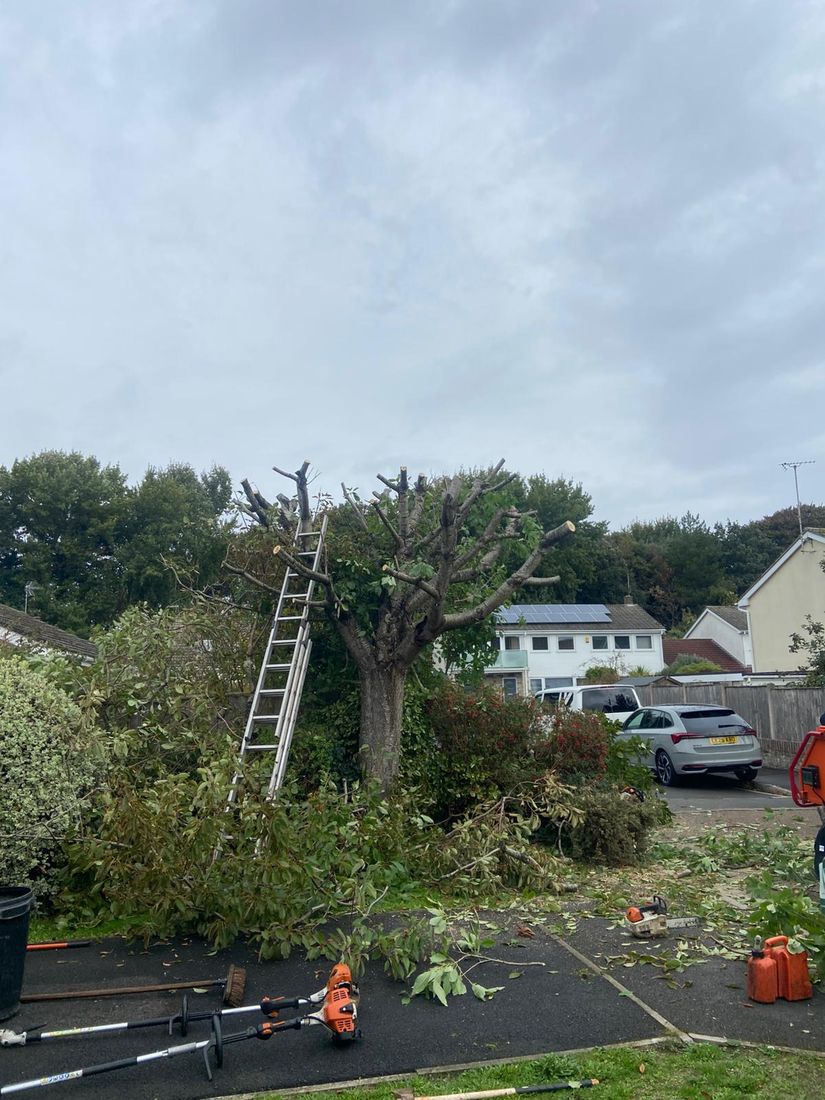
Crown lifting raises the canopy by removing low branches, while crown reduction makes the whole tree smaller, so choosing the right one depends on your problem.
Read the guide →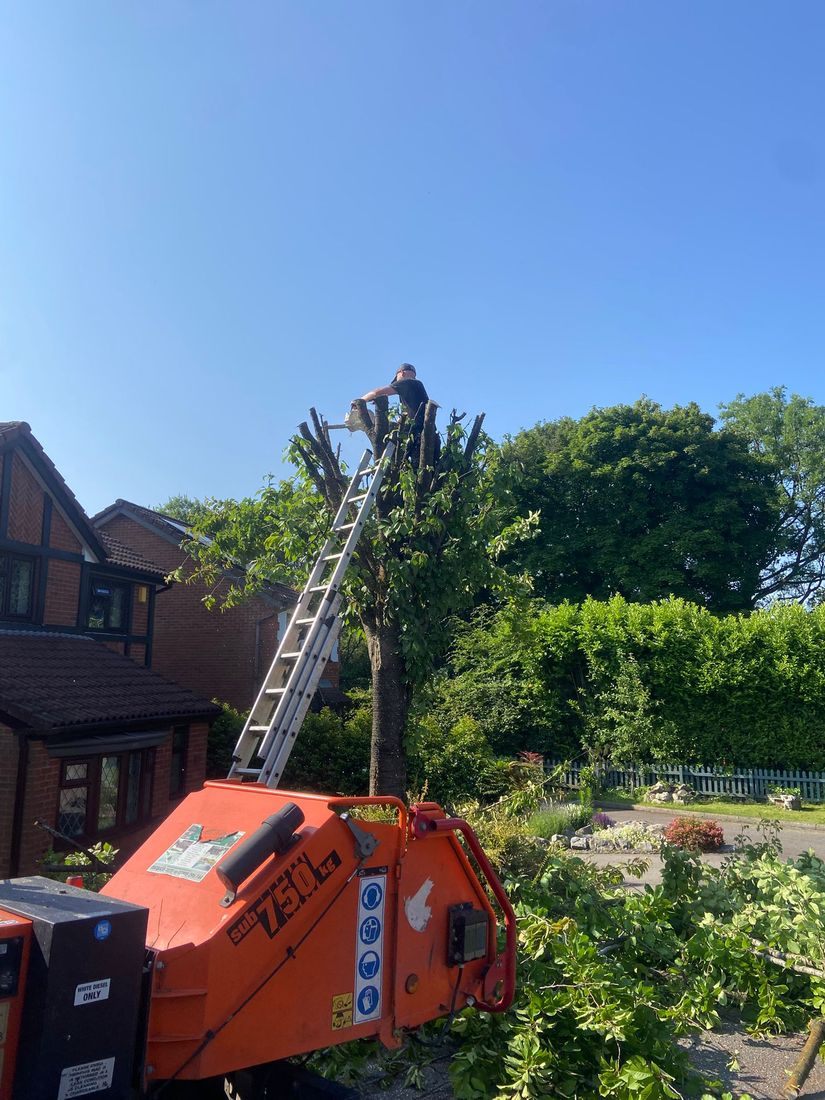
Tree surgery is priced job by job rather than from a fixed list, so this guide explains what moves the cost up or down and how to get a firm figure.
Read the guide →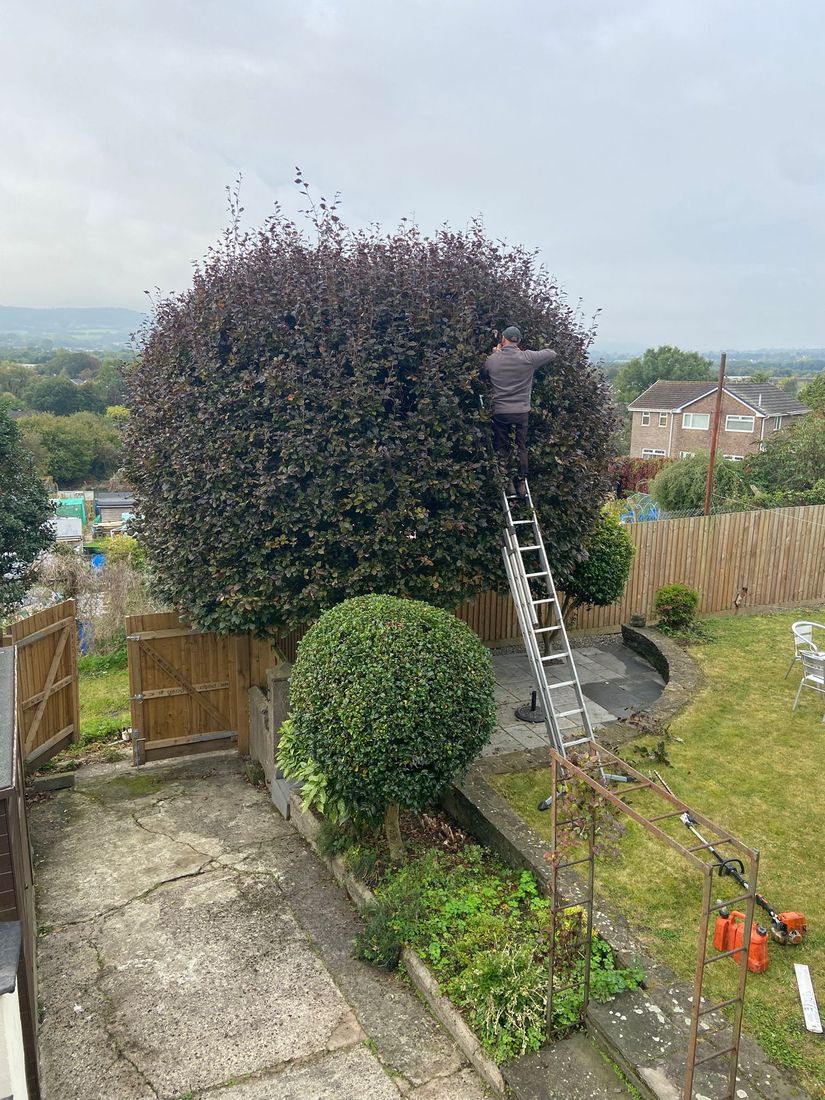
There is no single perfect month for every tree, but winter suits many species, and this guide shows how timing, nesting birds and weather affect the choice.
Read the guide →You might. Trees with a preservation order, or those in a conservation area, usually need permission from the council first. We check before we quote the work in detail, so you are not caught out. Not everything needs it, but it is worth asking.
Usually, yes. Slopes make the job slower and need more thought about access and where branches land, but we work on steep gardens regularly. We will walk the ground with you first and plan the safest way to do it.
Only the lowest branches that cause the problem, and never so many that the tree loses its balance. We aim for clean cuts and a natural outline, and we will tell you if a smaller lift would do the job.
Tell us what needs doing and where. We will come back to you, or call 07766 919630 if it is urgent.