Crown lifting raises the canopy by removing low branches, while crown reduction makes the whole tree smaller, so choosing the right one depends on your problem.
Householders often use the two terms interchangeably, but they solve different problems. Crown lifting removes the lowest branches so there is more clearance beneath the tree. Crown reduction shortens branches throughout the canopy so the tree becomes smaller overall. If you ask for the wrong one, you can end up with a tree that still blocks the path or one that has lost far more than you wanted, so it is worth knowing which you need. We are always happy to talk through the options at the visit.
Crown lifting raises the underside of the canopy. It is the right choice when low branches are brushing against a footpath, a drive, a parked car, a window or a roofline, or when you want light and a view beneath the tree. Done in moderation, it leaves the tree's natural shape intact. We cut cleanly back to the branch collar rather than leaving stubs, and we keep the lifted height proportionate to the tree.
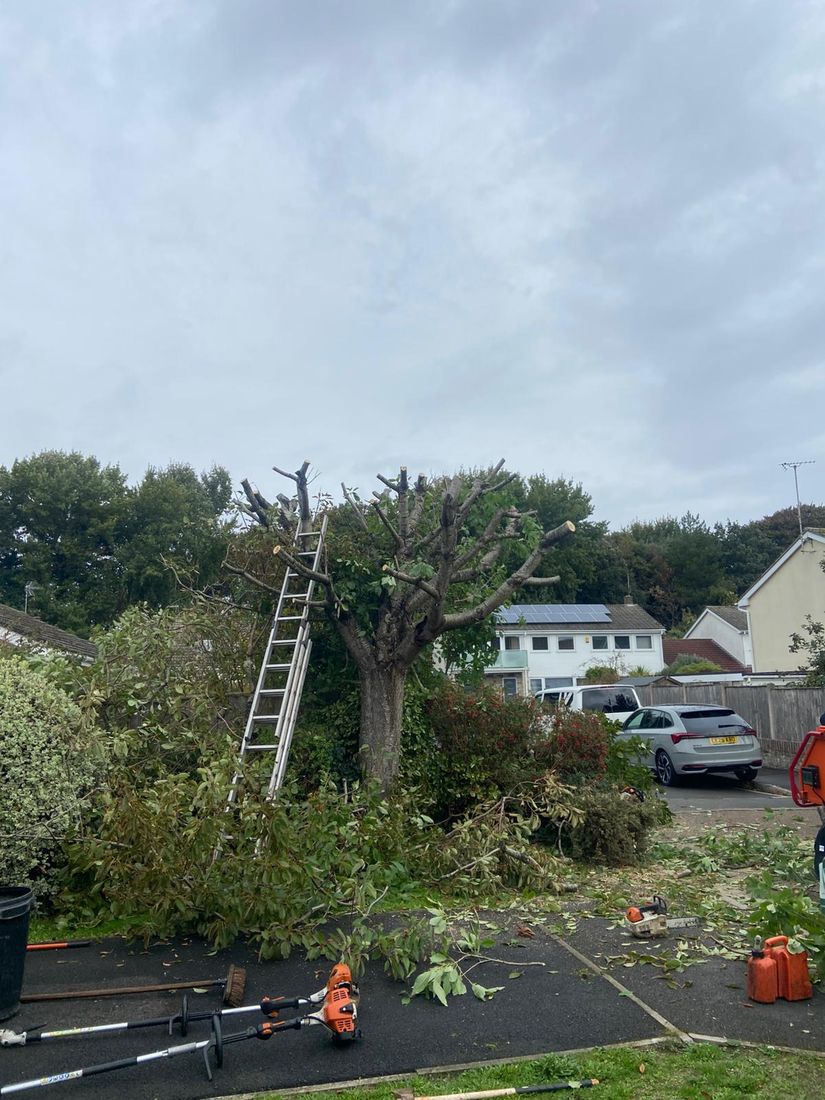
Crown reduction decreases the height or spread of the tree by cutting branches back to suitable points, rather than simply chopping the top off. People choose it when a tree has grown too large for its space, is shading the house and garden, or presses against buildings. Carefully done, it keeps a natural outline. It is not suitable for every species, and it should never remove too much in one go.
Start by describing the problem rather than the treatment. If branches are in your way at head height, you probably need lifting. If the whole tree is simply too big, too heavy or too close to the house, you probably need reduction. Some trees need a little of both. Trees on sloping valley gardens or exposed coastal sites may also benefit from reduction to reduce wind loading, but only where it suits the species. A tree close to a boundary or a road may also need a gentler approach.
Every cut is a wound, so less is more. Removing too many branches in one visit stresses the tree, can trigger weak, bushy regrowth and may let disease in. Some species tolerate heavy work badly. This is why we are cautious about cutting large live limbs, and why we may suggest spreading the work over more than one visit. Topping, cutting through the main stems at a flat height, is something we advise against.
Trees can be protected by a Tree Preservation Order or by standing in a conservation area, and either may mean permission is needed even for pruning. Your local council is the place to check. We also take care over nesting birds during spring and summer, so some jobs are better booked for the dormant months. All of this should be settled before any cutting begins.
Both jobs involve working at height, often with heavy branches and, sometimes, nearby cables or roofs. They are not tasks to attempt from a ladder with a chainsaw. We climb safely, lower branches under control, take away the cuttings and leave the site tidy. If you are unsure which treatment you need, we will look at the tree and give a free quotation after seeing the job. The aim is always a tree that is safe, healthy and in proportion to your garden.
We will visit, tell you honestly what is needed and give you a free, no-obligation quotation.
Only a little if it is done in moderation. Removing the lowest branches raises the canopy without altering the overall outline, and the tree stays natural in shape. Taking too much off can leave it top-heavy, so we keep lifting proportionate to the size of the tree.
No. Crown reduction shortens branches back to suitable growing points so the tree keeps a natural form. Topping chops through main stems at a flat height, leaving ugly stubs and weak regrowth, and it can harm the tree badly. We do not recommend topping.
There is no single answer, because it depends on the species, age and health of the tree. As a cautious rule we avoid removing too much live growth in one visit, and for some trees we spread the work out so they can recover properly. We will explain the reasons at the visit.
You might. A Tree Preservation Order or conservation area status can mean consent or notice is needed even for pruning. Check with your local council before booking any work, and tell us what you find so we can plan the job properly.
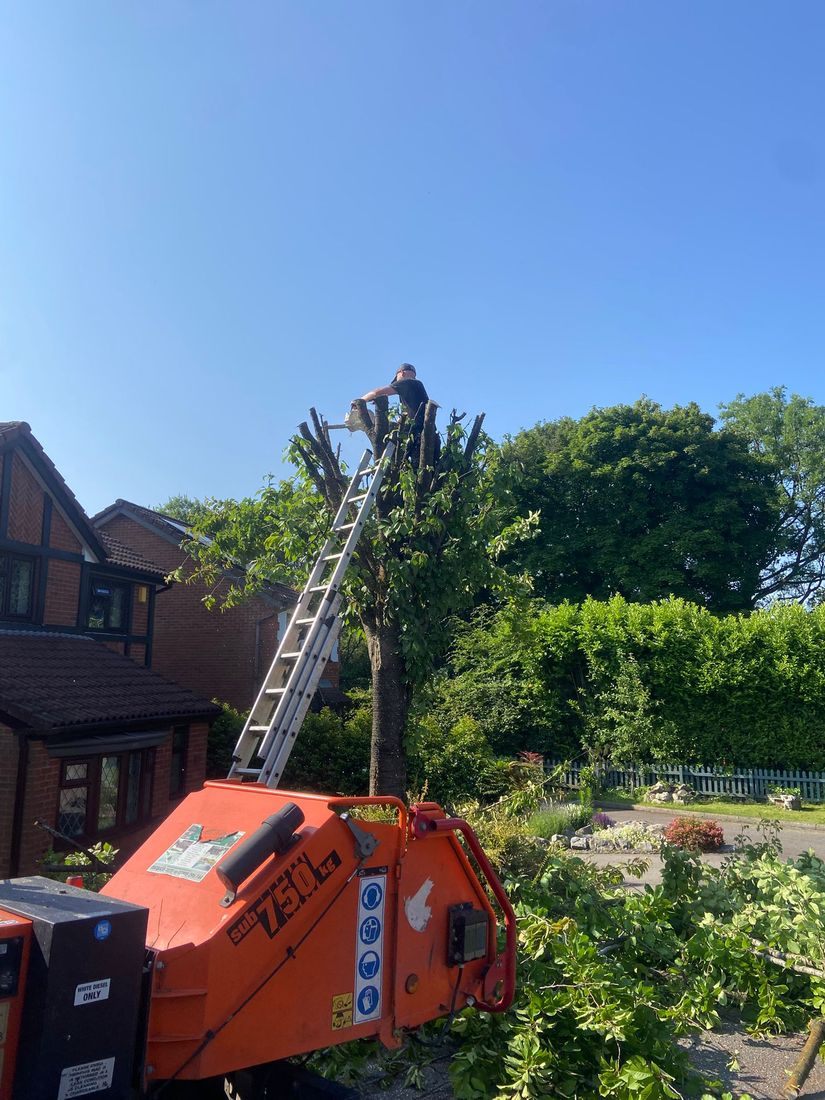
Tree surgery is priced job by job rather than from a fixed list, so this guide explains what moves the cost up or down and how to get a firm figure.
Read the guide →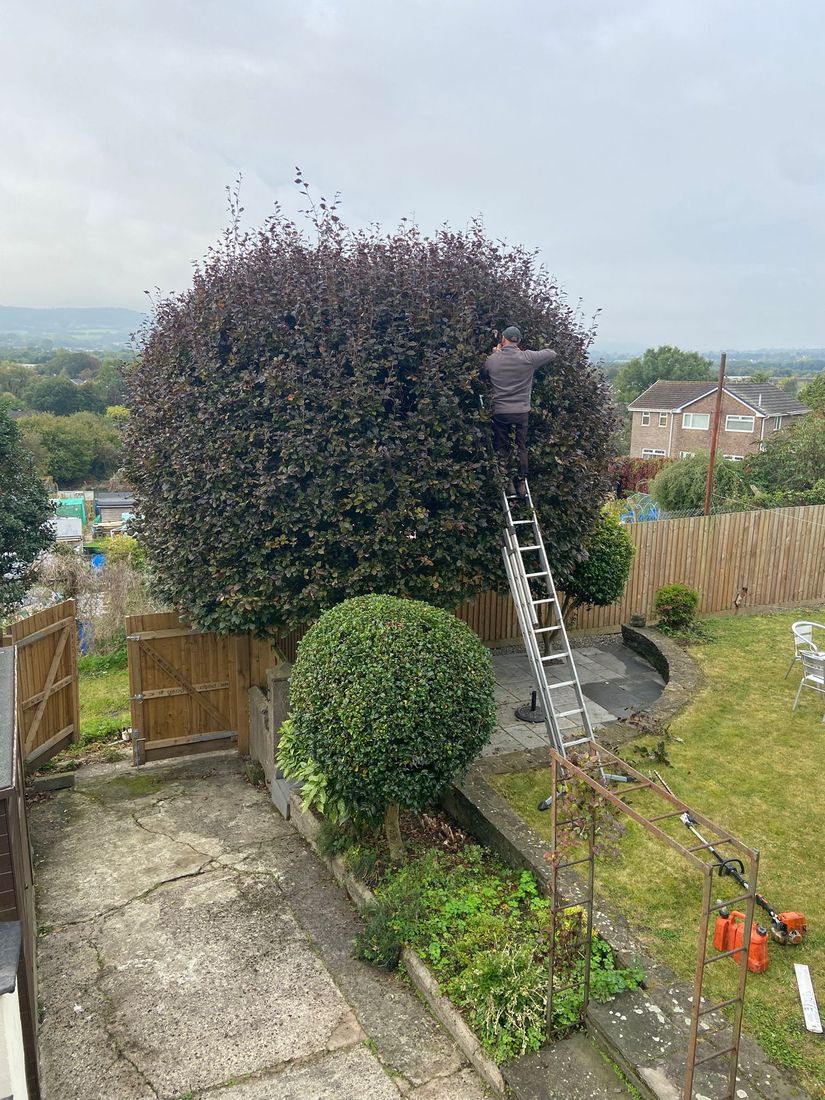
There is no single perfect month for every tree, but winter suits many species, and this guide shows how timing, nesting birds and weather affect the choice.
Read the guide →Most trees are perfectly safe, but certain signs suggest a tree is weakened, and knowing what to look for helps you act before something falls.
Read the guide →Tell us what needs doing and where. We will come back to you, or call 07766 919630 if it is urgent.