
Porcelain offers a consistent, low-maintenance surface, while natural stone brings variation and character, and both depend on a properly built base.
Porcelain paving is a dense, manufactured material, fired at high temperature and sold in uniform slabs, often thin and finished to imitate stone, wood or concrete. Natural stone, such as sandstone or limestone, is quarried and cut, so every slab is slightly different in colour, texture and thickness. It also pays to think about how the patio meets the house, steps and borders.
Neither is simply better. The right choice depends on the look you want, how much upkeep you will tolerate, the weather your garden faces and the way the patio will be used, from quiet seating to busy summer barbecues. We are happy to talk through each factor and help you weigh them up. There is no wrong answer here.
Porcelain gives a crisp, even finish. Colours and patterns are consistent from slab to slab, which suits modern houses and clean-lined gardens. Some designs are so convincing that it takes a close look to tell they are not stone. Sunlight and shade change how each surface looks through the day, so see samples outdoors. Seeing them in real light matters.
Natural stone has movement and warmth. Slight shade changes, texture and uneven edges give it a softer, more traditional appearance that sits comfortably with older terraces, stone cottages and cottage-style planting. It also weathers gracefully, though colour can shift over time. Local stone often blends in especially well with existing walls and buildings. Many people simply prefer its character.
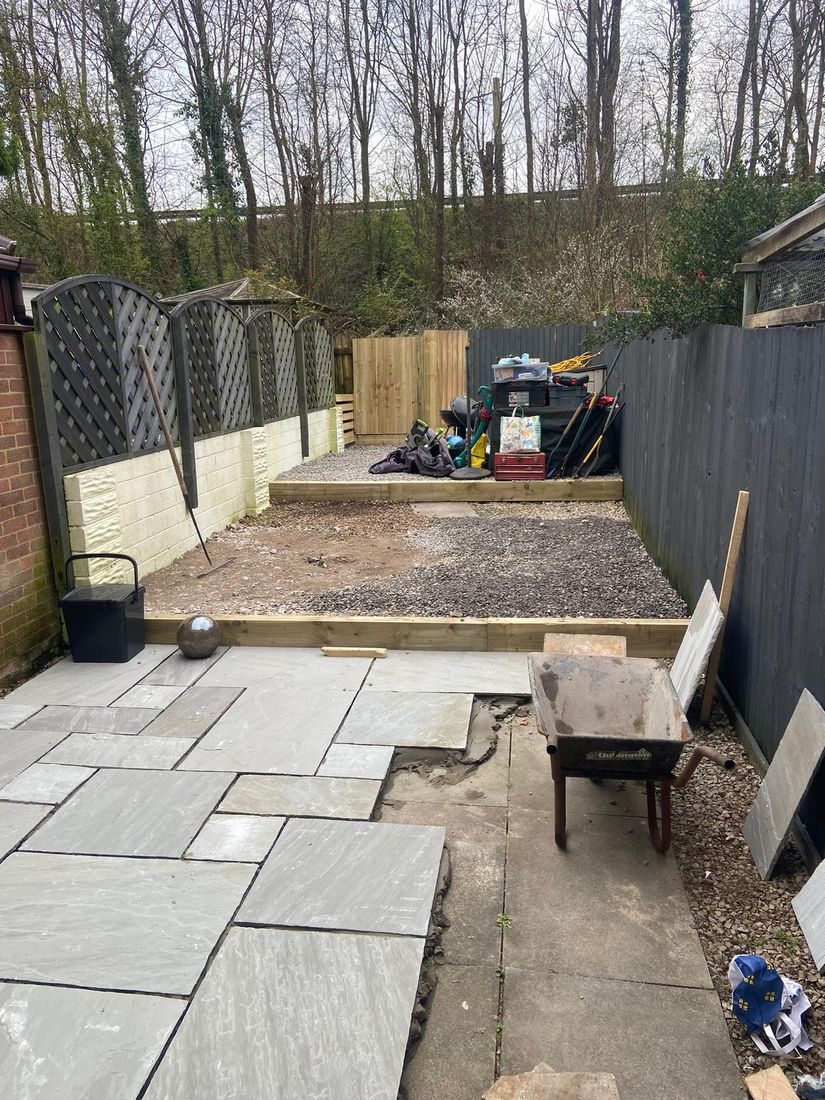
Porcelain is hard and non-porous, so water, dirt and most stains sit on the surface and wipe or wash away. It tends to resist algae and does not usually need sealing. That makes it popular in damp, shaded gardens where green growth is a problem. It still needs the odd wash, since leaves and soil will build up in corners and joints over time.
Natural stone is more porous. It can absorb spills and hold moisture, so sealing is often recommended, and it may need cleaning more regularly. Some softer stones need gentle treatment and low-pressure washing. This is a trade-off worth weighing up honestly. Sealing can darken the tone of some stones, so test a small sample first if appearance matters.
Wet Welsh weather makes slip resistance important, especially on steps and slopes. Both materials come in textured finishes designed to give grip, and it is sensible to choose a slab with a good surface rather than a smooth, polished one for outdoor use. Tell us about any steps, slopes or shaded corners, as those are where grip matters most.
Natural stone often has a naturally rough surface. Porcelain varies by product, so look at the finish carefully and, if you can, test samples when they are wet. Falls, drainage and a well-built base also help water leave the surface quickly. Handling samples in the rain is the most honest test you can do before choosing.
Porcelain is brittle at its edges and needs careful cutting and laying. It is usually bedded on a firm, flat base with correct fall for drainage, and the right adhesive and joint filler make a big difference. Natural stone is thicker and more forgiving of small variations, but it is heavy and needs a solid, compacted sub-base.
In either case, the patio is only as good as the ground beneath it. We mark out, excavate, build a compacted sub-base, lay with a fall away from the house and finish with tidy pointing and edges. Skimping on preparation is the most common cause of sunken or rocking slabs, whatever the surface. Good preparation really is the secret.
Price depends on the slab you pick, the area, the shape, the depth of excavation, the base, access for deliveries and how much waste has to be taken away. Sloping gardens and steps add work whichever material you choose. Natural stone and porcelain both vary widely in grade, so comparing like for like matters. We can explain where the main differences lie.
Choose porcelain for a clean, low-fuss surface that suits shade. Choose natural stone for character and a softer, more traditional feel. We can bring samples to discuss, which helps you picture how each looks in your own light. Neither choice is wrong, and your house and garden often point towards one of them. Take your time over the decision.
The most reliable way to compare is for us to see your garden. We will look at the levels, drainage, access and the style of your house, and explain what each material would involve. A visit also lets us check levels, drainage and where the water will run. Taking photographs of the garden can help us prepare.
Ask for a free quotation and we will set out the work clearly, including preparation and finishing, so you can choose with confidence and plan the project for a dry spell. We will also explain how long the work should take and what it will mean for access to your garden. You are welcome to ask as many questions as you like.
We will visit, tell you honestly what is needed and give you a free, no-obligation quotation.
Neither is better in every case. Porcelain is easy to keep clean and consistent in appearance, while natural stone has character and variation. The right choice depends on your style, upkeep preferences and how your garden is used. We can help you compare samples.
Usually not, because the surface is dense and non-porous. Grout and joints still need care, and the patio should be cleaned gently from time to time. Natural stone is more likely to benefit from sealing. It is wise to ask what the supplier recommends for the specific product you choose.
Both can be slip resistant if you choose a textured finish. Smooth, polished slabs are better avoided outdoors. Good drainage and a correct fall also help water clear quickly, which reduces slippery areas and algae. Ask to see the finish when wet.
Yes, with careful planning. Slopes may need steps, retaining edges or a levelled terrace, and drainage must be considered. We look at the levels and ground conditions on site so the patio sits properly and water runs away. Terracing is often the neatest answer.
The cost of a patio depends on its size, the paving you choose, the ground beneath it and how easily materials and waste can be moved.
Read the guide →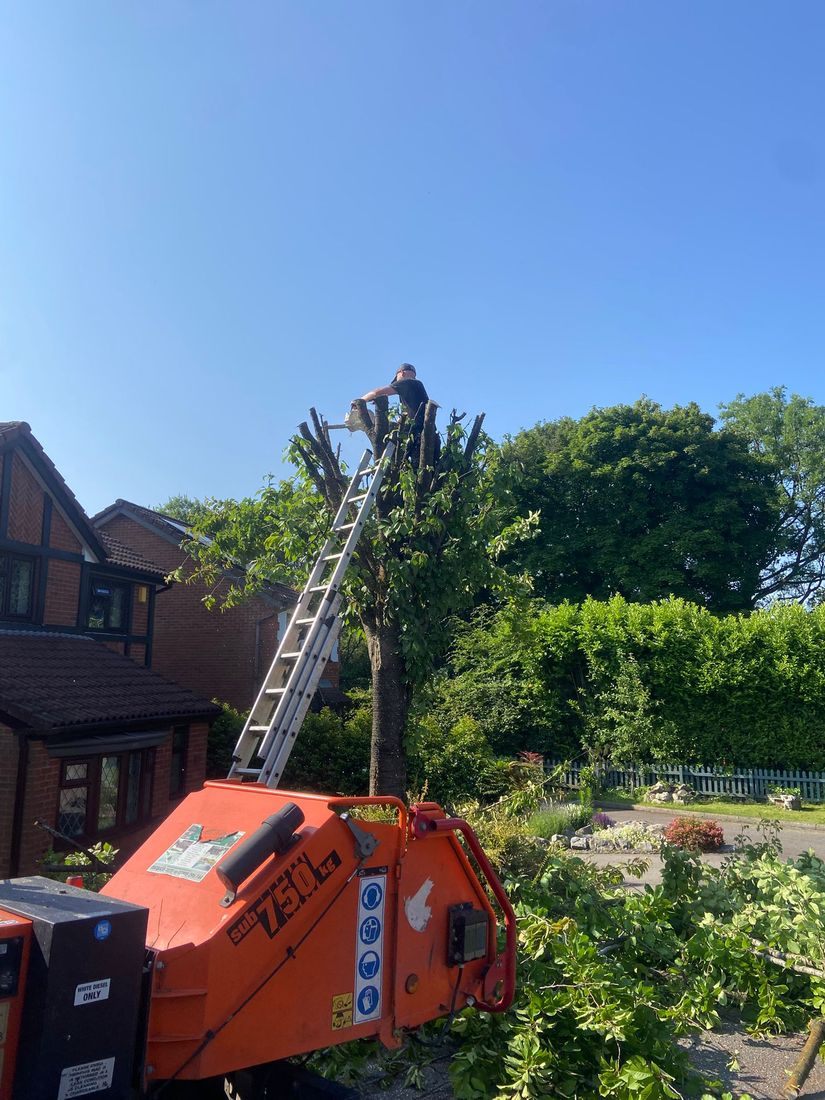
Tree surgery is priced job by job rather than from a fixed list, so this guide explains what moves the cost up or down and how to get a firm figure.
Read the guide →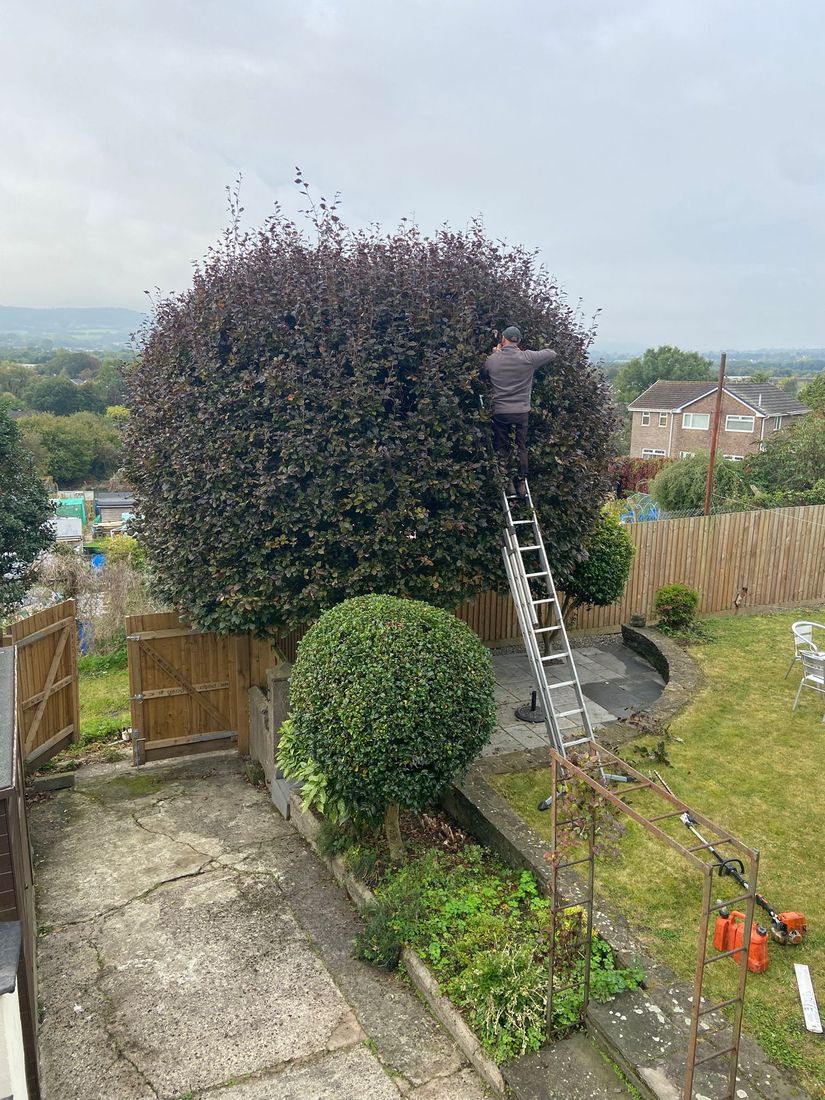
There is no single perfect month for every tree, but winter suits many species, and this guide shows how timing, nesting birds and weather affect the choice.
Read the guide →Tell us what needs doing and where. We will come back to you, or call 07766 919630 if it is urgent.