Leylandii and other conifer hedges grow quickly and have to be cut with care. Here is how regular trimming, height management and the old-wood problem work in practice.
Conifer hedges, and Leylandii in particular, are among the fastest growing hedges in a garden. In a good growing season a Leylandii hedge can add a great deal of height and width in a single year. Left alone, it soon blocks light, takes over the boundary and becomes difficult to manage. Conifer hedge cutting Cardiff gardens need is therefore less about restoring a hedge than about not letting it get away in the first place.
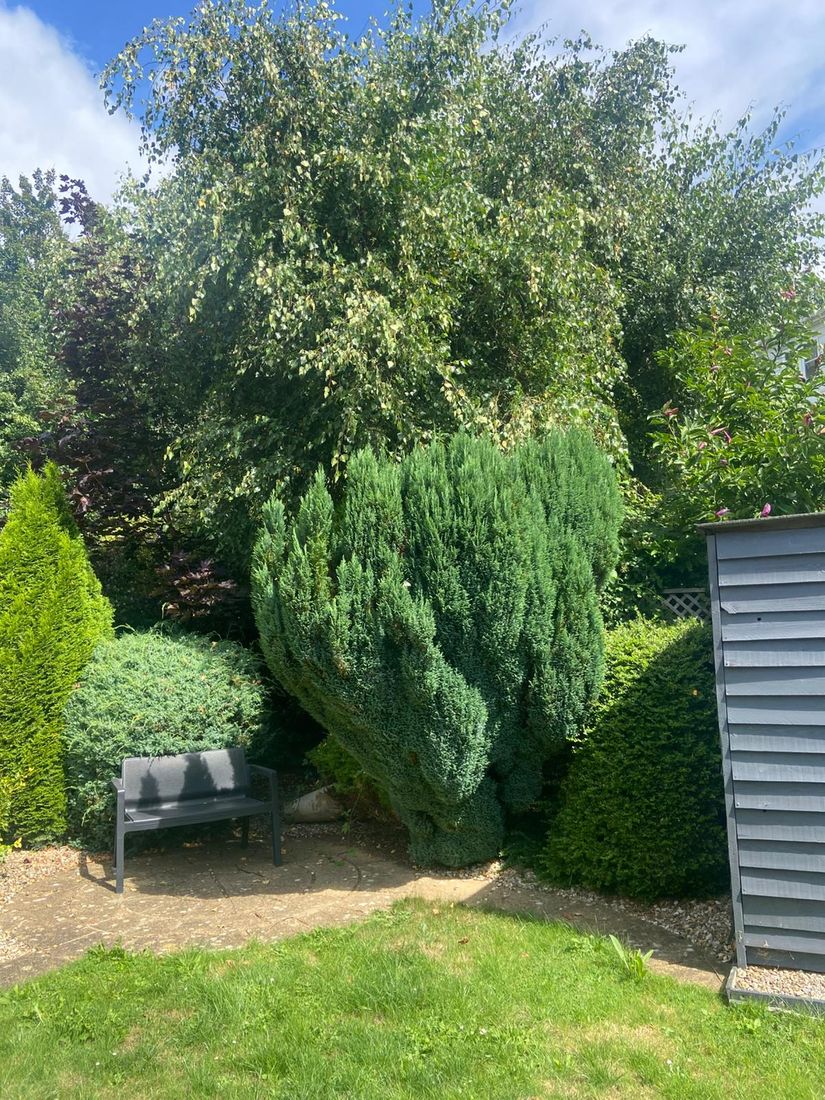
The time to act is before a conifer hedge reaches the point where it cannot be cut back. Look out for:
The earlier a conifer is brought under control, the more options there are, so it is worth asking us to look at it before it gets out of hand.
Leylandii hedge trimming Cardiff owners book is best done little and often. Trimming once or twice a year keeps the hedge in shape and holds its height at a size you can live with. A tall conifer hedge left for several years can be cut down, but the sooner it is dealt with, the more options there are. Conifer hedge reduction Cardiff householders ask about depends on how much green growth the hedge still has.
The key thing to know about conifers is that most of them will not regrow from old brown wood. A conifer hedge cut back to bare wood does not shoot again like privet or beech would; the bare patch usually stays bare. This is why we always look at how much green growth is left before taking a conifer hedge down, and why we will sometimes tell you that a hedge should only be reduced part of the way.
Our guide to reducing the height of overgrown conifers goes into this in more detail.
Tall conifer cutting Cardiff jobs involve working at height. Ladders or a working platform are used where needed, and we check the ground, the neighbouring fences and any overhead cables before we start. A tall hedge cut produces a great deal of waste, and we plan how it will be removed.
If a conifer hedge has grown too large to cut back, or has been cut into brown wood and gone patchy, taking it out and replacing it can be the sensible choice. We will tell you honestly which option we think suits the hedge. See our article on hedge removal in Cardiff for what that involves.
We will visit, tell you honestly what is needed and give you a free, no-obligation quotation.
Only as far as the green growth allows. Conifers do not reliably regrow from old brown wood, so we assess the hedge before cutting.
Usually once or twice a year, though a fast grower may need more. The nesting season affects timing.
Often, yes, depending on how much green growth it has. We will tell you what we think is possible at the visit.
Yes, if you want us to. Conifer hedges produce a lot of cuttings.
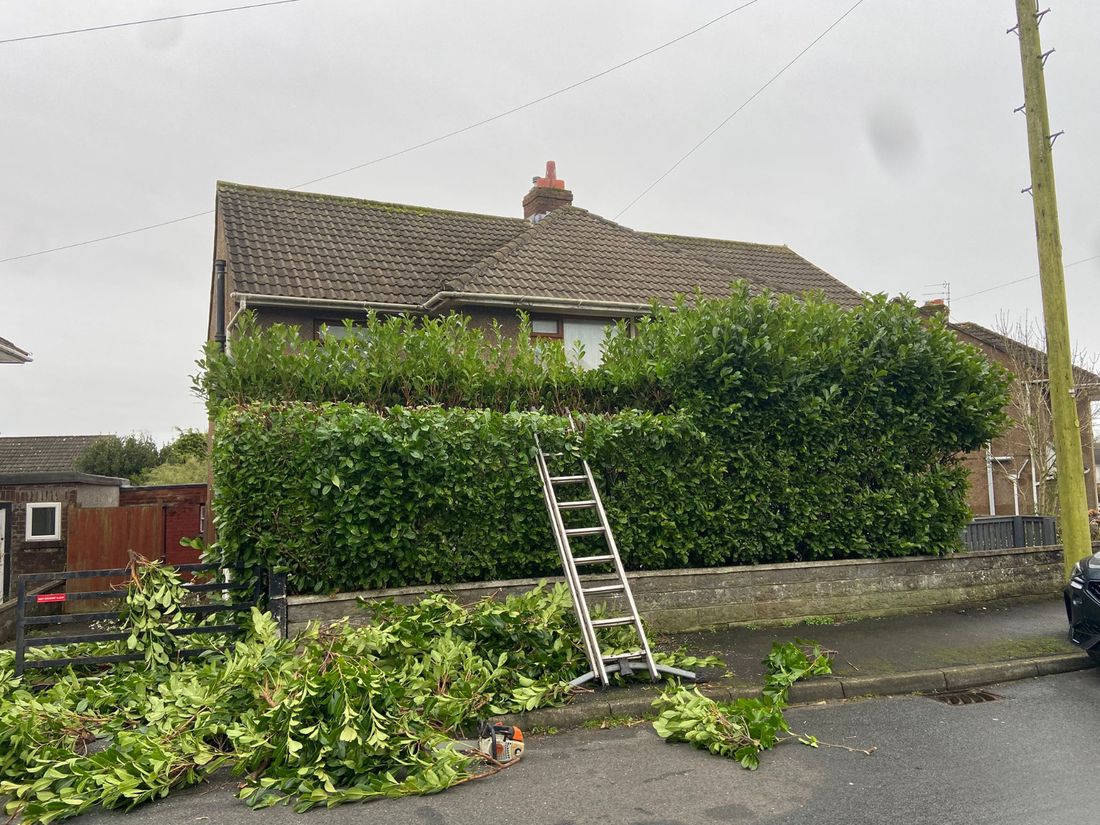
A large hedge that has outgrown its space can be brought back down in height and width, but how it is done depends on the plant, the access and how long it has been left to grow.
Read the guide →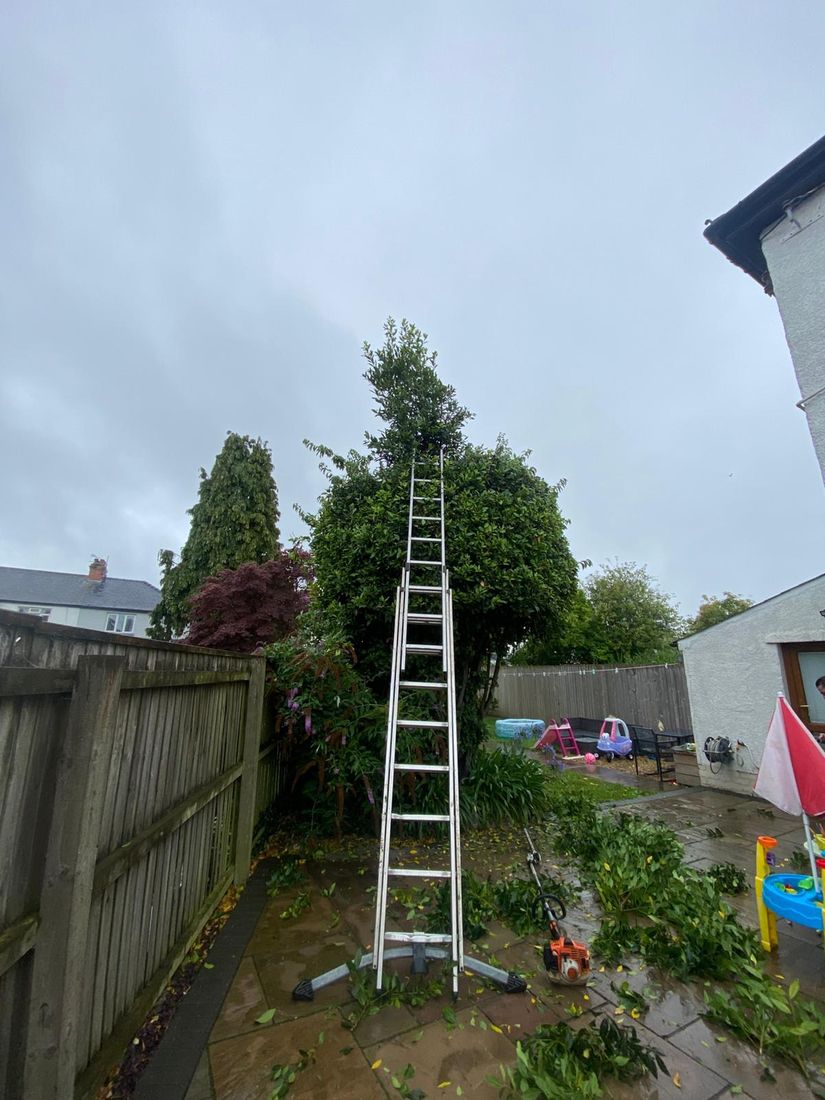
Cutting a tall hedge is a different job from trimming a low one. Height changes the equipment, the safety planning and the amount of waste, which is why it is usually best left to professionals.
Read the guide →
An overgrown hedge can be brought back under control, but the best way to do it depends on how far it has gone. Here is how restoration works and when it is better done in stages.
Read the guide →Tell us what needs doing and where. We will come back to you, or call 07766 919630 if it is urgent.