

This photo from Pontyclun shows the stage that decides how an artificial lawn will look and drain. The courtyard has been cleared and filled with a levelled layer of compacted stone, bordered by rope-style edging. No turf is down yet, so what you see is the foundation that the grass will sit on.
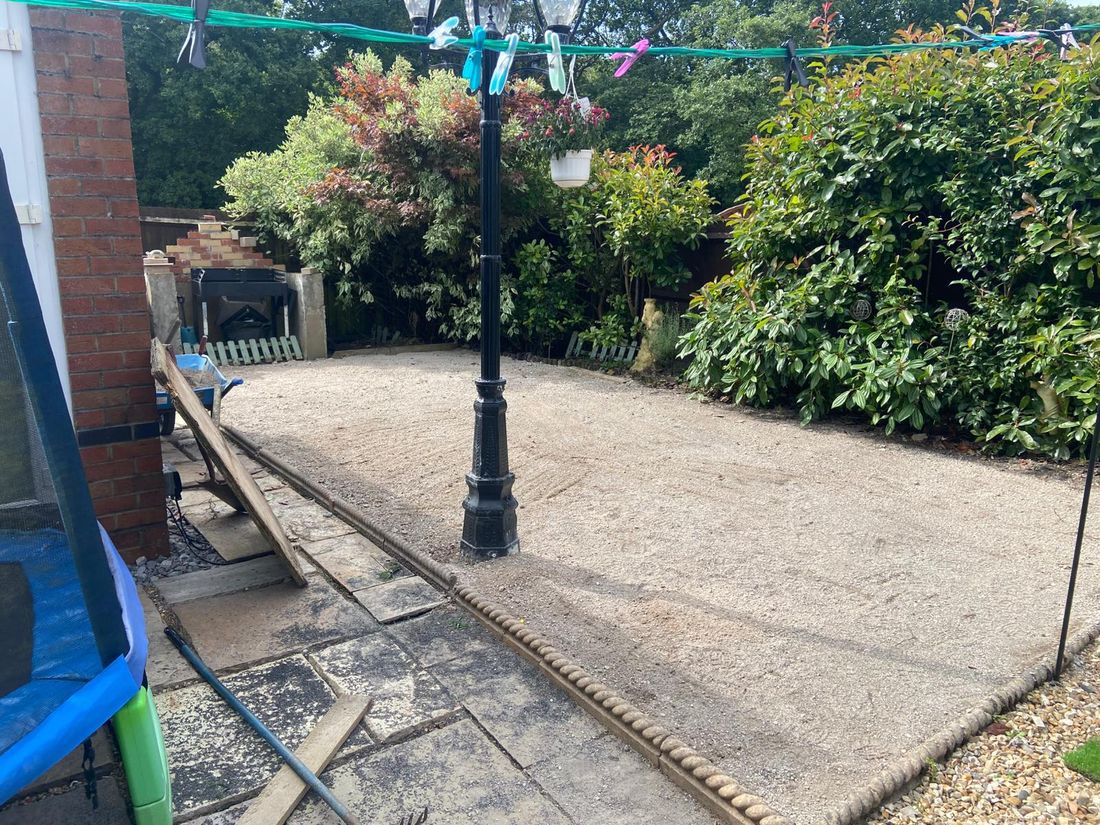
The surface is a pale, fine crushed stone, raked flat and pressed down hard. You can still see the rake lines in it. A black lamp post stands in the middle of the area and the base has been shaped neatly around it, which is the kind of detail that is much easier to deal with now than after the turf is laid. Shrubs and a brick wall enclose the space, and the old paving runs along the near side with a few loose boards leaning on it.
A compacted base gives a firm, even surface with no dips, and the gaps between the stones let rainwater drain away. Skipping this step is the usual cause of puddles and ripples in an artificial lawn later on. With the base finished, the next steps are normally a weed membrane, then the turf rolled out, cut to the edges, joined and fixed down, and finally brushed so the fibres stand up. In a courtyard this size, tidy edges against walls and the lamp post make the biggest visual difference.
 Artificial Grass
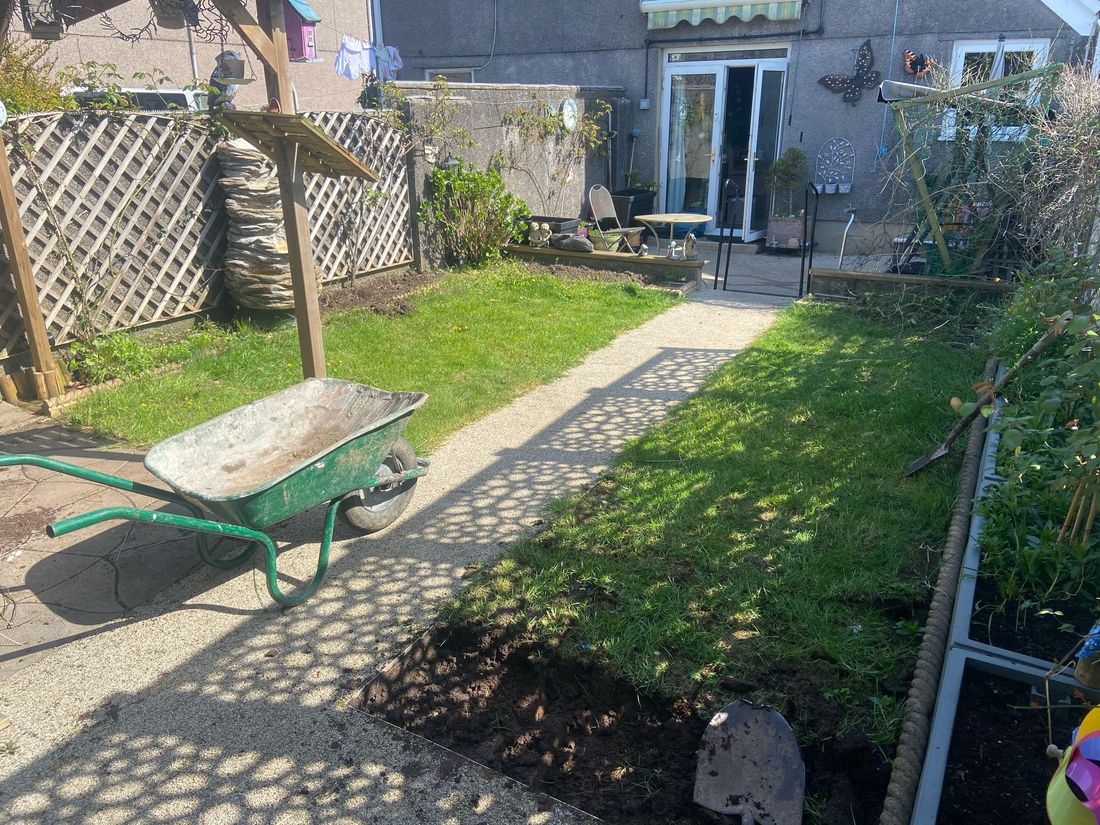
Early groundwork for artificial grass in a terraced Bridgend back garden, with the old lawn being cut back along its edge.
See the project →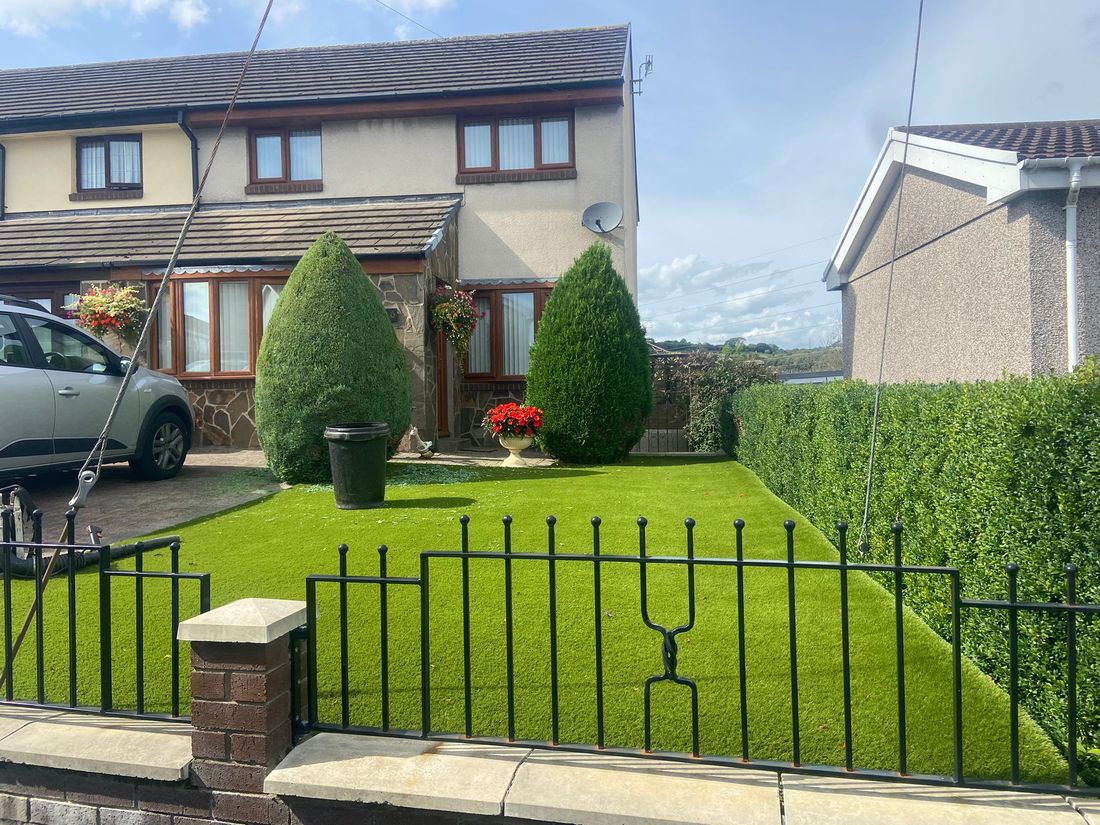 Artificial Grass
A small front garden of a semi-detached house in Swansea, finished with artificial grass behind black railings and a trimmed hedge.
See the project →We would be glad to look at your job and give you a free, no-obligation quotation.
All artificial grass installation information →Tell us what needs doing and where. We will come back to you, or call 07766 919630 if it is urgent.