A few sensible checks in early autumn can reduce the damage that gales and heavy rain do to trees, fences, hedges and outbuildings across South Wales.
Winter in South Wales often arrives as a run of gales and heavy rain rather than one big storm. Waterlogged ground loosens the grip of roots, and leaves that have not yet fallen catch the wind. Valley gardens funnel gusts along the hillside, while coastal and exposed upland gardens take the full force. Most storm damage comes from things that were already weak: a dead branch, a leaning fence post, an old conifer. Spotting them in calm weather is far easier than dealing with them in a gale.
Walk round the garden in early autumn and look up, without climbing or leaning on anything. You are looking for obvious warning signs, not carrying out a survey. Anything that looks doubtful, especially near the house, a shed, a road or a neighbour's boundary, should be looked at by a tree surgeon rather than guessed at.
Wind turns loose garden items into hazards. Bring in or tie down furniture, trampolines, parasols and light planters, and make sure the shed door closes firmly. Check fence panels and posts for rot at ground level, because a post that wobbles in your hand will not survive a good gust. Tall hedges that have grown thin or top-heavy can be cut back in autumn, which reduces the area the wind can push against.
Storms usually mean heavy rain as well. Clear leaves from gutters, drain covers and the channels along patios and paths so water does not back up against walls. On sloping valley gardens, check that run-off is heading away from the house and not towards it. Waterlogged ground also makes lawns and borders soft, so avoid dragging heavy items across them and leave any big job on wet soil until it has dried.
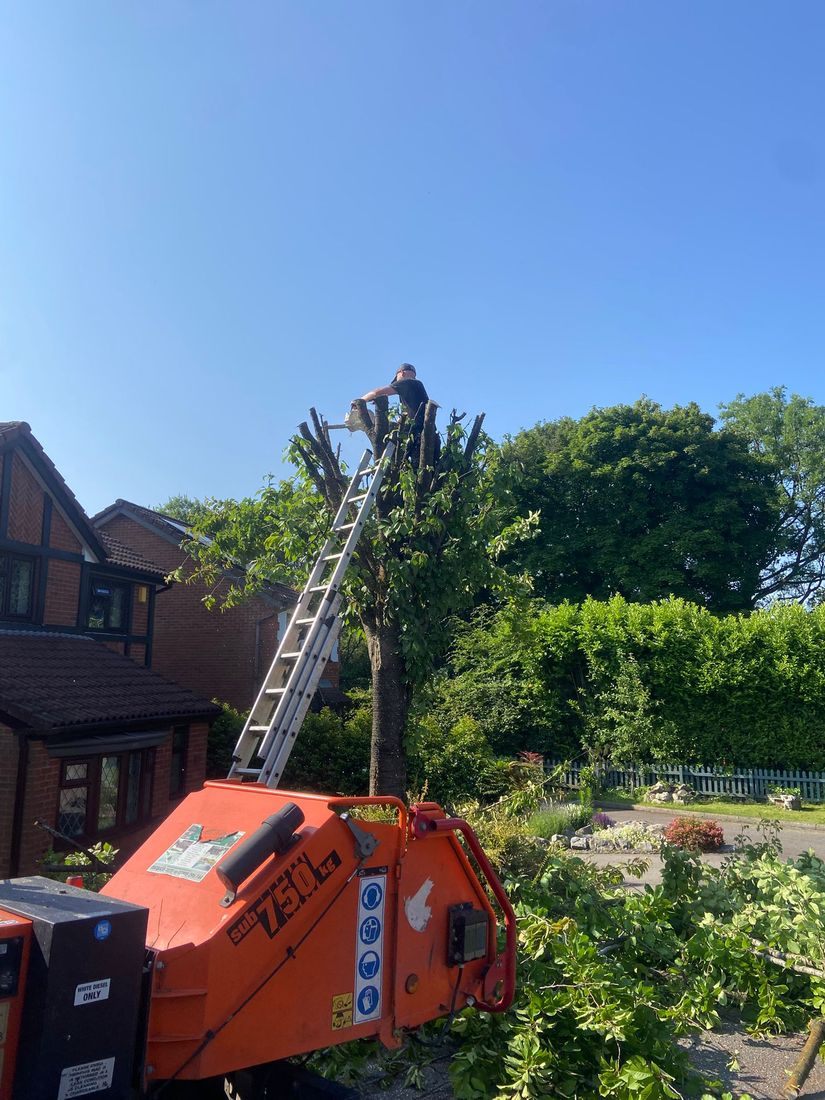
Plenty of storm preparation is simple ground-level work: tidying, staking small young trees, moving furniture and clearing drains. Anything involving a ladder, a chainsaw, a branch above head height or a tree near power lines is a job for a professional. Cut branches under tension can spring unexpectedly, and a tree that has already moved can fall without warning, so keep well back.
Even a well-prepared garden can lose a tree or large limb. Stay away from it, particularly if it has landed on or near a wire, and do not try to cut it up yourself. Call us and we will look at making it safe. This is one of the few times we treat the job as an emergency, because trees under tension can be dangerous. Take photographs for your own records before anything is moved.
Before any tree is pruned or removed, check whether it is protected. Trees can be covered by a Tree Preservation Order or stand in a conservation area, and your local council is the place to check. In Wales, felling larger amounts of timber may also need a felling licence from Natural Resources Wales, so check before you plan work. Booking pruning before the worst weather arrives is usually calmer than waiting. Ask us for a free quotation and we will look at the trees with you.
We will visit, tell you honestly what is needed and give you a free, no-obligation quotation.
Early to mid autumn is a good time, before the worst gales arrive. Look from the ground for dead wood, splits, leaning and fungus. Repeat a quick check after any major storm, since wind can loosen trees and branches that looked fine a week earlier.
Not necessarily. Some trees have always grown at an angle and are perfectly stable. What matters is a change, such as soil lifting at the base or a lean that is getting worse. If you are unsure, have a tree surgeon look at it, and check protection status first.
Not always. Dead or dangerous branches can be dealt with at any time, and many trees are pruned in winter anyway. We avoid cutting during bird nesting season, work around the weather, and will tell you honestly if a particular job is better left until conditions improve.
Yes. We can cut up fallen branches and trees, remove the timber and green waste and leave the site tidy. If a tree is leaning on a building, fence or wire, stay clear and call us so we can make it safe first.
Tree surgery is priced job by job rather than from a fixed list, so this guide explains what moves the cost up or down and how to get a firm figure.
Read the guide →Most trees are perfectly safe, but certain signs suggest a tree is weakened, and knowing what to look for helps you act before something falls.
Read the guide →Stay calm, keep clear of the tree and any cables, and call for help, because a fallen tree can still be unstable and dangerous long after the wind drops.
Read the guide →Tell us what needs doing and where. We will come back to you, or call 07766 919630 if it is urgent.